
Are Worship Leaders Just Cover Artists? (The Honest Answer)
Table of Contents
A member of my praise band called me a church cover artist once.
I’m not going to go into the circumstances around why it was said — there was some conflict in their view of how I should be leading, and I’ll leave it there. But the words landed, and they made me think.
My honest first reaction? I wasn’t offended. My immediate internal response was well, duh. I’ve been leading worship my entire adult life and I have never once sung a song I wrote. It’s always been a hymn, a contemporary worship song, something from someone else’s pen. So in the moment I thought — but that’s what we do. That’s the job.
But then something else followed, quieter and more convicting: I think I’ve failed to educate my team about why we do what we do.
Because the band member who said it was a songwriter. They wrote their own Christian music, and genuinely — good for them. That’s a real gift. It’s just not mine, and it’s not what I feel called to right now. But the fact that they saw “cover artist” as a critique told me they hadn’t fully understood what worship leading actually is. And that was on me.
Someone’s going to ask you this at some point — if they haven’t already. Maybe it’s a skeptic at a dinner party who thinks church music is just a Christian version of a karaoke night. Maybe it’s a well-meaning friend who watches your Sunday livestream and says, “You guys sound just like Elevation Worship.” Maybe it’s a question you’ve quietly asked yourself late on a Saturday night while building a setlist out of songs you didn’t write. (For what it’s worth — I wouldn’t recommend that approach. My setlist is finalized by Tuesday evening, out the door to my team Wednesday morning, full rehearsal Thursday night, and a quick run-through Sunday morning one hour before service. Preparation is part of the calling.)
Are worship leaders just cover artists?
It’s a fair question. And it deserves a real answer — not a defensive one.
Key Takeaways
- Research suggests congregational attention significantly drifts after 20–30 minutes of continuous listening — a worship leader’s song selection and arc must account for this (Brandon Hilgemann).
- Worship leaders regularly perform songs they didn’t write, which looks like cover artistry from the outside — but the purpose and orientation are fundamentally different.
- A cover artist centers the performance on the song and their own interpretation. A worship leader centers the room’s participation, the congregation’s voice, and the moment in the service (David Santistevan).
- The question “are worship leaders just cover artists?” is a useful diagnostic — if your congregation is mostly watching rather than singing, you may have drifted from the job.
- The best worship leading feels less like a concert and more like guided participation (The Worship Initiative).
What Does a Cover Artist Actually Do?
Before we answer the question, let’s define the terms.
A cover artist takes someone else’s song and makes it their own. Their job is creative reinterpretation — bringing a new arrangement, a new voice, a new emotional angle to material that already exists. The best cover artists don’t just reproduce the original; they reveal something in the song that wasn’t obvious before.
The audience comes to hear that interpretation. They’re watching the performer engage with the material. The energy flows from the stage toward the crowd.
That’s a legitimate art form. There’s nothing lesser about it. But notice what it centers: the song, and the performer’s relationship to it.
What Does a Worship Leader Actually Do?

A worship leader’s primary job is not to interpret songs for an audience. It’s to facilitate a room full of people in singing, praying, and participating together in worship. That’s a fundamentally different orientation — and it changes everything about how the role functions (David Santistevan).
Here’s what I actually do every week — and I want you to tell me if this sounds like a cover artist.
I start with myself. My first task every Sunday isn’t the setlist. It’s my own heart. I need to prepare myself to enter a place where I can genuinely thank God, praise Him for who He is and what He’s done in my life, reverence Him, and worship and adore Him — before I ask anyone else to do any of those things. That’s for me first. And sometimes it is genuinely difficult to get there on a Sunday morning. Life doesn’t pause for the service schedule.
That difficulty has a chain reaction I’ve watched play out dozens of times: if I’m not feeling the song, I can’t expect my praise band to feel it. And if they’re not feeling it, they’ll render it halfheartedly to a congregation that will absolutely notice. Christianity is contagious — if someone feels joy or peace or grief, the brothers and sisters around them feel it too. The chain starts with me.
So I have a strict personal rule: if there’s any conflict between myself and someone on the band or the sound team before service, we do not feed those flames. I draw a hard line there. I need to be in a space that is entirely focused on what God will do through me, through the band, through the service. That’s not rigidity — that’s stewardship of the moment.
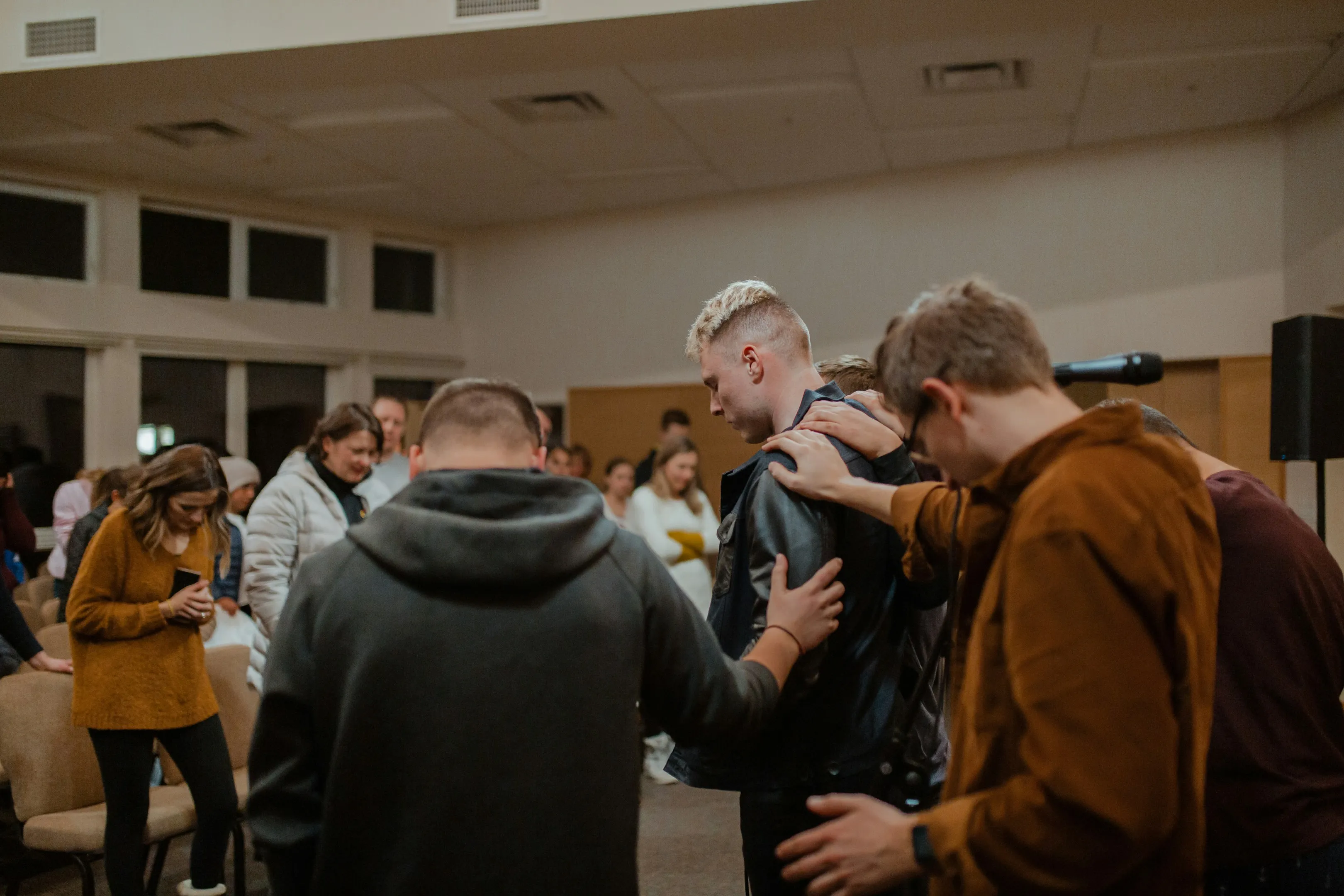
If it’s a Sunday where getting there is genuinely hard, I hit the reset button. I remember why I was called to do this in the first place. And then I do it.
Then I study the sermon. My church is excellent about communicating the message and scripture ahead of time — and I’m grateful for that, because I’ve served in churches where I had to choose the week’s songs without any idea what the sermon would be. I got good at it (thank you, Holy Spirit), but it was harder. Now, I read the text the way my English degree trained me to read anything: looking for keywords, themes, the emotional register of the passage, and what someone in today’s world might be walking through that connects to it.
This week, for example, was Holy Trinity Sunday. The moment I saw that theme, I thought: All of Creation by MercyMe — “Praise the Father, praise the Son, and the Spirit in one.” It was immediate. The song matched the theology, the vocabulary, and the moment.
Then I think about the room. Research on adult attention suggests that most listeners begin to disengage from a continuous presentation after about 20 minutes, with 30 minutes being the practical outer limit for most sermon settings before attention significantly drifts (Scot McKnight, Substack; Brandon Hilgemann). I factor this into how I build the worship arc — knowing that someone in the pew may have mentally stepped away somewhere in the middle of the message. So I repeat the anthem before service concludes. The last song people hear is the one they carry out the door with them. I want them carrying the right thing.
And then I pray one specific prayer. Every single week, before we start, I ask God: Let me impact at least one person today. That one person who really needs to hear that one song. And I mean anyone — it might be someone in the congregation, but it could just as easily be one of the musicians on my own band, or one of our pastors. I never know who that person is going to be. I just want God to move in their life, and if I can be the vessel for that as a worship leader, then I’ve done my job. Sometimes after service someone finds me and tells me exactly what it meant to them. Sometimes I never find out. But I trust God is moving, whether I see it or not.
My pastor said something recently that stayed with me: children can teach us what matters most in life. I think about that every time I see the kids in our congregation during worship. When they’re laughing, dancing, and praising God while my band is singing — completely unselfconscious, completely present — it reassures me that we are on the right track. Children don’t perform worship. They just respond to it. When they respond like that, I know the room is real.
Tell me — does that sound like a cover artist to you?
The cover artist is watching the audience. The worship leader is watching — and leading — the congregation. One of those people is on stage. The other one is inside the room with everyone else, just standing at the front.
When a worship leader chooses a song, they’re not asking, “Does this showcase my voice well?” They’re asking, “Can my congregation sing this? Does the theology hold? Does this fit where we are in the service?” They’re thinking about range, about lyric density, about what the pastor just preached, about the person in the third row who’s been coming for three weeks and still isn’t sure about any of this (Essential Worship).
That’s not a performer’s calculation. That’s a shepherd’s.
And here’s one more thing worth saying — about the band member who called me a cover artist. I don’t hold it against them. What the moment revealed to me was a gap in my own leadership. I hadn’t done enough to help my team understand the mission we were all part of. That’s on me. And it made me a better worship leader than I was before they said it. Because from that day forward, I make a conscious effort to reiterate to my group — and to anyone I lead worship with — what we are called to do and the reason we are here. The mission doesn’t go without saying. It has to be said, regularly, by the person standing at the front.
Where the Lines Get Blurry
Here’s where I’ll be honest: yes, the line blurs. Sometimes significantly.
When a worship team releases a live album, they’re functioning as recording artists. When they put on a polished production with stage lighting and a setlist that feels more like a concert than a service, they’re borrowing the format of performance. When the congregation stops singing and starts watching — which happens more often than anyone in the industry wants to admit — the line has been crossed (Katelyn Beaty, Substack).
This is the uncomfortable truth that the question is really pointing at: some worship leaders have, in practice, become cover artists — not because of malicious intent, but because the culture around them rewarded performance over participation. The metrics that get celebrated (production quality, attendance numbers, recorded streams) are performer metrics. The metric that actually matters — is the congregation singing? — is harder to measure and easier to ignore.
So the question “are worship leaders just cover artists?” isn’t just a philosophical one. It’s a diagnostic. If you lead worship every Sunday and the people in the room are mostly watching rather than singing, something has shifted. The songs might be great. Your voice might be excellent. But you may have drifted from the job.

What Scripture Says About the Worship Leader’s Role
Long before the debate about covers versus originals, the Bible was already drawing a clear line between worship and performance. And it consistently lands on the same side.
“Come, let us sing for joy to the Lord; let us shout aloud to the Rock of our salvation.” — Psalm 95:1
Notice the word: come. The psalmist isn’t announcing a performance. He’s issuing an invitation. The worship leader in this text is a voice calling a community into something — not standing in front of them to deliver something. That single word contains the entire theology of worship leading.
“Let the word of Christ dwell in you richly, teaching and admonishing one another in all wisdom, singing psalms and hymns and spiritual songs.” — Colossians 3:16
Paul ties worship music directly to mutual instruction. Singing is something the congregation does to one another and with one another — not something they receive passively from a stage. The worship leader’s job, in this framework, is to facilitate that communal act.
“I will sing with my spirit, but I will also sing with my understanding.” — 1 Corinthians 14:15
Paul’s concern here is that worship engages the mind of the congregation, not just its emotions. A cover artist can move a room emotionally. A worship leader must help the room engage with understanding — which means lyric clarity, theological integrity, and congregational accessibility take priority over artistic complexity.
“When the trumpeters and musicians joined in unison to give praise and thanks to the Lord… the glory of the Lord filled the temple.” — 2 Chronicles 5:13–14
This is perhaps the most striking picture of what worship leading is actually for. The glory didn’t fill the temple when the musicians performed exceptionally. It filled the temple when they sang in unison — when the congregation was united in one voice, one purpose, one direction. The cover artist’s goal is a great performance. The worship leader’s goal is that kind of unison.
“True worshipers will worship the Father in spirit and in truth.” — John 4:23
Spirit and truth. Not skill and polish. Not production quality and setlist depth. The standard Jesus gives is motive (spirit) and theological integrity (truth) — which are exactly the two things that distinguish faithful worship leading from performance.
None of this is a criticism of musicianship. Excellence in craft is a gift to the room. But the scriptures are consistent: the goal of worship music in the gathered church is the participation and formation of the congregation — not the expression of the leader.
Cover Artist vs. Worship Leader: Side by Side
Why the Distinction Matters
This isn’t splitting hairs. The distinction between a cover artist and a worship leader shapes every practical decision you make on Sunday morning.
Song selection. A cover artist picks songs that showcase their range and artistry. A worship leader picks songs the congregation can actually sing — in a key they can reach, with lyrics clear enough to mean something when spoken, not just heard (David Santistevan).
Arrangement. A singer at a concert can extend a song, change the arrangement, and focus on delivering a memorable moment. A worship leader may simplify the arrangement, repeat a chorus, and keep the flow easy for the room to join in. That doesn’t mean worship leaders are unskilled — it means their skill is being used for a different purpose (Musicademy).
Connection. A cover artist builds connection through performance quality. A worship leader builds connection by creating space for the congregation to encounter God — and then staying out of the way enough to let that happen. The best worship leading is often the most self-effacing (Relevant Magazine).
Motive. Performers are judged by artistry, expression, and how well they communicate with listeners. Worship leaders are judged by whether they removed distractions and made room for congregational participation (The Gospel Coalition). Performance is a tool in worship leading — it is not the end goal (The Worship Initiative).
Success metrics. A cover artist succeeds when people leave saying, “That was incredible.” A worship leader succeeds when people leave saying, “God moved in that room today” — and often can’t even remember the specific songs.
What Separates a Great Worship Leader From a Great Cover Artist
The short answer: orientation.
Both may be singing “10,000 Reasons” this Sunday. But one of them is thinking about their phrasing, their breath control, their performance arc. The other is thinking about the eighty-year-old woman in the fourth row who used to sing this with her late husband, and whether the tempo is slow enough for her to keep up.
Great worship leading looks, from the outside, like a performance. The musicianship is high. The presence is real. But from the inside of it, the leader’s attention is always divided — part of it on the music, most of it on the room. They’re listening to whether the congregation is singing. They’re reading the emotional temperature. They’re making micro-decisions in real time about whether to extend a chorus, bring the dynamic down, or move forward.
That’s not what a cover artist does. A cover artist performs the song. A worship leader uses the song to lead people somewhere.
The Honest Answer
So — are worship leaders just cover artists?
No. But they’re not immune to becoming one.
The songs may be the same. The chord charts may be identical. But the job — the actual job — is different at every level. Cover artists serve the song and their interpretation of it. Worship leaders serve the congregation and the moment God has called them into. The former faces the crowd. The latter walks in front of the crowd, facing the same direction they are.
The question is worth asking yourself regularly. Not as an accusation, but as a compass check. Who are you actually leading toward? And is the room following?
For more on the theology behind worship leading, these 7 books reshaped how I think about the role — especially Bob Kauflin’s Worship Matters, which addresses this exact tension better than anything else I’ve read. And if you’re wondering how I actually build the setlist that drives all of this, here’s how I choose worship songs each week — including the sermon-alignment process I described above.
Frequently Asked Questions
Is it wrong for worship leaders to use other artists’ songs?
No — using songs written by others is standard practice in almost every worship tradition. The question isn’t whether you wrote the song. It’s whether you’re leading it for congregational participation or performing it for an audience. CCLI licensing exists precisely because the church has always sung other people’s songs, from hymns to contemporary worship (Essential Worship).
Can a worship leader also be a recording artist?
Yes, and many are. Hillsong, Elevation Worship, and Bethel Music all function as both worship ministries and recording artists. The tension arises when the artist identity starts driving the worship leader’s Sunday decisions — song selection skews toward what’s on the album, production gets optimized for the stream rather than the room. Both roles can coexist with intentionality, but they require different modes of operation.
What is the main purpose of a worship leader?
The primary purpose of a worship leader is to facilitate congregational worship — to help a room full of people engage together in singing, prayer, and encounter with God. This is different from performing, which centers the performer’s interpretation. A worship leader’s success is measured not by how well they sang, but by how fully the congregation participated (David Santistevan).
How do you know if you’ve crossed from worship leading into performing?
One signal: the congregation is watching instead of singing. Another: your song choices are driven more by what sounds good than what your people can sing. A third: you feel more energized by the applause than by the moments of collective stillness. None of these are condemnations — they’re checkpoints. Every worship leader crosses the line occasionally. The ones who grow are the ones who notice and recalibrate.
Do worship leaders need to be original songwriters?
No. Songwriting is a gift, but it’s a separate gift from worship leading. Some of the most effective worship leaders in history have never written a single song they used in a service. What matters is the ability to choose, prepare, and lead the congregation through music that serves the moment — not where the song came from.
A Final Word
Every worship leader is standing on someone else’s shoulders, singing someone else’s words. The hymns we love were written by people long dead. The contemporary songs on our CCLI lists were crafted in studios, sometimes by teams of writers who’ve never led a service. We take all of that and bring it into a room of real people on a real Sunday morning.
That’s not lesser. That’s stewardship.
SOMETIMES we look like cover artists from the outside. BUT the room knows the difference when someone is truly leading them somewhere, not just performing for them. ALWAYS the congregation can tell when the person at the front is facing the same direction they are.
That’s the job. And it’s one of the most sacred ones I know.
A Prayer for Every Worship Leader Who Has Wondered
Lord, let every worship leader reading this be reminded today why You placed them at the front of the room — not for performance, not for recognition, but to help one more person turn their face toward You. Guard their hearts against the drift. Renew the joy of their calling. And send them into Sunday morning with that first love still burning. In Jesus’ name, Amen.
Be Blessed,
Mark Claiborne


Find this helpful?
Writing takes time. If Worship Frontier has been useful to you, buying me a coffee means a lot — and keeps this going.
Join the Conversation
Comments are moderated — approved ones are posted periodically.
Thanks for your comment — it's in the queue for review.