Your Gear Is a Gift, Not a Goal: Keeping Worship in Perspective
Table of Contents
Let me tell you something I had to learn the hard way.
I spent a season early in my worship ministry obsessing over gear. I was convinced that the right pedal board, the right guitar, the right amp — that those were what stood between me and the worship experience I was trying to create. If I could just get the right rig together, the sound would open up, the congregation would engage, and everything would fall into place.
I was wrong. And honestly, a little embarrassed to admit how long it took me to figure that out.
Key Takeaways
- Gear is a means of expression, not a measure of calling. God doesn’t care what guitar you play — He cares how you steward it.
- The discipline of mastering a “lesser” instrument builds the kind of musicianship that no budget can buy.
- Worship that moves people has almost always come from musicians who were deeply rooted in their craft — not their gear list.
Gear as an Act of Reverence
Here’s what I believe, and what I think gets lost in a lot of worship musician conversations: your instrument is a vehicle for worship, not the destination.
When we pick up a guitar, sit down at a keyboard, or step behind a drum kit, we’re engaging with one of the most ancient forms of human expression. Music was never just entertainment — it was offering. The Psalms are full of specific instruments, specific sounds, specific intentions. “Praise him with the sounding of the trumpet, praise him with the harp and lyre.” (Psalm 150:3)
That verse doesn’t say what kind of harp. It doesn’t specify a string gauge or a pickup configuration. It says: praise him. The instrument is in service of something far bigger than itself.
Good gear matters. I’m not going to pretend otherwise — the right tools make a real difference in your ability to express what you’re hearing in your head and feeling in your heart. But gear is only as good as the hands holding it. And those hands need to be trained, disciplined, and submitted to something greater than the sound they’re chasing.
Looking for book recommendations to go alongside your gear journey? Check out 7 Must-Have Books Every Worship Leader Should Read.
The Myth of the Magic Instrument
There’s a lie that circulates quietly through every gear forum, every YouTube review, every church budget conversation: if I just had better gear, I’d be a better worship leader.
It doesn’t work that way. It never has.
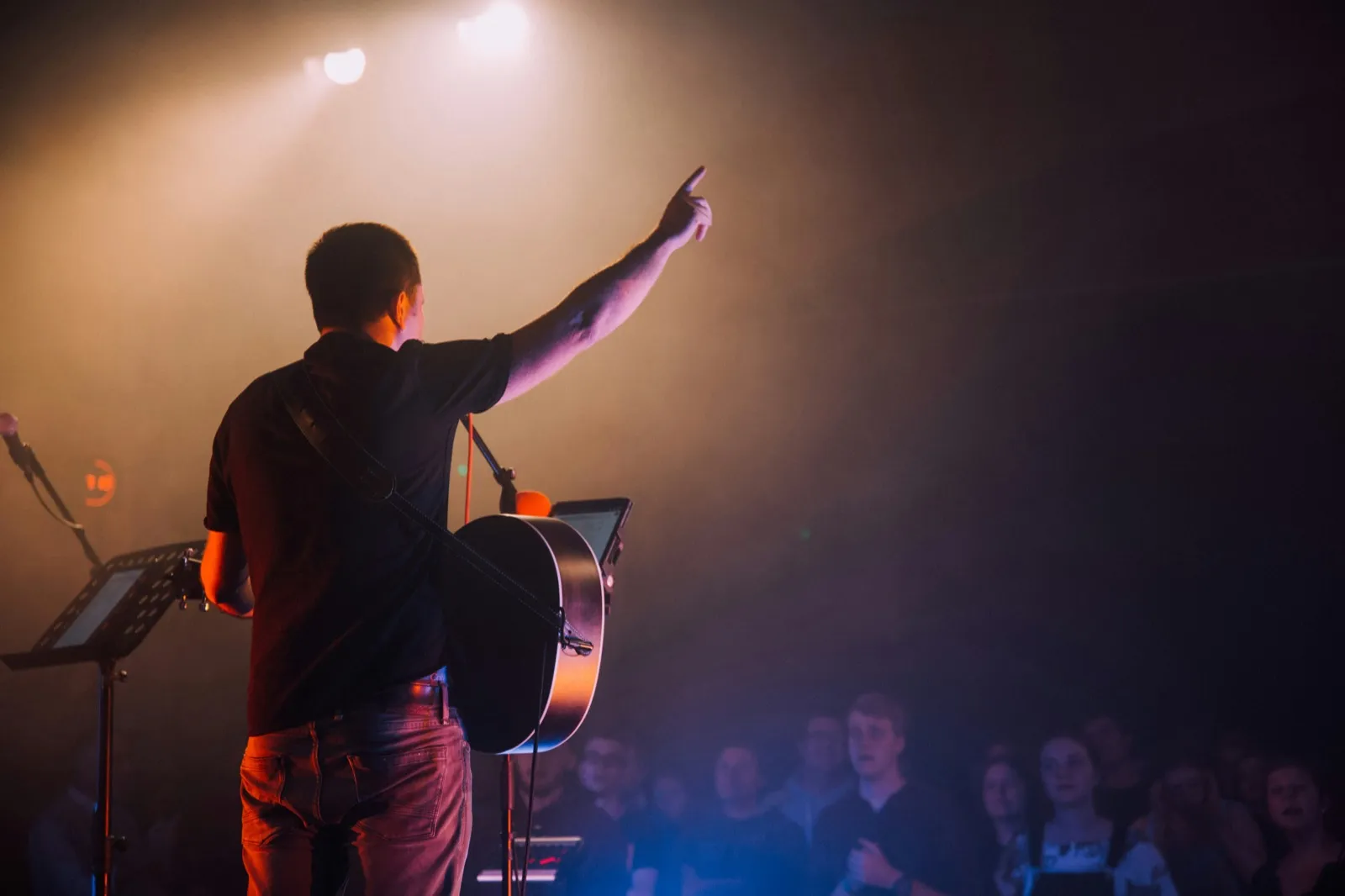
I’ve heard some of the most spine-tingling worship I’ve ever experienced come from a guy with a beat-up Squier Stratocaster and a $30 reverb pedal. I’ve also sat through services where a player had a $4,000 custom guitar through a boutique amp and it was — somehow — completely lifeless.
The difference wasn’t the gear. It was the player’s relationship to what they were doing. One person was playing to lead. The other was playing to perform. You can feel that difference in the room immediately, even if you can’t name it.
“The Lord does not look at the things people look at. People look at the outward appearance, but the Lord looks at the heart.” — 1 Samuel 16:7
This is as true at the instrument as it is anywhere else in life.
Why Your Beginner Guitar Is One of the Best Teachers You’ll Ever Have
I taught myself guitar in 30 days. I didn’t start on a boutique instrument — I started on what I had. And what I had forced me to focus on technique, because the instrument wasn’t going to hide anything for me. Every buzzing note, every sloppy transition, every missed chord — it was all right there.
That’s actually a gift.
When you’re playing a beginner guitar or a modest keyboard, you can’t lean on the gear. You have to develop real skill — finger strength, muscle memory, dynamic control, timing. And when you do eventually upgrade, those skills transfer completely. They multiply.
A player who learned on a cheap acoustic and then picks up a Martin sounds like a player who learned on a cheap acoustic and then picked up a Martin. The Martin doesn’t teach you to play — it just gets out of your way once you already know how.
So if you’re in a season of limited resources: stay consistent, stay disciplined, and hone the craft. The gear will come. The habit of mastery needs to be built now.
If you want to go deeper on the mindset behind the craft, the Worship Frontier reading list is a good next step — or explore the blog for more on developing as a worship musician.
The $6,000 Nord Conversation
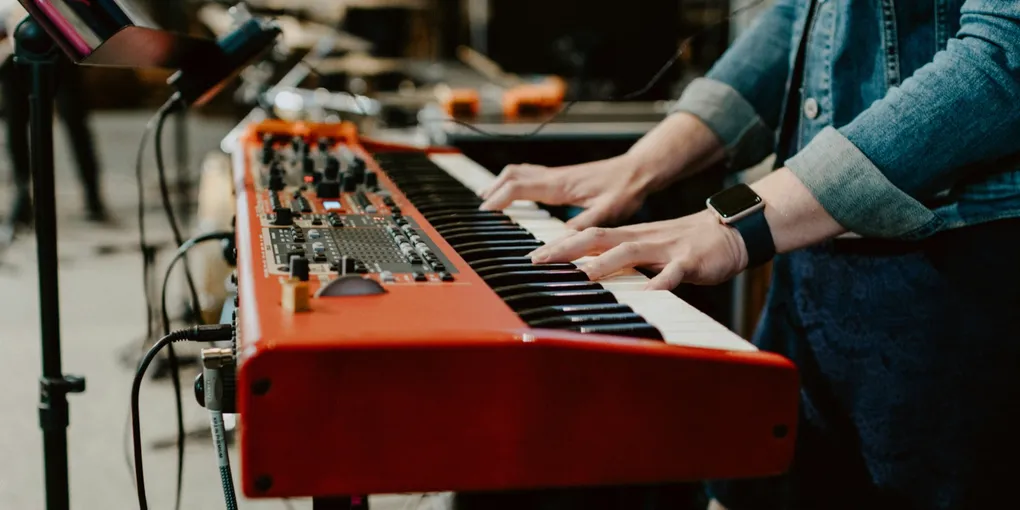
Let me address the elephant in the room: yes, professional-grade gear is genuinely better. A Nord Stage is a better instrument than a $300 digital keyboard. A boutique pedalboard sounds different than a single multi-effects unit. These things are real.
But here’s what I’ve watched happen to worship musicians who upgrade before they’re ready: they plateau. Because they attributed their limitations to their gear, when the actual limitations were in their technique and musicality. They get the upgrade, they sound incrementally better, and then they stop growing — because the problem they thought they were solving wasn’t actually the problem.
The musicians I know who play $6,000 instruments well got there because they were already playing at a high level on what they had. The expensive gear was a reward for craft already developed, not a substitute for it.
“His master replied, ‘Well done, good and faithful servant! You have been faithful with a few things; I will put you in charge of many things.’” — Matthew 25:23
That’s a stewardship principle that applies directly to your gear journey. Be faithful with the instrument in your hands right now. Play it as well as it can be played. That faithfulness is what opens the next door.
Practical Steps for Any Budget
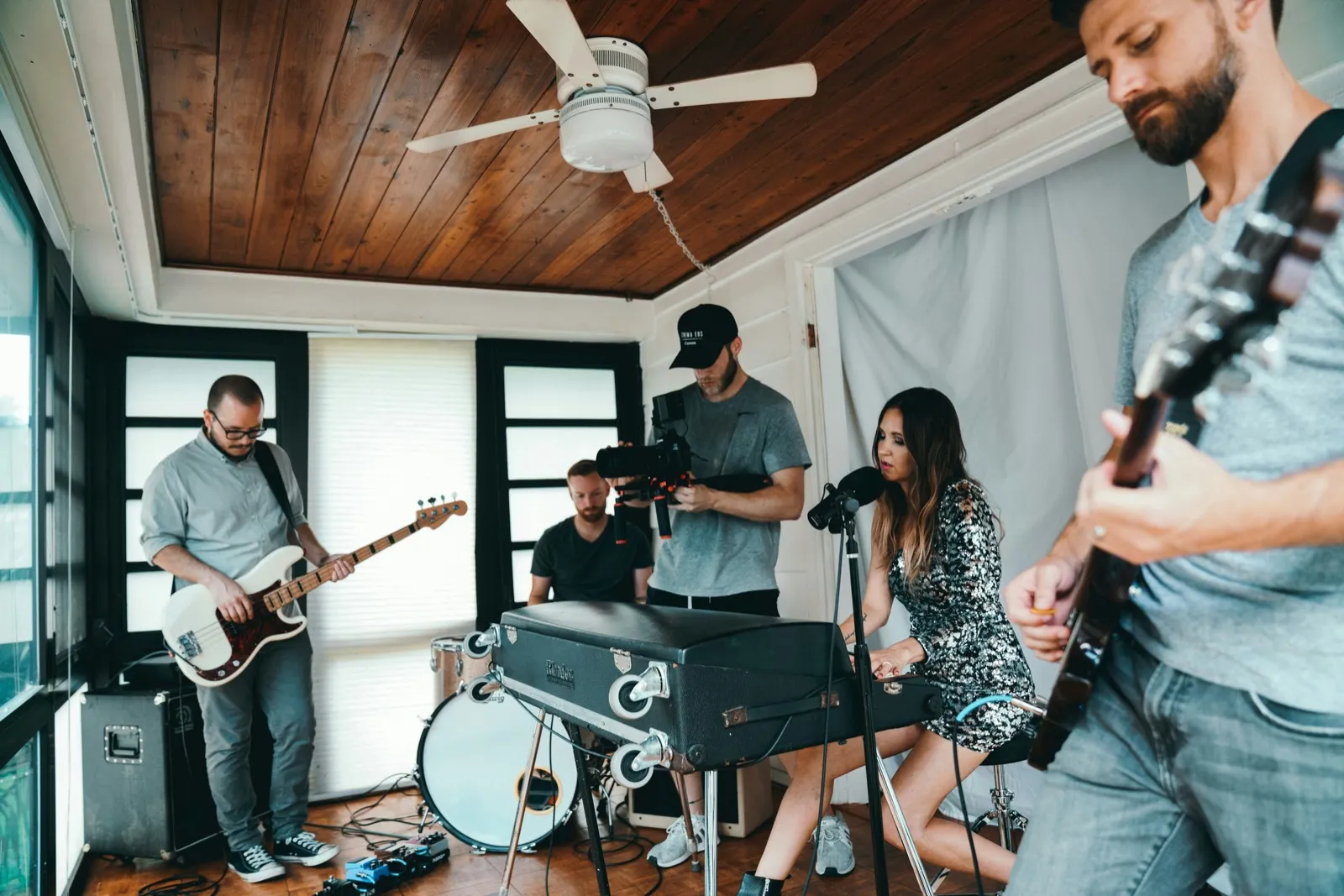
Whether you’re playing a beginner acoustic or a full professional rig, the principles are the same:
Practice with intention, not just repetition. Running through a worship set without awareness is rehearsal. Deliberately working on a chord transition, a dynamic shift, or a rhythmic pattern — that’s practice. They’re not the same thing.
Record yourself regularly. Your ears lie to you in the room. A recording shows you what the congregation actually hears. Use your phone if that’s all you have. The feedback is invaluable.
Study players better than you. Find worship musicians whose sound and approach you admire and study them systematically. Not to copy — to understand. What are they doing with dynamics? How are they using space? What’s their relationship to the groove?
Serve the song, not your instrument. The best gear decision you can make in any given moment is to ask: what does this song need? Not what does my rig allow. What does the song need — and how do I serve that?
For more on building your library alongside your instrument, see 7 Must-Have Books Every Worship Leader Should Read.
Frequently Asked Questions
Does the quality of gear actually matter in worship?
Yes — but far less than skill and heart. Better gear can remove technical limitations, but it can’t manufacture musicianship or spiritual presence. A disciplined player on modest gear will always outperform a careless player on expensive gear. Gear matters; craft matters more.
How do I know when it’s time to upgrade my instrument?
When you’ve genuinely maxed out what your current instrument allows you to do — not when you want something new. If your technique has grown to the point where the gear is actually holding you back (not just in your head), that’s the right moment. Most players reach that point later than they think.
Is it wrong to want better gear as a worship musician?
Not at all. Wanting tools that help you express yourself more fully is reasonable and good. The issue is when gear becomes the goal rather than the means. Keep your desire for better instruments in its proper place — below your desire to grow as a musician and a worshiper.
How do I make the most of a limited budget?
Focus on the fundamentals: a decent instrument that stays in tune, reliable amplification if needed, and the discipline to practice consistently. Many of the best worship musicians in history worked with far less than what’s available today at entry-level prices. The gap between a beginner and a professional instrument is much smaller than the gap between a beginner and a professional player.
What’s the one gear investment worth making early?
A good tuner. Nothing undermines worship faster than being out of tune. After that — lessons or intentional self-study. Invest in your skills before your signal chain.
The Bottom Line
The instrument in your hands right now — whether it’s a $150 starter guitar or a high-end professional rig — is a means of expressing reverence to God. Don’t lose sight of that.
Play it well. Play it humbly. Play it with the understanding that what you’re doing is an offering — and offerings aren’t measured by their cost. They’re measured by the heart behind them.
“Sing to him a new song; play skillfully, and shout for joy.” — Psalm 33:3
Skillfully. That word is in there for a reason. God deserves our best — and our best is something we build through discipline, not something we buy at a gear store.
Ready to keep growing? Browse the full Worship Frontier blog for more devotionals, gear perspective, and practical ministry resources.
A Prayer for the Musician Who Serves
Father, let every musician reading this be reminded today that the gear is a gift and the calling is the point. Keep us from chasing the next pedal when what the congregation needs is a worship leader whose heart is right. Let the instruments we play be tools in the hands of servants, not trophies on the stages of performers. Amen.
Be Blessed,
Mark Claiborne


Find this helpful?
Writing takes time. If Worship Frontier has been useful to you, buying me a coffee means a lot — and keeps this going.
Join the Conversation
Comments are moderated — approved ones are posted periodically.
Thanks for your comment — it's in the queue for review.