How to Build a Worship Setlist That Actually Flows
Table of Contents
A worship setlist is not a playlist. A playlist is five songs you like. A setlist is a journey — one that begins with scripture, moves through the congregation’s emotional and spiritual experience, and lands somewhere meaningful by the time service ends.
I’ve been building setlists for over fifteen years. Every week, the same process. Same questions. Same tools. And on the weeks where I get it right — where the opening song, the sermon, and the closing all pull in the same direction — the room feels it. The congregation doesn’t just sit through worship. They participate in it.
Here’s exactly how I build a setlist from scratch, using a real example from this week.
Key Takeaways
- For a standard Sunday worship set, 4-5 songs is the most widely practiced range — enough to build a full arc without rushing or stretching the congregation. The Gospel Coalition notes that every song in a worship service functions as a primary teaching platform for the congregation, which means the number matters less than whether each song earns its place (The Gospel Coalition).
- Start with scripture and theme, not songs. Song selection is the last decision, not the first.
- Your setlist is a service document — not just for you, but for every musician, vocalist, and sound engineer on your team.
- A closing repeat of the “anthem” song from earlier in the service is one of the most effective congregation-retention strategies in worship planning.
- The goal is not a great setlist. The goal is a congregation that encounters God.
Start With Scripture, Not Songs
The biggest mistake worship leaders make when building a setlist is opening their song library first. Don’t do that. Open your Bible first.
Every week before I touch a single song title, I read the sermon scripture and find the keywords. That’s it. I’m not looking for a profound theological framework — I’m looking for the words and phrases the Holy Spirit will use that Sunday. The words that will be in the pastor’s mouth, in the reading, in the congregation’s ears.
This week’s scripture: 1 John 1:1–2:2 (NIV)
“That which was from the beginning, which we have heard, which we have seen with our eyes, which we have looked at and our hands have touched — this we proclaim concerning the Word of life… God is light; in him there is no darkness at all… But if we walk in the light, as he is in the light, we have fellowship with one another, and the blood of Jesus, his Son, purifies us from all sin.”
The keywords that jumped out immediately: Word of Life. Light. Walk in the light. God is light. The theological thread running underneath all of it: salvation, grace, the atoning work of Jesus Christ.
That’s my foundation. My rule of thumb: no matter what the sermon’s specific angle is, salvation is always a safe center of gravity. The Gospel Coalition’s song selection framework asks four questions of every song: Are the lyrics biblically sound and clear? Is it singable for this congregation? Does it meet a real theological or musical need? Do I trust the source? (The Gospel Coalition) — my scripture keyword approach answers all four before I even open a song library. The reason we gather, the reason we sing, the reason any of this matters — it always comes back to what Jesus did. So songs that speak to grace, to salvation, to the blood and the light — those are my first candidates.
With 1 John 1-2:2, I landed on these themes: grace and salvation (the baseline), and light and darkness (the specific motif of this passage). From there, song selection becomes almost obvious.

Selecting the Songs
Here’s the actual setlist I built for this passage:
- This Is Amazing Grace — opens with the grace theme, high energy, congregational
- Lifesong — “Let my lifesong sing to you” — declaration, response to the Word of Life
- Amazing Grace (My Chains Are Gone) — grace and salvation, familiar to the whole congregation
- Rescue (Desperation Band) — one of my personal favorites, fits perfectly with the salvation theme
- Way Maker — “Light in the darkness, my God is the Way Maker” — that line is a direct echo of the passage
- Lifesong (closing repeat) — same song as #2, repeated as the anthem send-off
That last decision — repeating Lifesong at the close — is intentional. I always repeat the week’s “anthem” at the end of service. Educational research consistently shows that adult listeners begin to disengage after 20-30 minutes of continuous presentation without a change in stimulus or activity — which is why the closing anthem strategy matters (Pashler et al., Psychological Science in the Public Interest). The last song a congregation sings is the one they carry out the door. Make it one they know, and make it the one that captures the week’s theme.
Once I have the songs, I grab the YouTube link for each one and paste it into my notes. More on that in a moment.

The Service Template (What Goes Where)
I don’t rebuild the service structure from scratch every week. I have a template in Apple Notes that I update — it syncs across my iPhone, iPad, and Mac automatically. Here’s the structure:
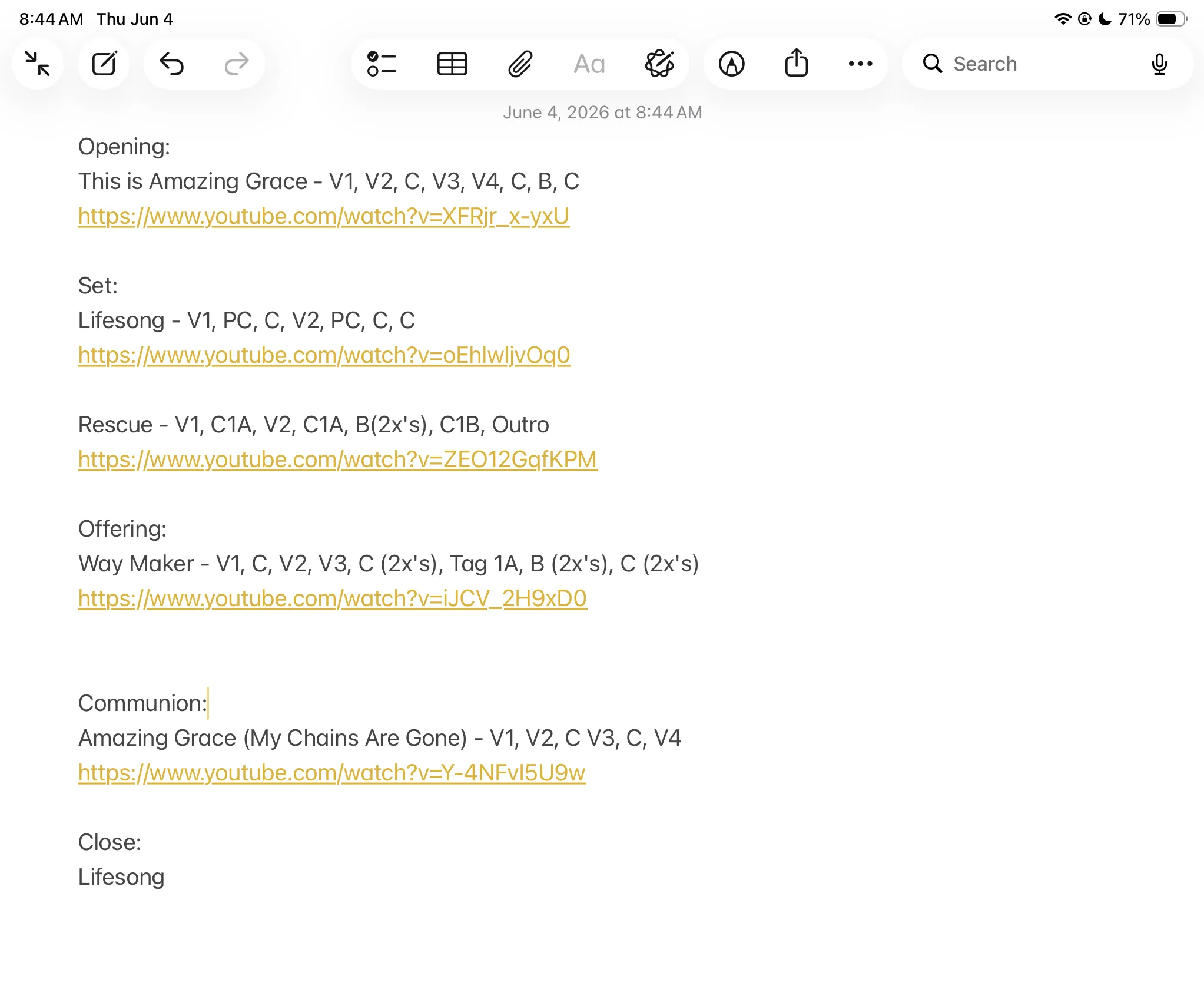
The template:
- Opening — high-energy gathering song
- Song 1 — reinforces the sermon theme
- Song 2 — deepens the response
- Offering — a song that carries the moment naturally
- Communion (first Sunday only) — intimate, reflective
- Closing — anthem repeat or send-off
Each slot has the song title, arrangement notes (key, tempo, any specific instructions for the band), and the YouTube link. That note becomes the body of the email I’ll send to the team.
The Component Sheet
My church uses a shared component sheet — a document every department fills out for Sunday service. I complete the worship portion: songs in order, timing notes, any special moments or transitions.
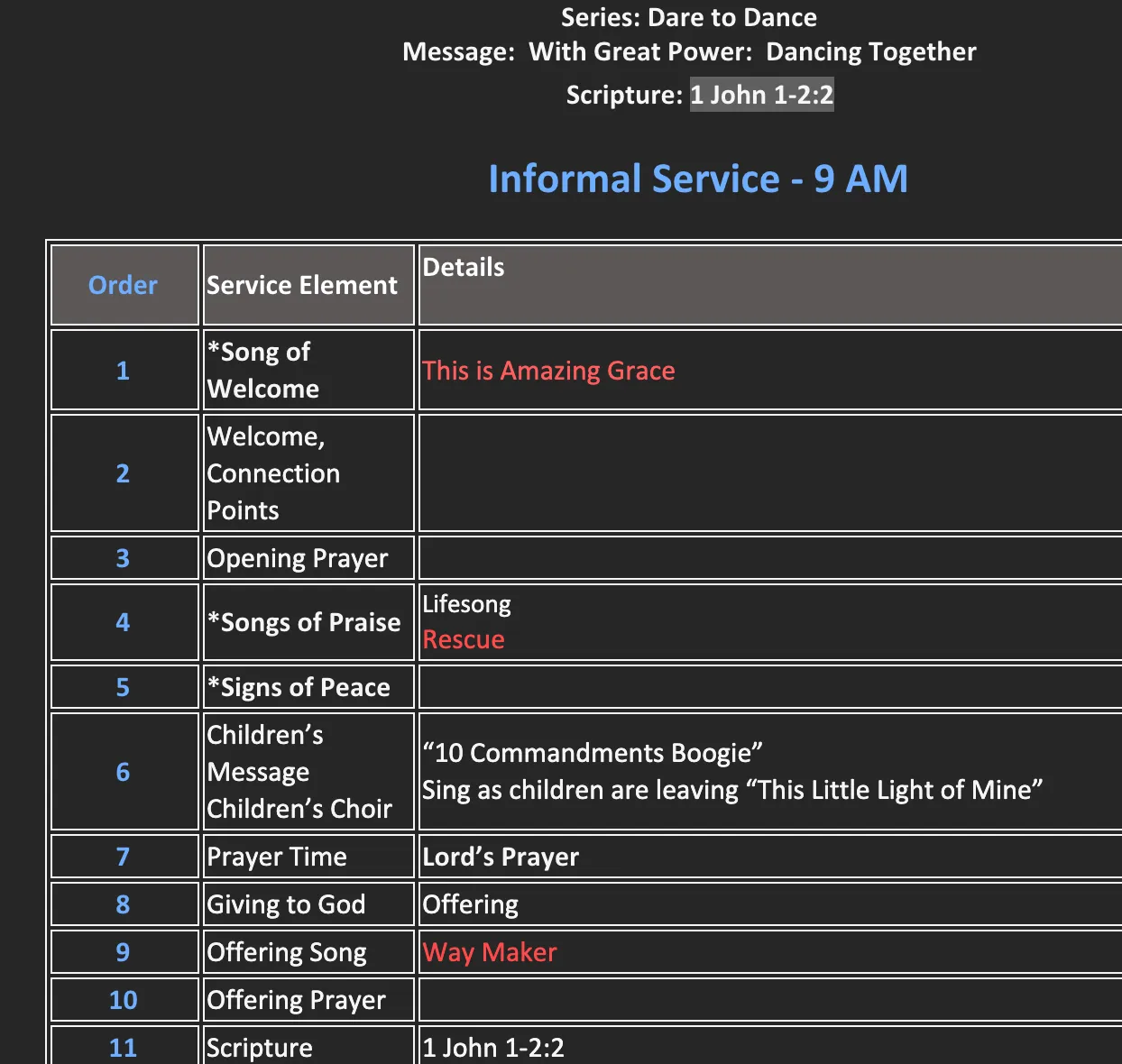
This is how the pastor, sound team, and any guest leaders know exactly what’s happening in worship before Sunday arrives. If you don’t have a shared planning document at your church, this is worth creating. The amount of Sunday morning confusion it eliminates is significant.
Building the PDF: SongBook Pro + Notability
This is the part most worship leaders find the most tedious — and where I found a workflow that actually works.
The old way: Download chord PDFs from CCLI → store in OneDrive or Google Drive → import one at a time into Notability → add notes. Repeat every week. It wore me down.
The new way: SongBook Pro.
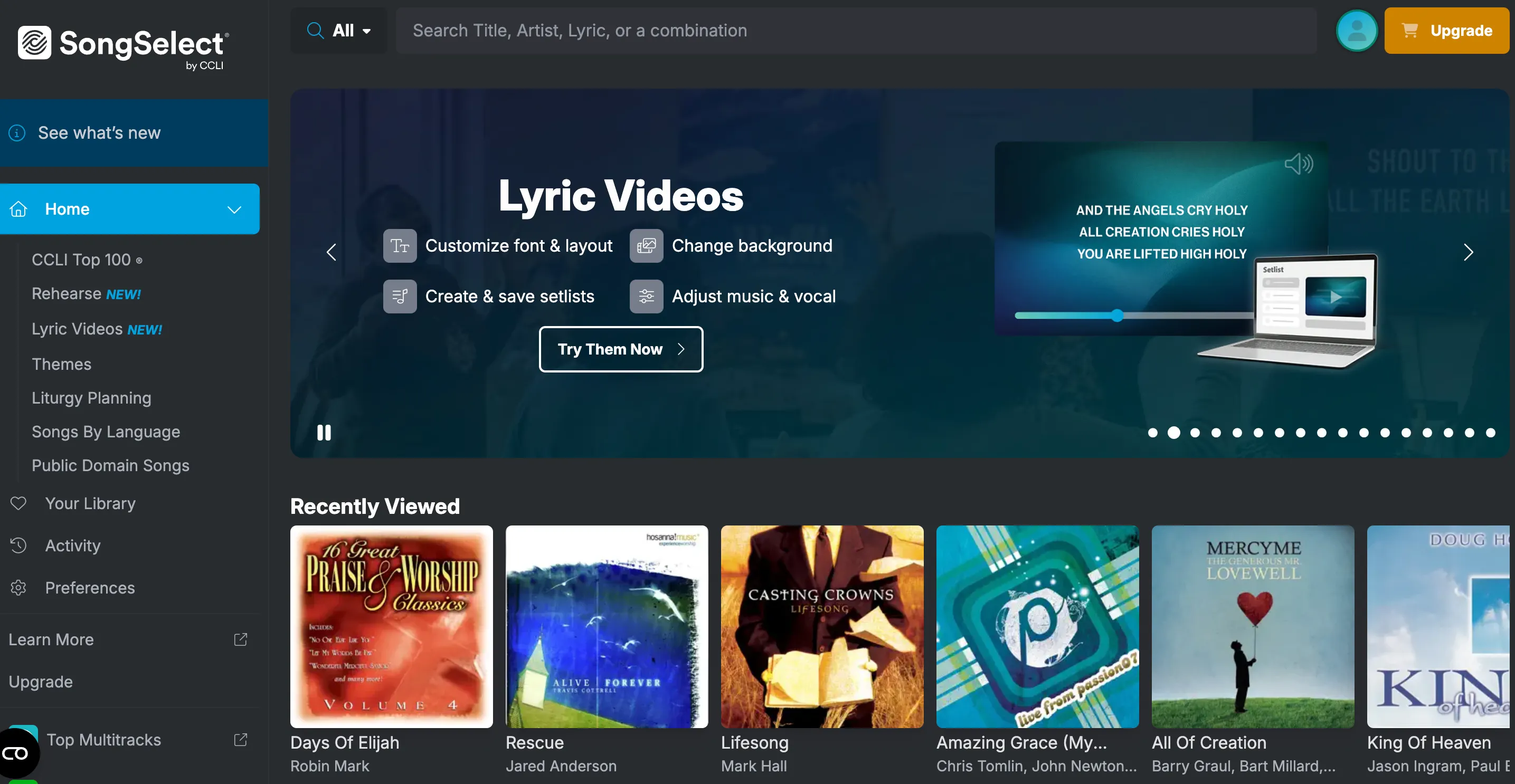
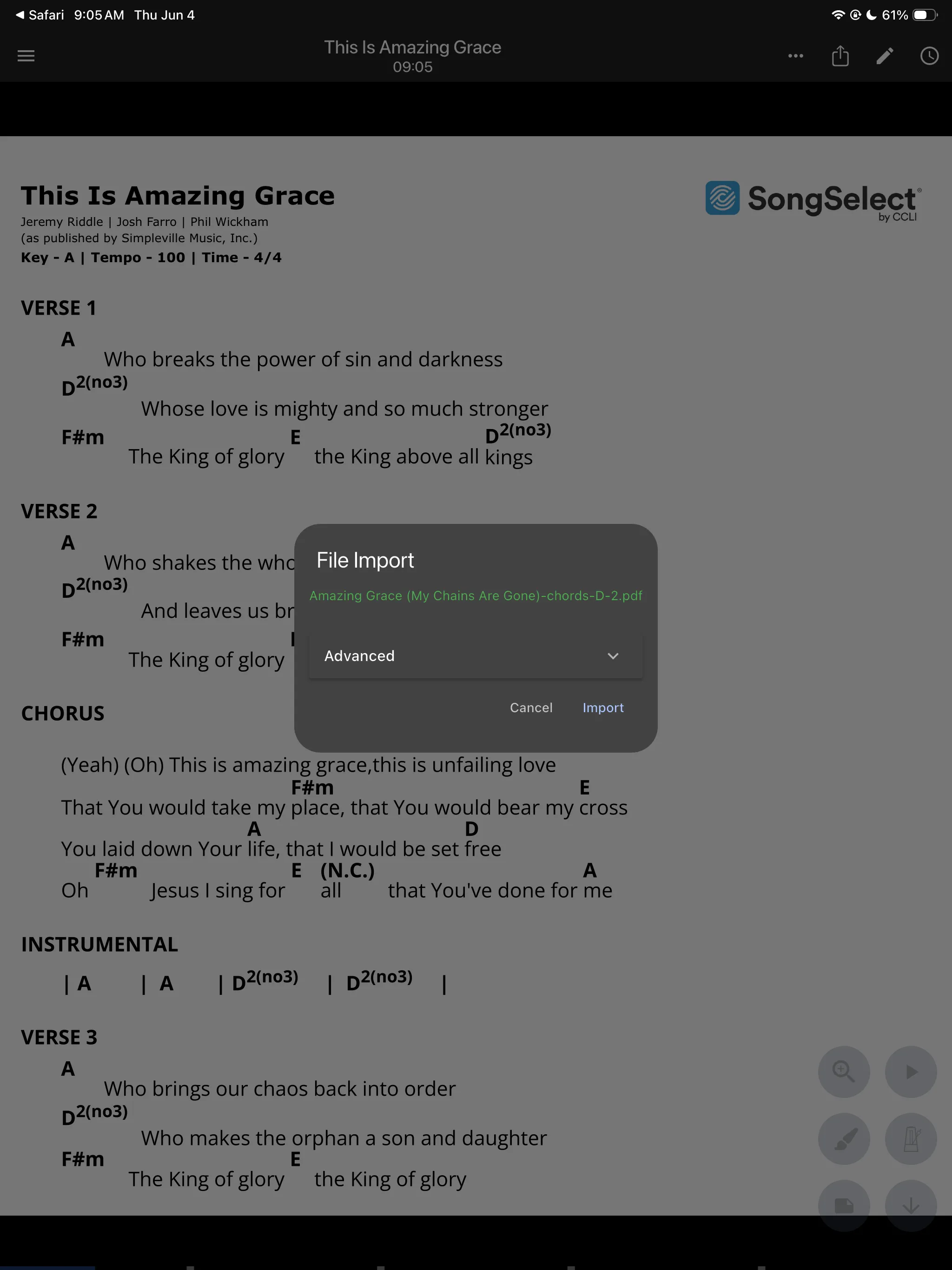
SongBook Pro is a one-time purchase iPad app that connects directly to CCLI’s SongSelect. I can search for any song and import the chord chart directly — no downloading, no file management, no intermediate storage.
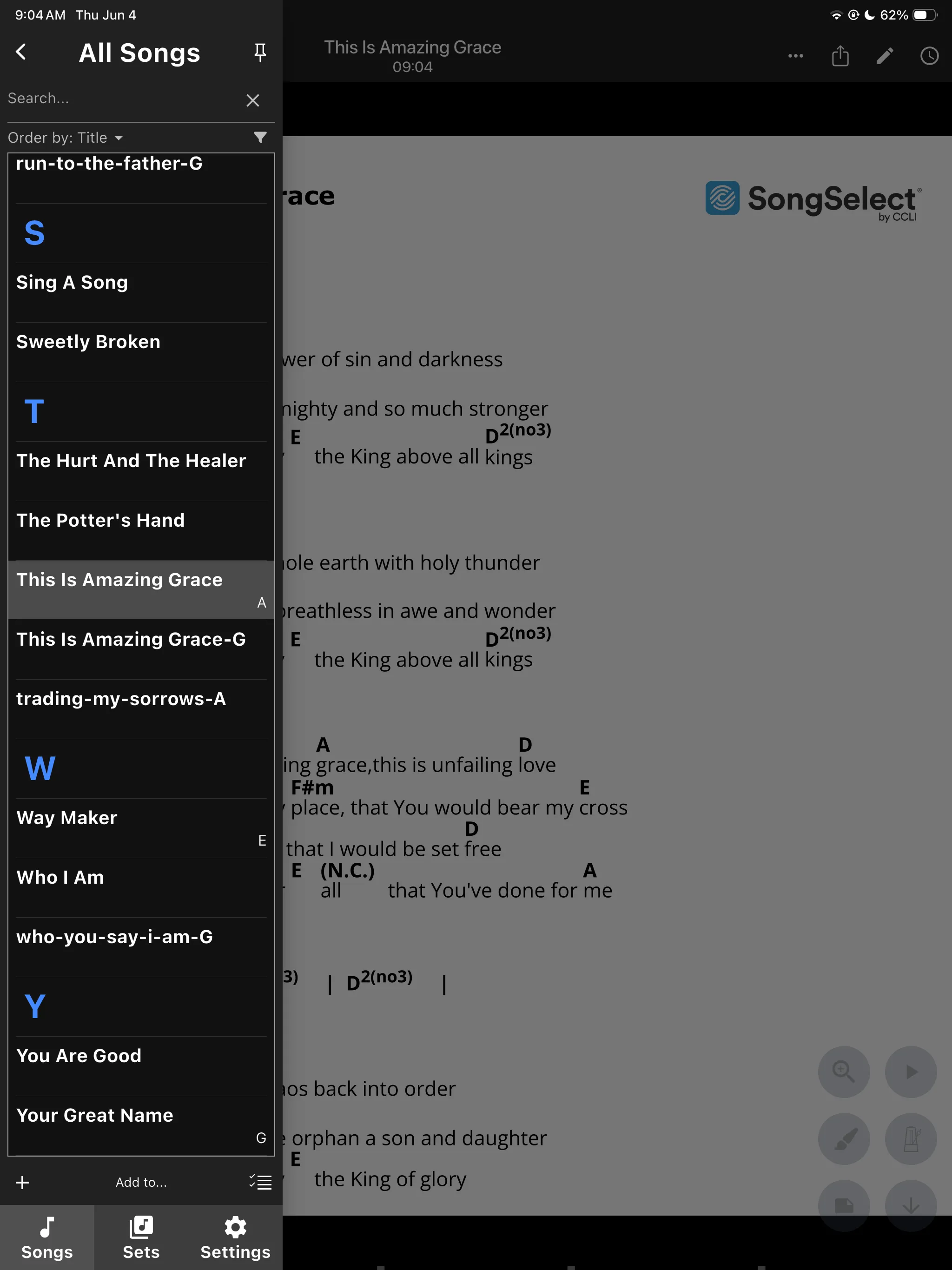
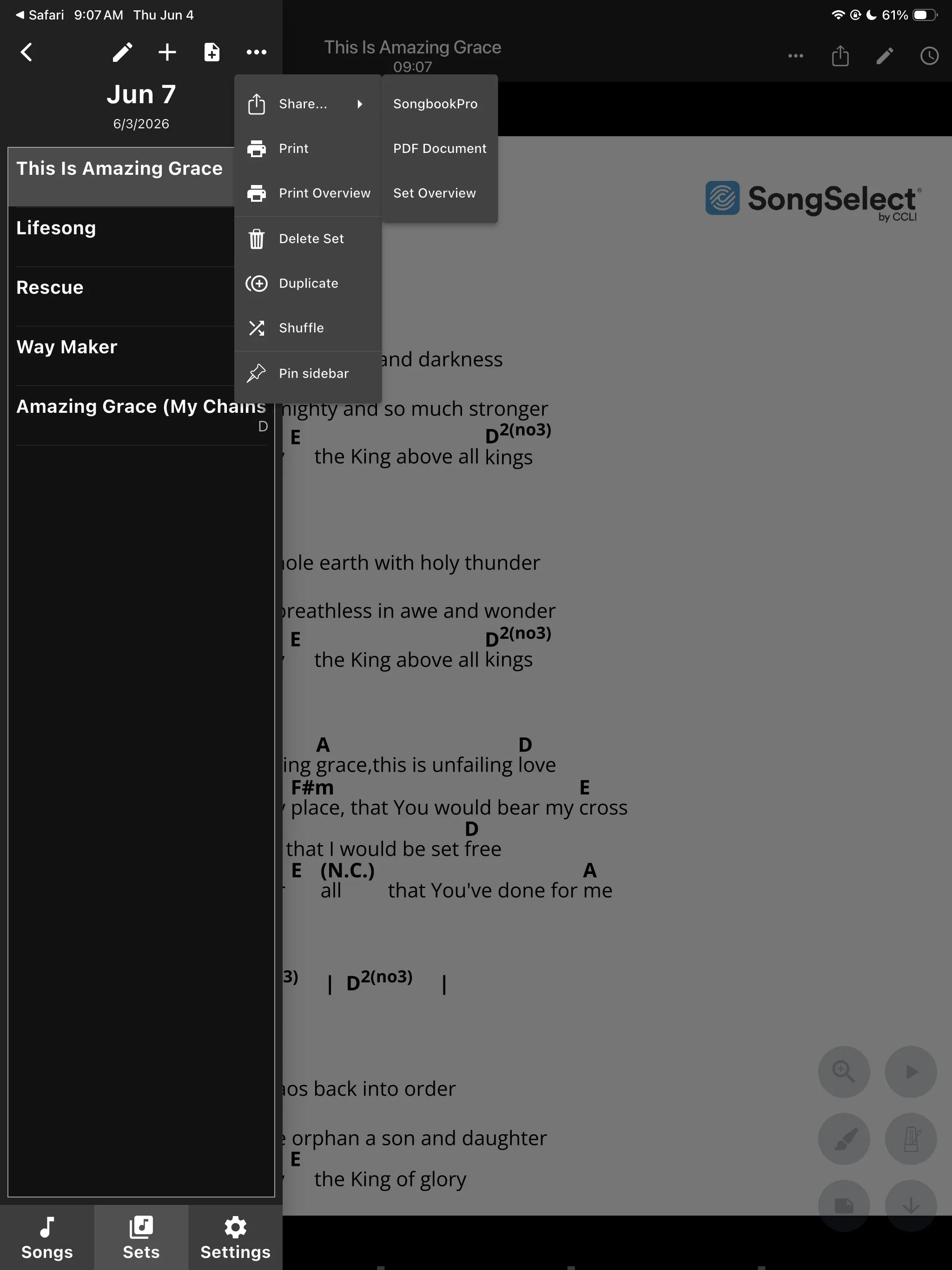
Once the songs are imported, I build the setlist inside the app — just select the songs in order.
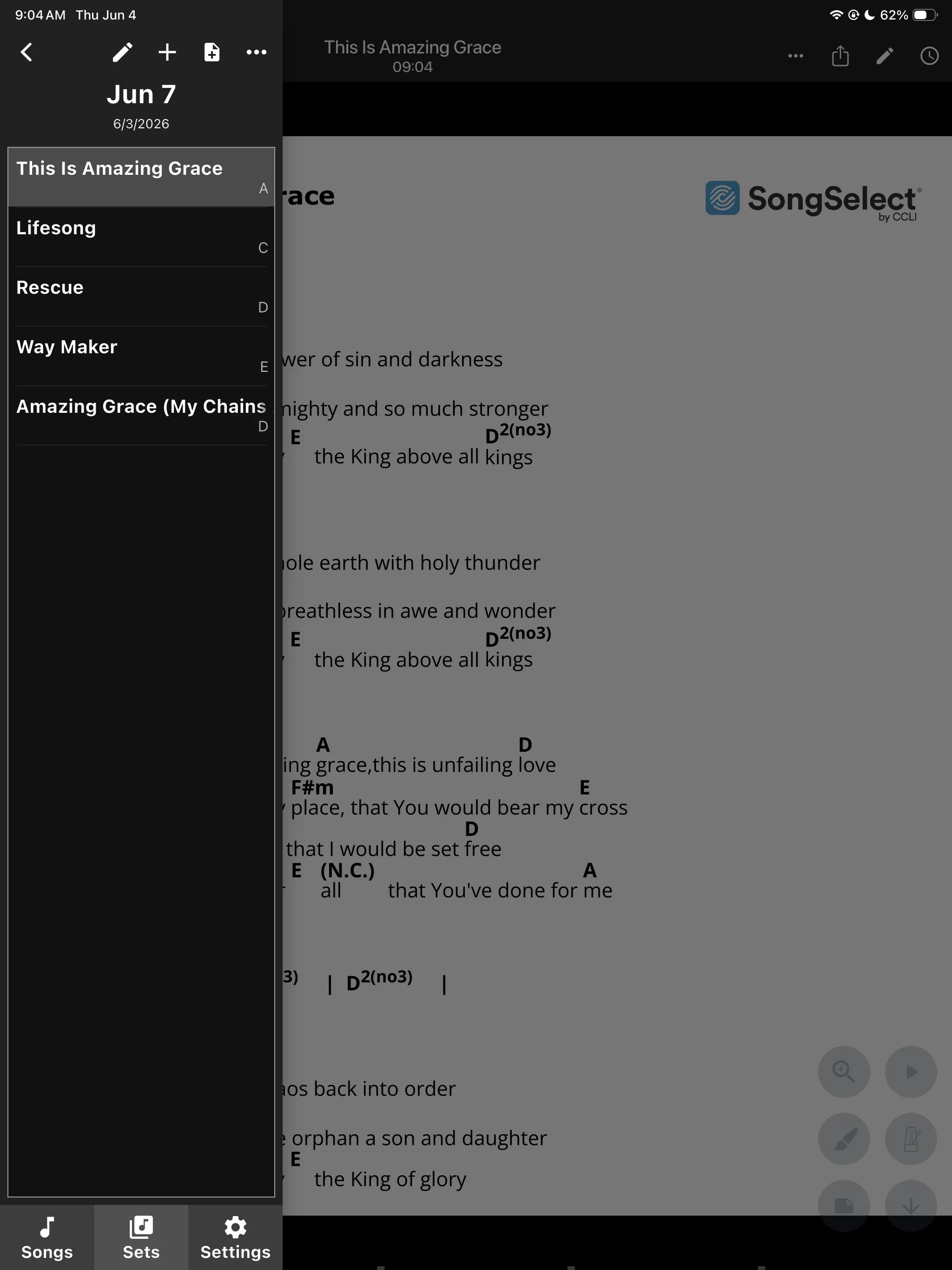
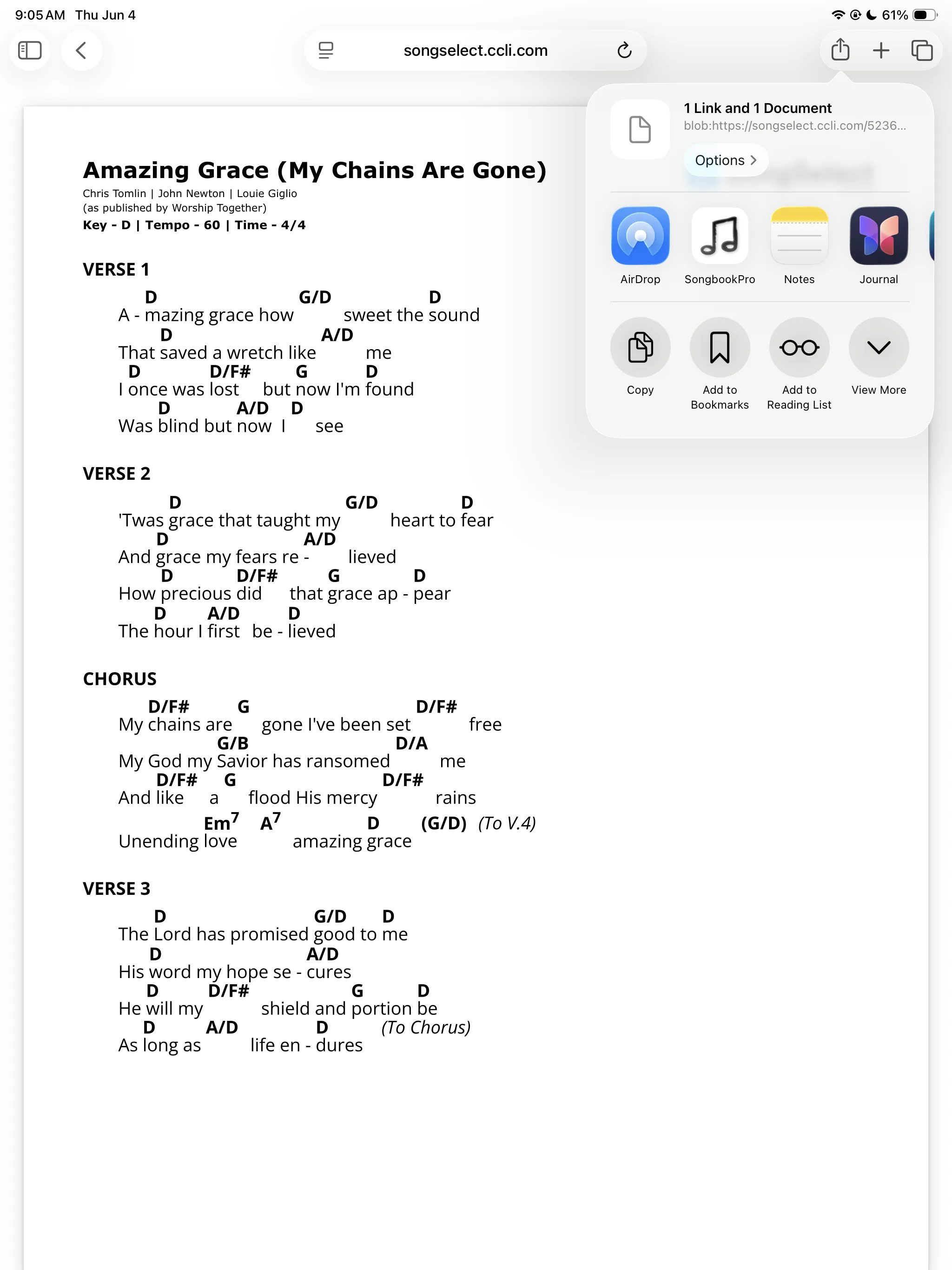
When the setlist is ready, I export it as a PDF. One important tip here: export from the setlist using the three-dot menu on the left side of the setlist view — not from within an individual song. If you export from inside the setlist, you’ll only get the first page of the PDF. Export from the setlist itself to get the complete document.
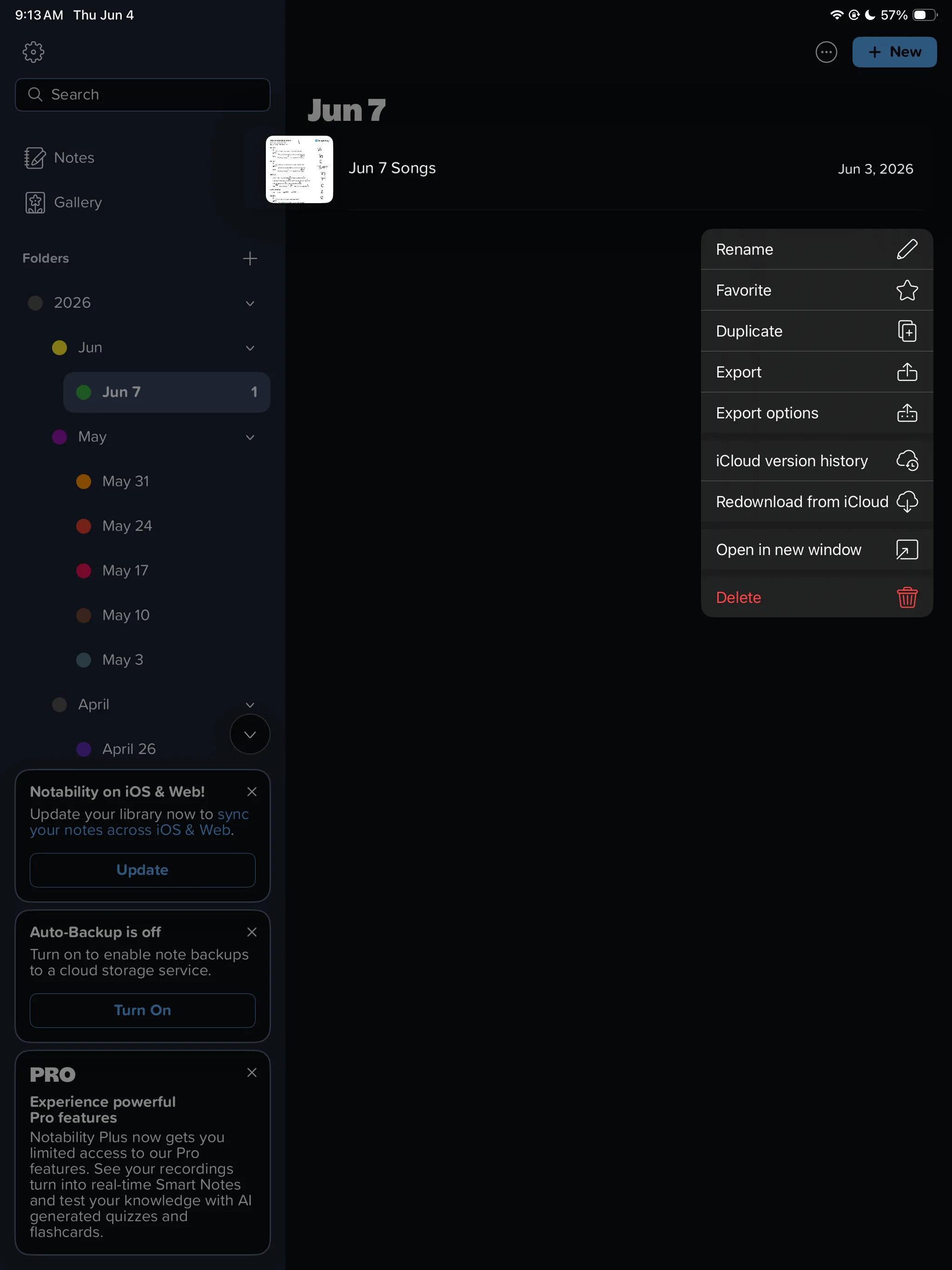
The PDF goes directly to Notability, where I add my arrangement notes beside each song — key information for the band and sound team.
From Notability, I export the final PDF to my laptop. I do this step on the laptop because Gmail on iPad has a frustrating limitation — it won’t let you select a contact group you’ve set up. That’s a Google problem, not mine. The laptop handles it easily.
The Wednesday Email
By Wednesday morning, the email goes out to the full team — band members, vocalists, and sound team. It contains:
- The scripture and theme for the week
- The songs in order with arrangement notes
- The YouTube link for each song
- The annotated PDF attached
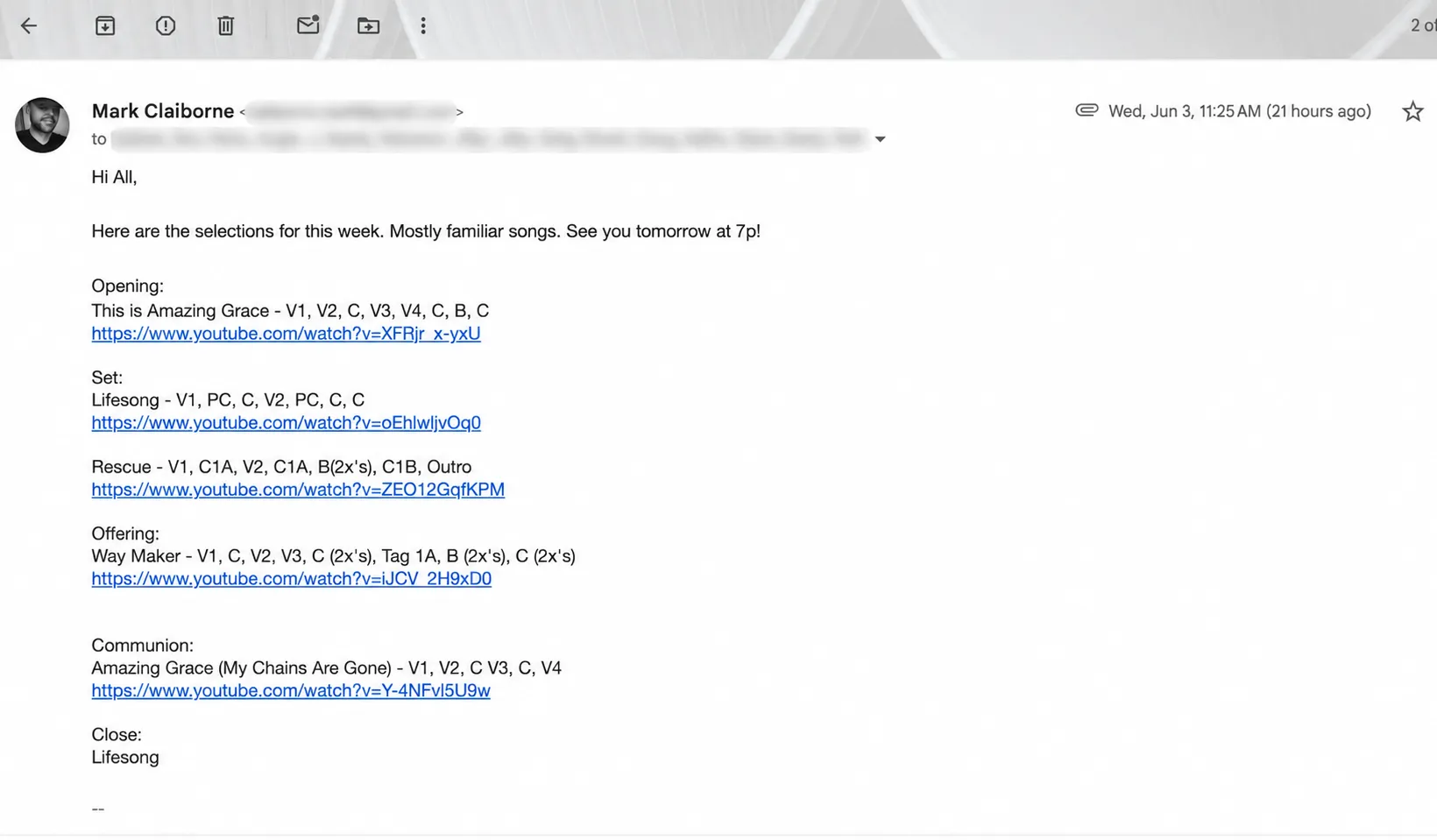
Wednesday gives everyone time to listen to the songs before Thursday. That matters. A musician who has heard the song twice before rehearsal plays it differently than one who’s sight-reading it for the first time Thursday evening.

Thursday Rehearsal and Sunday Morning
Thursday evening the group meets to run through the songs — sounds, arrangements, transitions. We’re not learning anything at this point. We’re confirming it. The setlist was finalized Tuesday, distributed Wednesday. Thursday is execution.
Sunday morning, one hour before service: a final run-through. By this point, everyone knows the songs. This run-through is about the room, the monitors, the sound — not the music.
And then we lead.

A Few Principles Worth Keeping
Let the scripture lead. Every song on this list is there because 1 John 1-2:2 pointed to it — not because it was trending or because the congregation requested it. The text drives the set. As Founders.org notes, songs are a primary vehicle for teaching theological truth and should be evaluated line-by-line for doctrinal soundness before being introduced to Sunday worship (Founders.org).
Serve the congregation’s range. Not every song that fits the theme fits your congregation. Know what they can sing and stay in that lane, especially for high-engagement songs early in the set.
Plan for transitions. An abrupt key change or an awkward silence between songs breaks the flow. Map out the keys in advance. A capo strategy or a brief instrumental transition can make the transitions feel natural and connected.
One repeat, intentional. Closing with a song the congregation already knows from earlier in the service creates a sense of completeness. They leave with something familiar in their mouths.
For more on choosing which songs earn a permanent place in your rotation, see my full CCLI worship song library — 200+ songs I actually use. And for the CCLI tools that make this whole workflow possible, my full CCLI worship song library covers the licensing foundation underneath everything here.
Frequently Asked Questions
How many songs should a worship setlist have?
For a standard Sunday service, 4-5 songs is the most widely practiced range — enough to build a journey without rushing or stretching the congregation. Three songs works for tighter timeframes; six or more fits communion Sundays, worship nights, or longer services. The Gospel Coalition emphasizes that every song functions as congregational teaching, so each slot should be intentional (The Gospel Coalition).
How do you match worship songs to the sermon?
Start with the sermon scripture and identify 2-3 keywords or themes. Then ask which songs in your library speak directly to those themes — not just loosely, but specifically. The best setlists feel like the songs and the sermon were written for each other, because they were chosen for the same source material.
What tools do you use to build a worship setlist?
I use Apple Notes for the template and team email, CCLI SongSelect for chord charts, SongBook Pro to organize and export the setlist as a PDF, and Notability to add arrangement notes before sending to the team. Previously I used Planning Center, which is excellent — our church moved to a different integrated system, but Planning Center remains a strong option for churches that want an all-in-one solution.
When should you finalize the setlist?
By Tuesday evening. The team gets it Wednesday morning. Thursday is rehearsal. Sunday morning is confirmation, not learning. That rhythm — finalize Tuesday, distribute Wednesday, rehearse Thursday — gives everyone enough time to prepare without the setlist being so far in advance that it loses urgency.
Is it okay to repeat a song in the same service?
Yes — intentionally. Closing with an “anthem repeat” of a song from earlier in the service is one of the most effective tools in worship planning. The last song is what the congregation carries out the door. Choosing one they already sang once that day means they leave with it.
A Prayer Over Your Setlist This Week
Father, bless every worship leader who sits down this week to build a setlist. Guide their scripture reading, sharpen their ear for what the congregation needs, and lead them to the songs that will carry the room. Let the worship setlist they build be more than a song order — let it be a prayer in advance for every person who will sing it on Sunday. Amen.
Be Blessed,
Mark Claiborne
Find this helpful?
Writing takes time. If Worship Frontier has been useful to you, buying me a coffee means a lot — and keeps this going.
Join the Conversation
Comments are moderated — approved ones are posted periodically.
Thanks for your comment — it's in the queue for review.