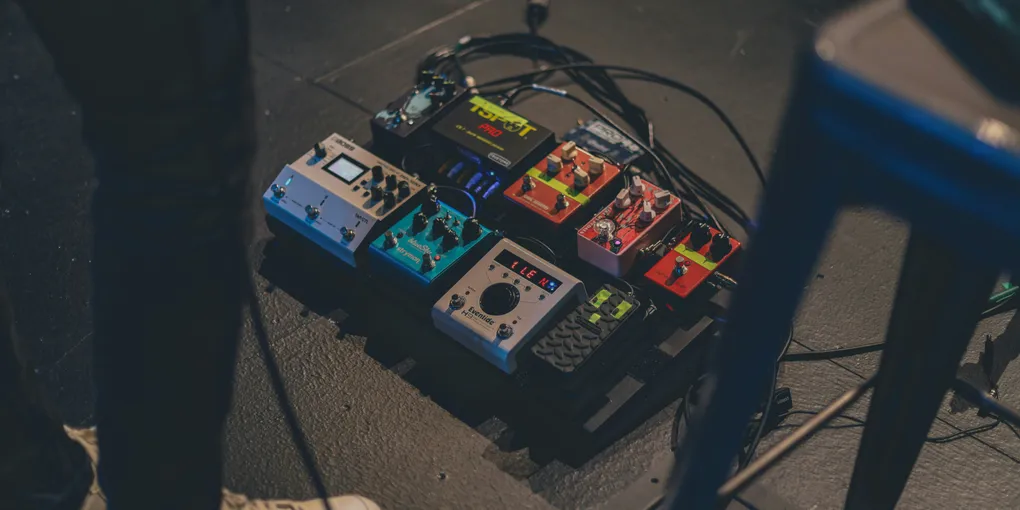
Best Delay Pedals for Worship Guitar: 9 Top Picks
Table of Contents
If delay is the one effect that separates a worship guitar tone from a plain guitar tone, then choosing the right delay pedal is one of the most important decisions you’ll make for your board. The wrong one muddies your mix, fights your band, and distracts your congregation. The right one disappears into the music and makes everything feel three times bigger than it is.
I’ve been playing worship guitar for over a decade — through church sanctuaries, outdoor stages, and intimate chapel settings. I’ve spent more time than I’d like to admit chasing that ambient shimmer that makes a verse section feel like it’s floating.
These are the 9 delay pedals I’d actually put money on — and in most cases, already have.
Key Takeaways
- In every pedalboard breakdown I’ve studied and every clinic I’ve attended, delay shows up on more worship guitar rigs than any other effect — more than overdrive, reverb, or compression.
- Tap tempo and trails are non-negotiable for live worship — a delay that cuts abruptly when bypassed will ruin a quiet moment.
- The Strymon Timeline packs 12 delay engines into one pedal and has been the go-to benchmark for professional worship guitarists for over a decade.
- For players on a budget, the Boss DD-3T and MXR Carbon Copy deliver dependable, musical delay for well under $150.
- The El Capistan is on my personal pedalboard right now — it’s been there for years, and it’s earned every inch of space.
Top Picks
- Best overall: Strymon Timeline shop at zZounds →
- On my personal board: Strymon El Capistan shop at zZounds →
- Best vintage warmth: Strymon Deco shop at zZounds →
- Best value: JHS Delay shop at zZounds →
- Best analog: MXR Carbon Copy shop at zZounds →
- Best budget workhorse: Boss DD-3T shop at zZounds →
A Word About Strymon (Yes, I Know)
I’ll say it upfront: there are a lot of Strymon pedals on this list. I know. It’s a little cliché in the worship guitar world, and mentioning Strymon five times in one article makes me sound like a sponsored athlete. I’m not. I just think they make genuinely great delay pedals, and pretending otherwise to seem less predictable would be doing you a disservice.
Strymon dominates worship guitar conversations for a reason — their algorithms are excellent, their build quality is premium, and their approach to sound design lines up almost perfectly with what worship music needs. So yes, they lead the list. But there are non-Strymon picks here too, and some of them punch well above their price point.
Let’s get into it.
The 9 Best Delay Pedals for Worship Guitar
1. Strymon Timeline — The Benchmark
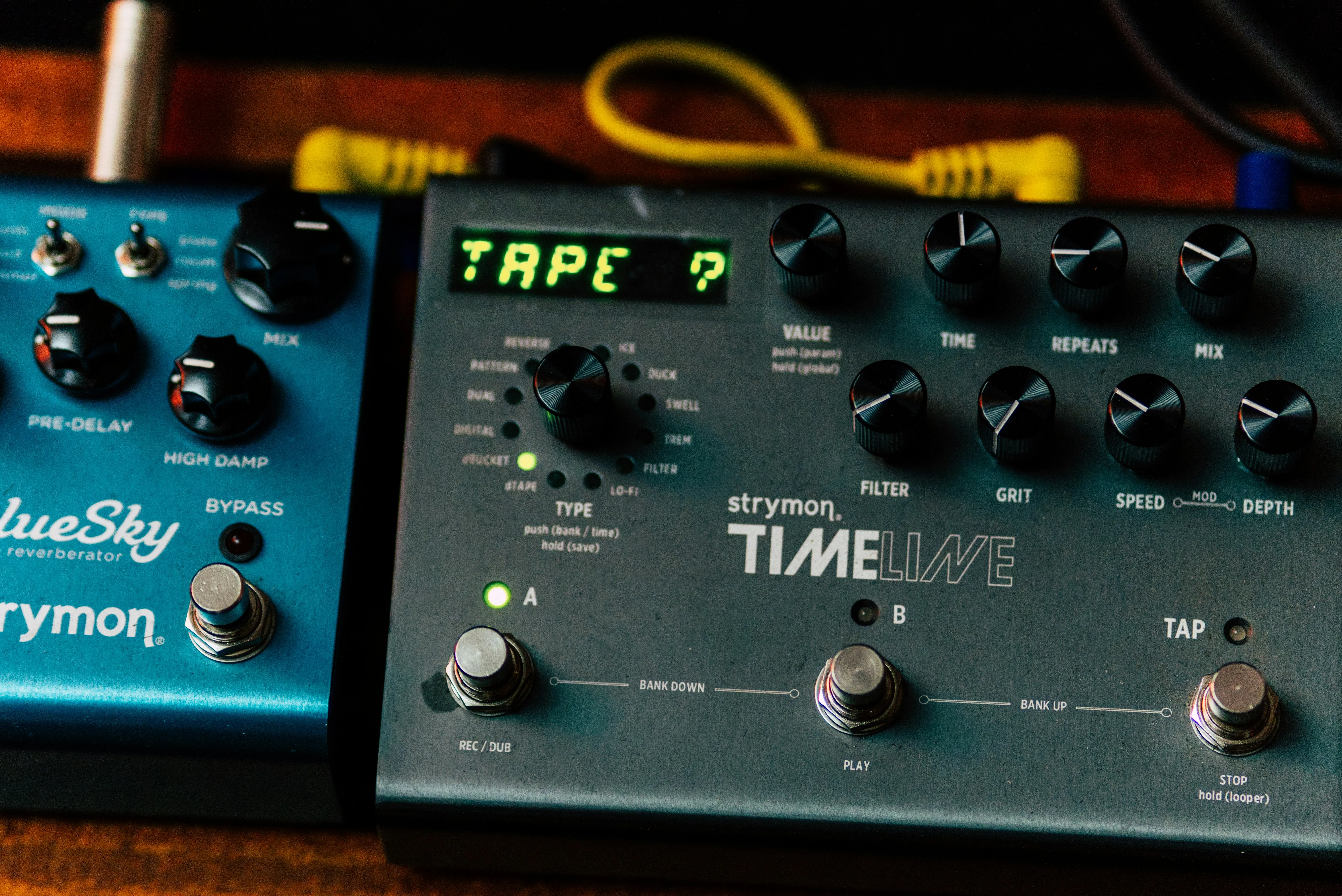
The Strymon Timeline (affiliate link) is the standard by which most worship guitarists measure every other delay pedal. It packs 12 delay types into one box — tape, bucket brigade, digital, lo-fi, reverse, ice, filter, and more — with two presets per bank, MIDI control, and stereo I/O. It’s the pedal you buy when you want to stop thinking about delay and just play.
What makes the Timeline exceptional for worship specifically is how musical the tail sounds when you push into ambient territory. The Tape and Binson modes have a warmth that’s hard to find anywhere else at this price range. The Ice mode — a pitch-shifted shimmer delay — has appeared on more worship records than its creators probably expected.
If you only have room for one delay and the budget stretches, the Timeline is the answer. It does everything, and it does it well.
Our Verdict
The benchmark for worship delay — 12 delay engines, stereo I/O, and preset recall in one pedal. If you want to stop thinking about delay and just play, this is the answer.
Shop at zZounds →Best for: Players who want one pedal to handle every delay sound they'll ever need
✓ Pros
- 12 delay types — tape, digital, lo-fi, ice, filter, and more
- Two presets per bank for instant recall mid-set
- Stereo I/O — essential for two-amp or IEM setups
- MIDI control for full automation
- Tape and Binson modes have warmth that's hard to find elsewhere
✗ Cons
- Premium pricing — the most expensive pick on this list
- 12 engines can be overwhelming if you only need one great delay sound
- Larger pedalboard footprint than many worship guitarists have available
2. Strymon El Capistan — On My Actual Board
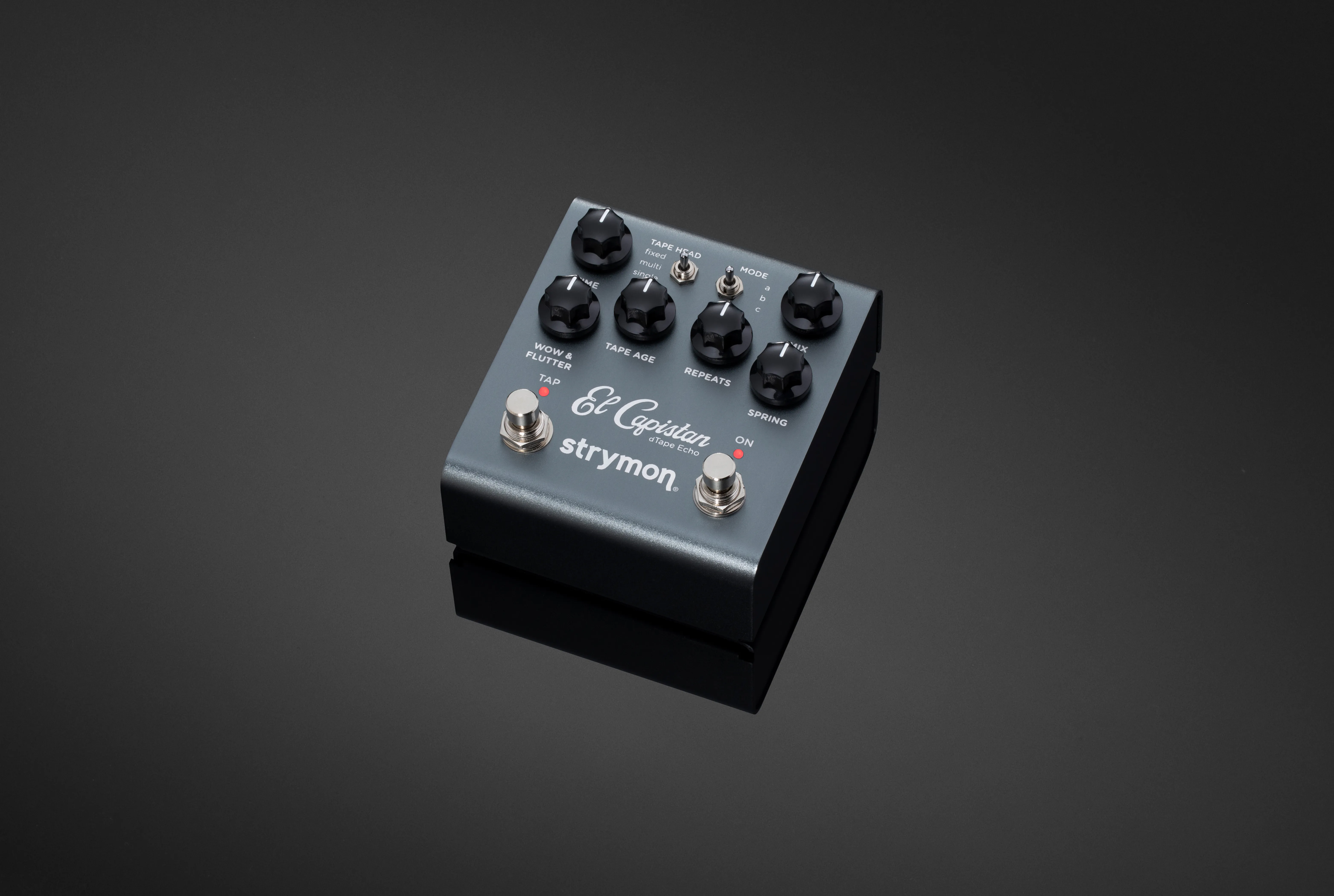
I want to be specific: the Strymon El Capistan (affiliate link) is currently on my pedalboard. It has been there for a long time. It’s not going anywhere.
If I had to sum it up in one word, it would be smooth. The tape echo on this pedal is rich, warm, and musical in a way that just works — and the controls are straightforward enough that you’re never hunting for a sound when the service starts. You dial it in, you know where everything is, and then you play. That combination of great tone and ease of use is rarer than you’d think at this price point.
The El Capistan is modeled after vintage machines like the Echoplex and Space Echo, with controls for wow and flutter, tape age, and feedback. What it does better than almost anything else is add a living, breathing quality to your delay that digital pedals rarely achieve.
In a worship context, it’s the one I reach for during devotional moments, slow builds, and communion songs. The tape echo has a warmth that feels human rather than processed. When I’m playing softly behind a vocal, this pedal makes the guitar feel like it belongs in the room.
It’s not the most versatile delay on this list. It does tape echo, and it does it beautifully. For me, that’s enough.
Best for: Ambient worship tones, devotional settings, and anyone who wants that vintage tape echo character.
→ Check price on Amazon (affiliate link)
3. Strymon Deco — The Classic You Didn’t Know You Needed
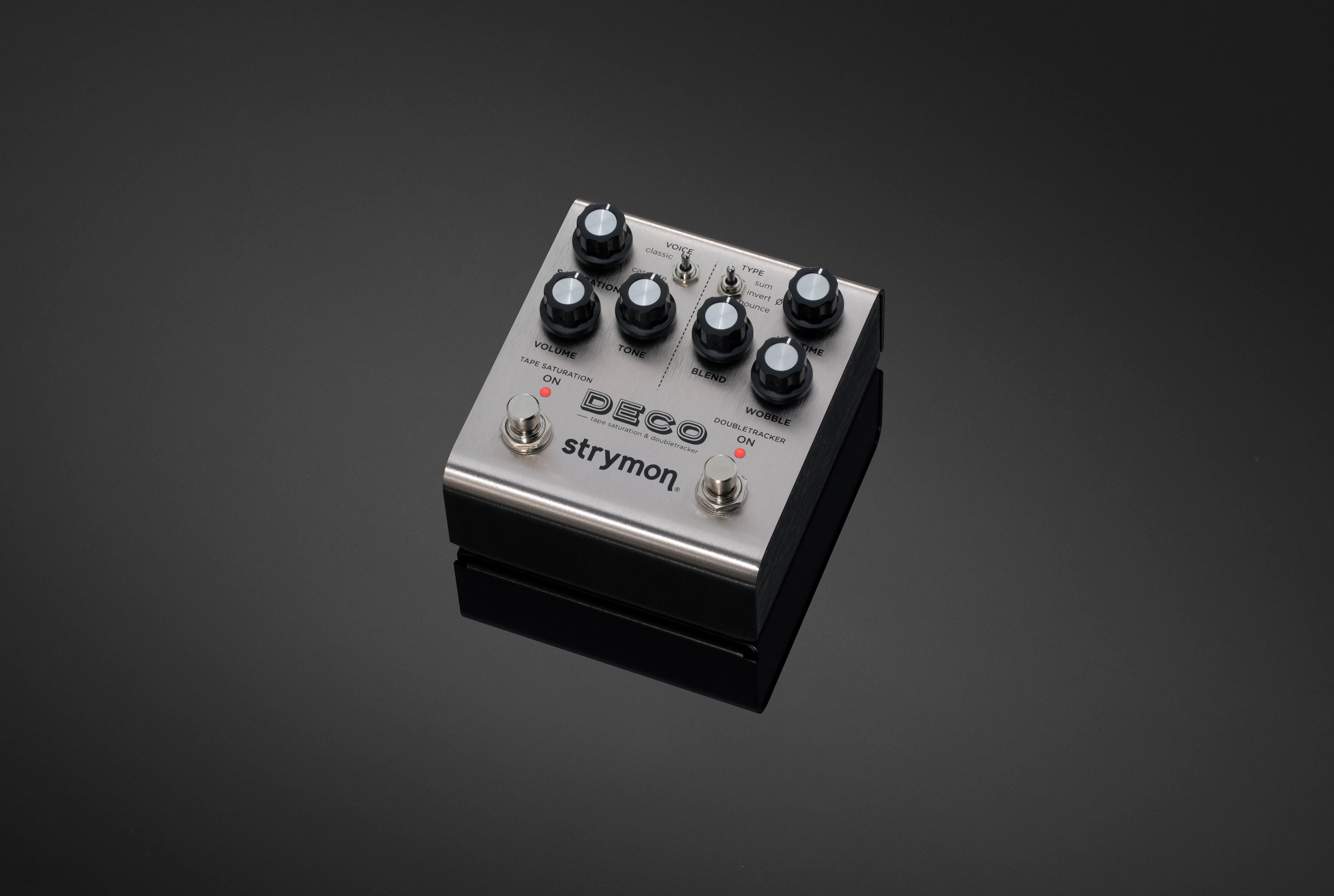
The Strymon Deco (affiliate link) is technically a tape saturation and doubletracker — but its slapback echo mode is one of the most musical, natural-sounding short delays I’ve heard on any pedal. It’s the classic sound: warm, saturated, slightly compressed, with just enough thickness to make your guitar feel like it was recorded in a real room.
I’ll be straight with you: I’m a sucker for tape echo and saturation pedals, and the Deco scratches that itch in a way that’s hard to explain until you play through one. It’s my close second behind the El Capistan — and if I’m being honest, the two of them cover almost everything I need in that tape-and-warmth space. This is the pedal that made me realize I don’t always need a long ambient delay. Sometimes what a song needs is the sound of a Nashville studio in 1968 — two notes together, sitting in each other’s warmth.
If your worship style leans toward roots, acoustic-influenced, or quieter devotional sounds, the Deco belongs on your board.
Best for: Slapback, saturation, and short echo — essential for players who want vintage warmth without going full ambient.
→ Check price on Amazon (affiliate link)
4. Strymon DIG — Dual Digital Delay Done Right
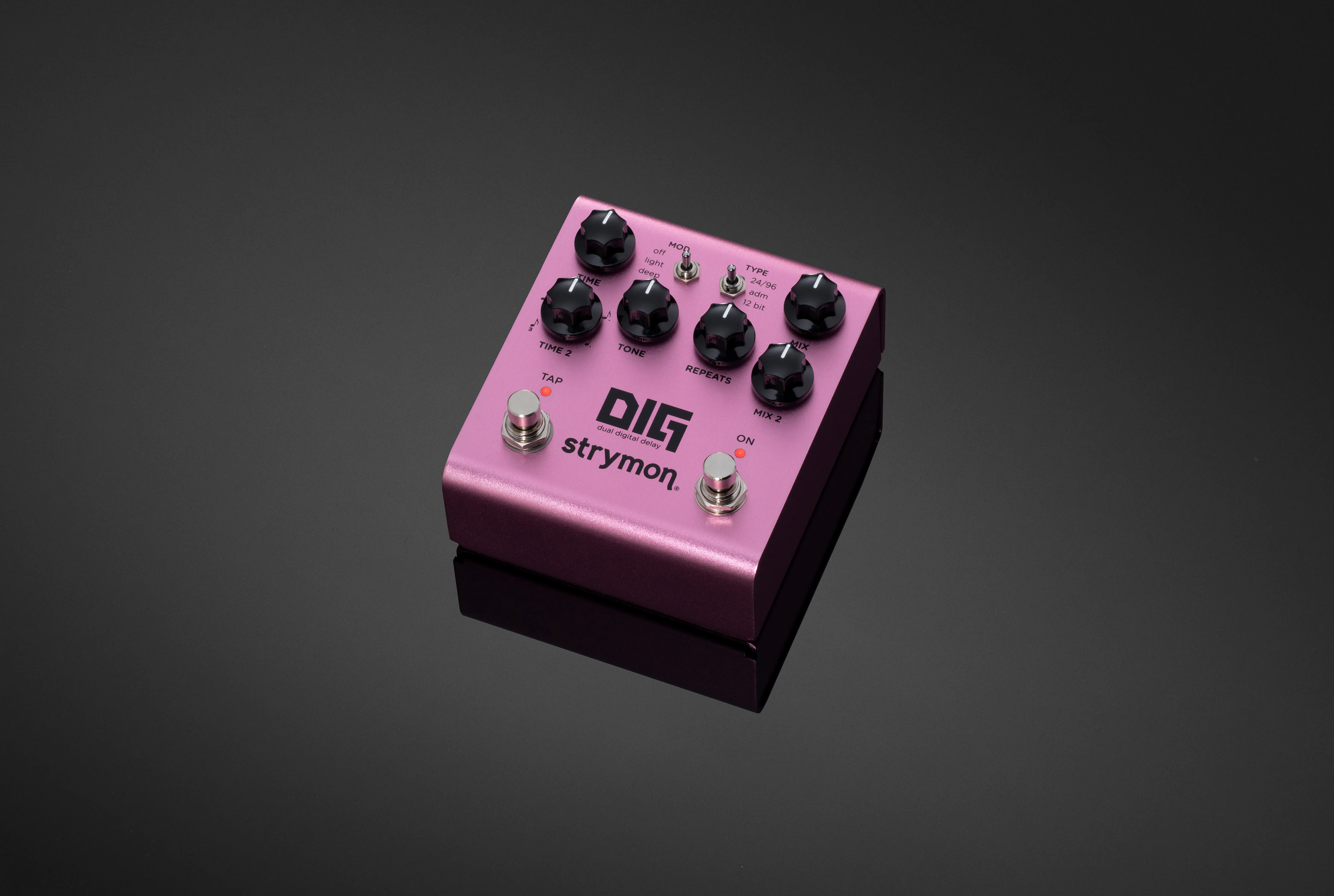
The Strymon DIG (affiliate link) focuses on vintage digital delay sounds from the 1970s and 80s — the era when digital delay was new, expensive, and slightly glitchy in all the right ways. It runs two independent delays simultaneously, routable in parallel or series, giving you layered rhythmic textures that feel full without becoming cluttered.
In worship, the DIG earns its place in higher-tempo songs where you want rhythmic delay that syncs to a groove without overwhelming the mix. The vintage digital character is brighter and crisper than tape emulations — it’s the difference between a warm watercolor and a clean ink line. Both are useful. It depends on the song.
Best for: Rhythmic delay, vintage digital character, and players who run two delays simultaneously.
→ Check price on Amazon (affiliate link)
5. Strymon Volante — The Magnetic Echo Machine
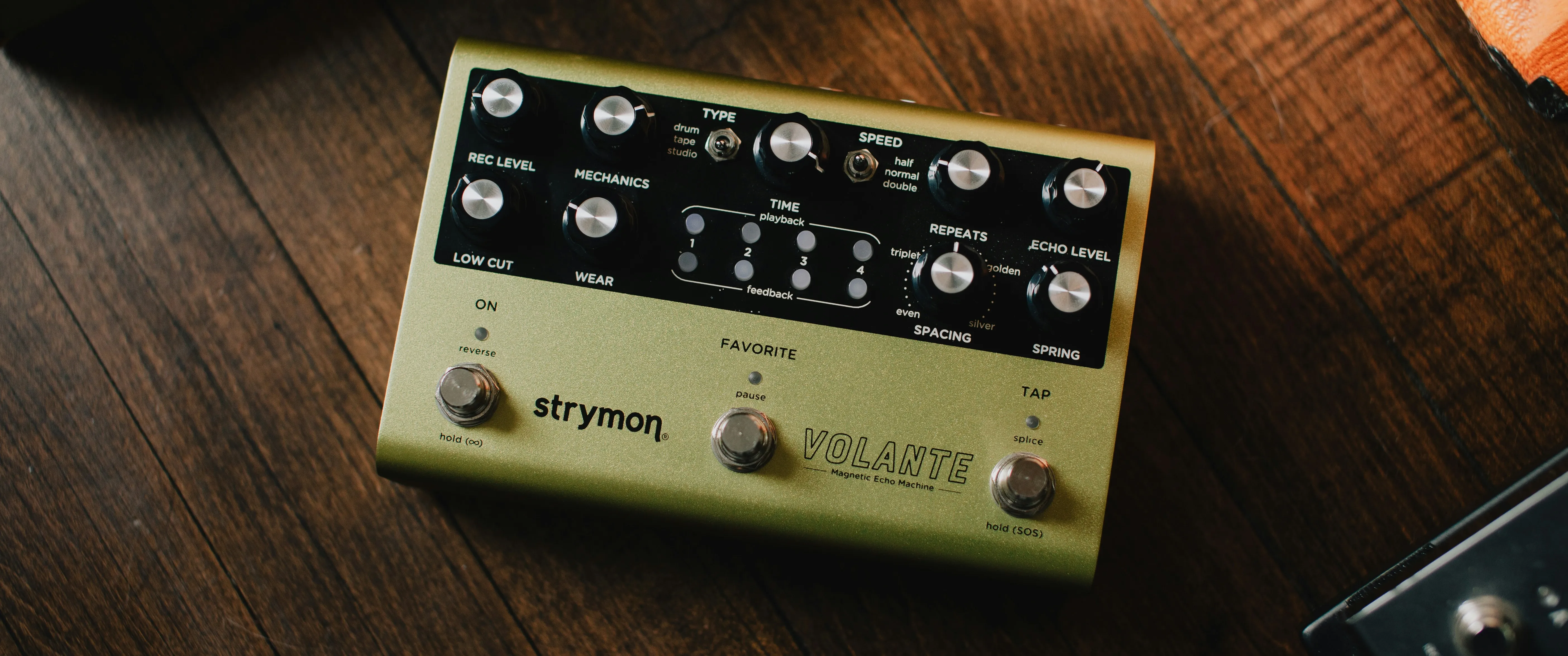
The Strymon Volante (affiliate link) models three types of magnetic echo: drum echo, studio tape, and multi-head. It’s luxurious in scope — four playback heads, independent repeat controls, spring reverb, and an onboard mix control that lets you blend the effect without a volume dip.
Here’s my honest take: the Volante lives in the same tape and magnetic echo world that I love, and the sounds it makes are genuinely beautiful. But compared to the El Capistan, it is not easy to operate. There are more controls, more modes, more decisions to make — and on a Sunday morning when you need to be locked in and present, complexity can work against you. The El Capistan wins for me precisely because it’s smooth and simple. The Volante rewards players who have the time to really learn it.
That said, if you want multi-head echo textures that no other pedal on this list can produce, the Volante is the only path there. Just go in knowing it has a real learning curve.
Best for: Players who want the full magnetic echo machine experience — multiple heads, deep customization, and studio-grade echo textures.
→ Check price on Amazon (affiliate link)

6. JHS Delay — Best Value on This List
The JHS Delay (affiliate link) is the first pick I share with budget-conscious worship guitarists. JHS has built a reputation for pedals that sound significantly better than their price suggests, and their delay is no exception. The tone is musical, the controls are intuitive, and the tap tempo works reliably on a live stage — which is more than can be said for some pedals costing twice as much.
For a worship guitarist building a first real pedalboard, or anyone who needs a dependable backup delay that won’t embarrass them in front of the congregation, the JHS Delay is an honest, no-gimmick pick. It won’t do everything the Timeline does. But it’ll do everything you need on a Sunday morning, and it’ll do it without drama.
Best for: Players building their first board, gigging musicians who need a reliable backup, and anyone who wants great tone without premium pricing.
→ Check price on Amazon (affiliate link)
7. MXR Carbon Copy — The Analog Classic
The MXR Carbon Copy (affiliate link) is one of the most beloved analog delays ever made. It uses a bucket brigade circuit that produces a warm, slightly degraded repeat — the kind that sits behind your dry signal rather than competing with it. Turn on the modulation switch and you get a subtle chorus warble that adds life to extended notes.
In a worship context, the Carbon Copy excels in simple, transparent delay roles: single repeats under a lead line, ambient swells when you roll your volume down, subtle thickening on a clean chord section. It’s not trying to be everything. It knows what it is. And what it is sounds really good.
Best for: Analog warmth seekers, players who want simple controls, and anyone who wants the warmth of tape delay without spending Strymon money.
→ Check price on Amazon (affiliate link)
8. Boss DM-2W Waza Craft — Analog Prestige
The Boss DM-2W (affiliate link) is a reissue of the original DM-2 analog delay from the 1980s, hand-assembled in Japan under Boss’s premium Waza Craft line. The original DM-2 is a cult classic — bucket brigade, warm, slightly dark, with a character players have chased for decades. The Waza version adds a Custom mode with extended delay time, making it far more practical for live worship than the original.
This pedal occupies a specific niche: analog delay with a pedigree. If you want to run an analog signal path all the way through your rig and you care about the history behind the circuit, the DM-2W delivers.
Best for: Players who want premium analog delay with extended range and aren’t afraid to pay for Japanese craftsmanship.
→ Check price on Amazon (affiliate link)
9. Boss DD-3T — For the Classic Purists
The Boss DD-3T (affiliate link) is for players who remember when a Boss digital delay was the good option, not just the affordable one. The DD-3T is the tap-tempo version of the classic DD-3 — arguably one of the most gigged delay pedals in history — and it delivers clean, reliable digital delay without fuss.
No deep menus. No soft-touch switches. Just Delay Time, Effect Level, Feedback, and a Mode knob. Plug it in, dial it in, and it works. Every time. In any venue. In any temperature. That reliability is worth something on a Sunday morning when you don’t have time to troubleshoot.
Best for: Players who want clean, reliable digital delay without complexity — the workhorse of the list.
→ Check price on Amazon (affiliate link)
How They Stack Up: Full Comparison
| Pedal | Type | Tap Tempo | Stereo | Presets |
|---|---|---|---|---|
| Strymon Timeline | Multi-engine | ✓ | ✓ | ✓ |
| Strymon El Capistan | Tape echo | ✓ | ✓ | ✓ |
| Strymon Deco | Tape saturation / slapback | — | — | — |
| Strymon DIG | Dual digital | ✓ | ✓ | — |
| Strymon Volante | Magnetic echo | ✓ | ✓ | ✓ |
| JHS Delay | Digital | ✓ | — | — |
| MXR Carbon Copy | Analog (BBD) | — | — | — |
| Boss DM-2W Waza Craft | Analog (BBD) | — | — | — |
| Boss DD-3T | Digital | ✓ | ✓ | — |
The Deco is a tape saturation and doubletracker first — tap tempo and presets aren’t part of its design.
What to Look for in a Worship Delay Pedal
The four features that matter most for live worship delay are tap tempo, trails, stereo output, and presets. Here is what each one does for you on a Sunday morning:
Tap tempo. If a pedal doesn’t have tap tempo, syncing to a worship team that changes tempos between songs is harder than it needs to be. Not every song requires it — but when you need it, you really need it.
Trails. When you bypass a delay, trails mode lets the repeats fade out naturally instead of cutting abruptly. Without this, bypassing mid-song in a quiet moment sounds like someone pulled the plug. Most of the pedals on this list have it.
Stereo output. If your setup runs into two amps or a stereo IEM system, stereo delay opens up a completely different dimension. Worth checking before you buy.
Presets. For a worship guitarist moving between sets, presets mean your ambient tone for the slow song and your rhythmic delay for the opener are already dialed in. Tap and go.
True bypass vs. buffered bypass. Both work. Buffered bypass is generally better for long signal chains — it preserves tone at the end of a long cable run. Most Strymon pedals are buffered; most Boss pedals are switchable. Sweetwater has a solid breakdown of the difference if you want to go deeper.
If you’re still early in building your sound, my post on gear and the heart of worship is worth a read before you spend another dollar on effects. And if you’re mapping out a full board rather than just a delay slot, the 5 pedals every worship guitarist needs walks through how delay fits alongside drive, compression, modulation, and reverb.
Frequently Asked Questions
What delay pedal do most worship guitarists use?
The Strymon Timeline is the most commonly cited delay pedal among professional worship guitarists, appearing on rigs from Bethel Music, Elevation Worship, and Hillsong. The MXR Carbon Copy and Boss DD-3T are the most common choices for church musicians on a budget. The JHS Delay has gained significant traction as a strong mid-range alternative.
Do I need both reverb and delay, or just one?
Most worship guitarists run both — they do different things. Delay creates rhythmic or ambient echoes of your note. Reverb puts your guitar in a space. Together they create the atmospheric texture associated with modern worship guitar. If you can only have one, delay is the more versatile choice.
Is analog or digital delay better for worship guitar?
Neither is universally better — they serve different sounds. Analog delay (Carbon Copy, DM-2W) produces warm, slightly dark repeats that blend naturally into a mix. Digital delay (DD-3T, Timeline) gives precise, clear repeats with longer available delay times. Most worship guitarists use digital for its flexibility, and reach for analog for warmth in devotional moments.
What’s the difference between the Strymon Timeline and El Capistan?
The Timeline is a multi-engine delay covering 12 delay types. The El Capistan does one thing — tape echo emulation — with deep control over that specific sound. If you want versatility, Timeline. If you want the best tape echo on the market, El Capistan. Many worship guitarists own both.
How do I keep delay from muddying a worship mix?
Set your feedback lower than you think you need — one or two clean repeats sit in a mix better than cascading trails. Keep your dry signal dominant. For busy full-band arrangements, reduce your delay level or shorten the delay time. Less is almost always more in a full worship context.
A Final Word
Every pedal on this list earned its recommendation through real use — by me or by worship guitarists I trust. None of them are here because they looked good in a catalog.
If you’re building a board from scratch, start with the Boss DD-3T or the JHS Delay and learn what delay actually does in a live worship mix before spending premium money. If you already know what you need and you’re ready to invest, the Strymon Timeline answers most questions.
And if someone ever asks why your board has so many Strymon pedals — just tell them what I told you. They’re really good.
For more on the heart behind the rig, read Gear and the Heart of Worship — because the best delay pedal in the world only matters if you’re using it for the right reasons.
A Prayer for the Worship Guitarist
Lord, bless every worship guitarist who serves with their instrument every Sunday. Let their tone serve the room, not distract from it. Let the tools they choose — every delay pedal, every setting — point people toward You rather than toward the player. And let the music they make be an act of genuine worship first. Amen.
Be Blessed,
Mark Claiborne
Find this helpful?
Writing takes time. If Worship Frontier has been useful to you, buying me a coffee means a lot — and keeps this going.
Join the Conversation
Comments are moderated — approved ones are posted periodically.
Thanks for your comment — it's in the queue for review.