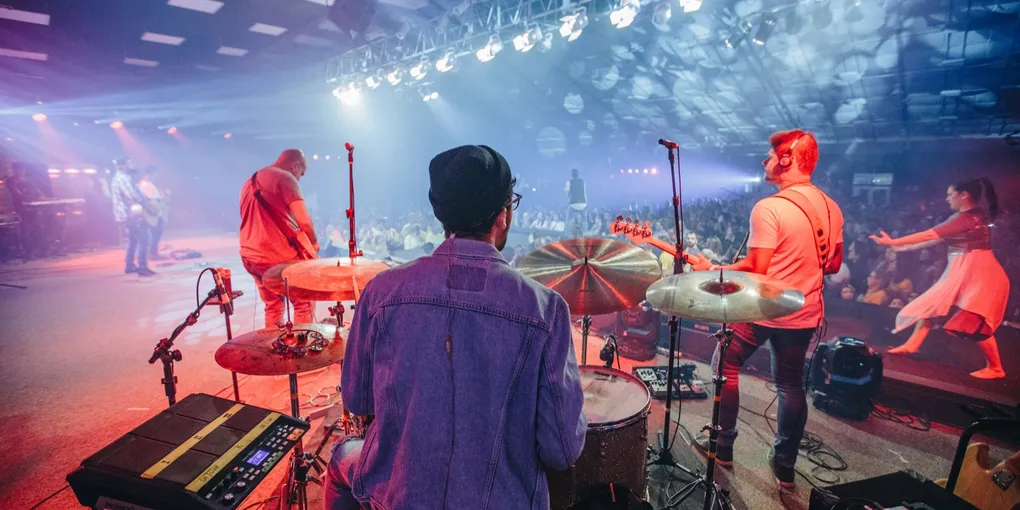
What I Learned From Fred Hammond About Leading Worship
Table of Contents
I didn’t pick Fred Hammond either. My parents went to one of his concerts in the DMV in the late 90s, and the next thing I knew, Purpose by Design was playing constantly in our Jeep Grand Cherokee.
From the first song, I was hooked. The horns. The funky bassline. The swing in the drums. It felt like every synapse in my brain was firing at once — and I didn’t even know yet that I was listening to a bass player, producer, and arranger, not just a singer.
This is the second post in an ongoing series on the worship leaders who’ve shaped my ministry — the people whose songs, teaching, or example became part of how I lead, often years before I could name what I’d learned from them. The first post covered Don Moen.
Key Takeaways
- Fred Hammond brought a live-band, horn-and-groove sound to gospel music that most churches at the time weren’t built to reproduce — and many still aren’t.
- The gap between a Fred Hammond record and a backing-track Sunday morning is a real, common tension in churches without full bands — not a failure, a resourcing reality.
- You don’t have to play an instrument to be shaped by a musician — groove, vocal phrasing, and feel can form in your ear years before they show up in your hands.
- Songs built for a live band still work today, even on tracks, because the songwriting itself — not just the production — carries the room.
Who Is Fred Hammond, and Why Does He Matter to Gospel Worship?
Fred Hammond is one of the most influential figures in contemporary gospel music, known not just as a singer but as a songwriter, bassist, producer, and arranger (Fred Hammond, official site). He was a founding member of the pioneering gospel group Commissioned, where he helped shape a modern, R&B-infused gospel sound before launching Radical for Christ and a major solo career (Yamaha Artists).
He’s widely credited as one of the architects of urban praise and worship — a style that brought a full-band, groove-driven sound into Black church worship in a way that felt musically current while staying church-centered (GospelFlava). His solo and group catalog has sold more than 8 million albums by his own site’s account, and his 2006 album Free to Worship reached #1 on the Billboard gospel chart (Fred Hammond, official site).
That was the sound that found its way into our Jeep — and into me — years before I understood any of that history.
What Made Fred Hammond’s Sound Different From Traditional Church Music?
When you think of gospel and church music, you probably think of hymns, slow drawls, congregational singing — the music I grew up surrounded by. Fred Hammond brought something different to the table, or at least something different from what I’d been exposed to at that point.
It wasn’t just that his songs were faster. It was the live-band feel underneath everything — horns punching in, a bassline doing actual work, drums with swing instead of just keeping time. That arrangement-level musicianship is part of what makes him an architect of the urban praise and worship sound rather than just another gospel artist with hits.
For more on how I think about the role of a full band in worship, what does it mean to know your role in a worship band gets into the band-dynamics side of this same question.
Why Does the Backing-Track Reality Still Matter for Small Churches?
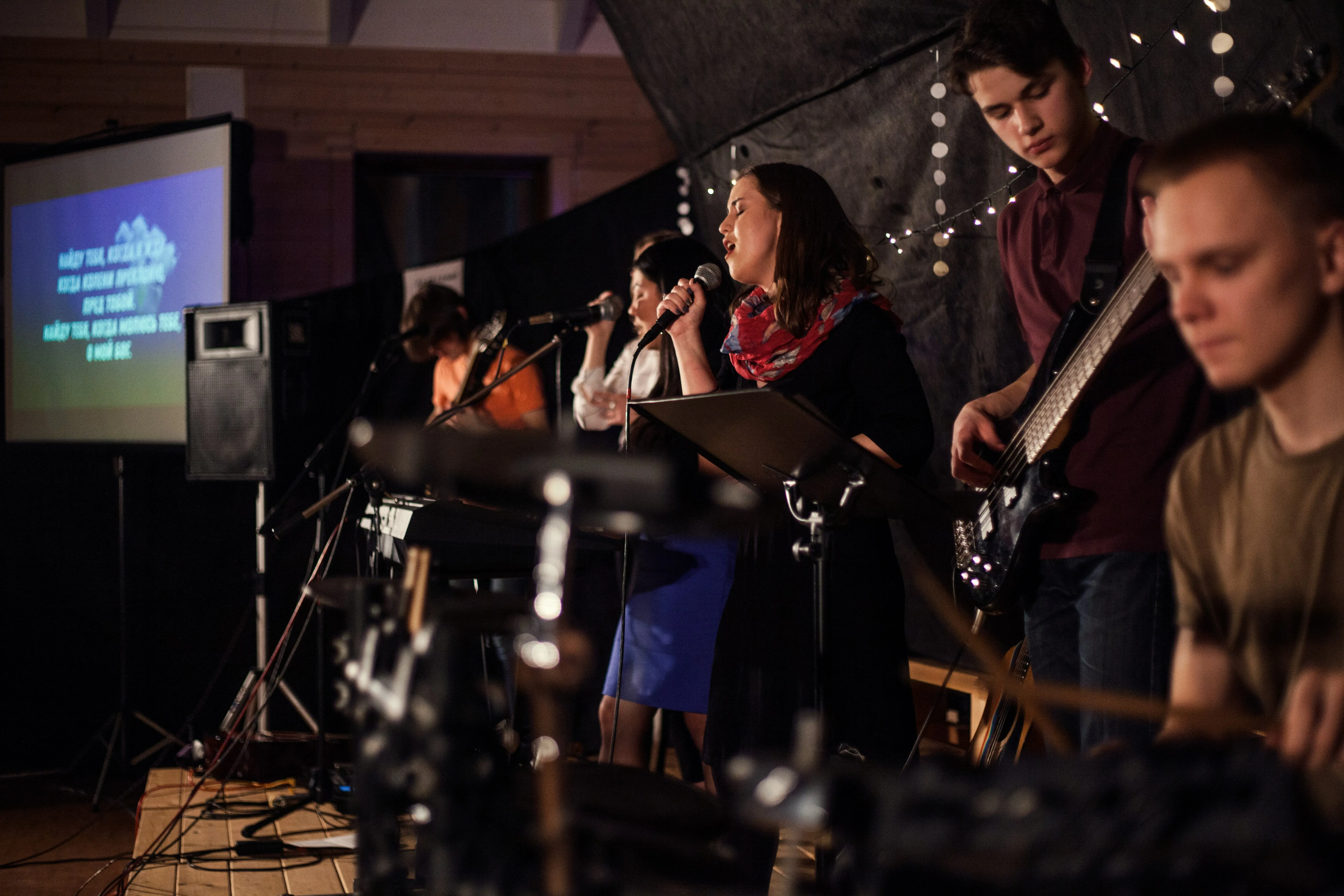
The songs we actually did of his in church were the slower ones — “No Weapon” and “We’re Blessed.” But they didn’t have the same feel as the live-band version on the album. We used backing tracks, because we didn’t have the musicians to play it any other way.
That’s not a criticism of my home church. It’s a resourcing reality I’m seeing more of today, not less — local churches leaning on tracks because the musicians simply aren’t there. A Fred Hammond song was written assuming a horn section and a full rhythm section behind it. Most churches singing his songs on a Sunday morning don’t have either, and that gap is worth naming honestly instead of pretending the tracks are the same thing.
If your church is in that exact spot, how to build a worship team from scratch covers what it actually takes to grow out of that reality over time.
How Did Fred Hammond Shape My Sound Before I Even Played an Instrument?
I didn’t pick up an instrument until my late 20s. But my sound and my groove were being shaped by Fred Hammond years before that — I just didn’t have the hands yet to show it.
You can hear it now in my vocal style, and in what I bring to the table on guitar. The phrasing, the pocket, the willingness to leave space in a groove instead of filling every beat — that’s Fred Hammond in my ear long before it ever became Fred Hammond in my hands. I still go back to his catalog today, looking for more to take my own craft to another level. He’s that good, and I don’t think I’m finished learning from him.
That’s the real lesson underneath all of this: influence doesn’t wait for ability. It gets in early and shows up later, on whatever instrument you eventually pick up.
Why Do Fred Hammond’s Songs Still Work in My Congregation Today?
Even stripped down to backing tracks, songs like “No Weapon” and “We’re Blessed” still land with a congregation, because the songwriting was built to carry a room, not just a record. That’s the same quality I look for now when I’m picking songs for my own church — whether I have a full band that Sunday or not.
I’m not done pulling from his catalog either. Beyond what I’ve already sung, I keep a running wishlist of Fred Hammond songs I want to bring to my congregation when the moment and the band are right: “I Will Trust,” “You Are the Living Word,” “Jesus Be a Fence,” and “This Is the Day.” Song selection isn’t just about what’s worked before — it’s also about what you’re building toward.
For more on how I approach song selection generally, my worship song library goes deeper into the songs I actually use week to week, and are worship leaders just cover artists? is worth a read if you’re weighing what it means to lead worship with someone else’s songs.
Explore more leadership content at the Worship Leadership hub.
Frequently Asked Questions
Who is Fred Hammond?
Fred Hammond is a gospel singer, bassist, songwriter, producer, and arranger, best known as a founding member of the group Commissioned and for a major solo career that followed. He’s widely credited as an architect of the urban praise and worship sound in contemporary gospel music.
What is “urban praise and worship,” and did Fred Hammond create it?
Urban praise and worship is a style that blends traditional gospel with R&B and contemporary production, built around a full live band rather than a traditional choir-and-organ setup. Fred Hammond is widely credited as one of its primary architects, both through his work with Commissioned and his solo catalog.
What are Fred Hammond’s most well-known songs?
Fred Hammond’s most enduring songs include “No Weapon,” “We’re Blessed,” and material from his 2006 album Free to Worship, which reached #1 on the Billboard gospel chart. His catalog has sold more than 8 million albums according to his official site.
Is it okay for a church to use backing tracks instead of live musicians?
Yes — backing tracks are a legitimate and increasingly common solution for churches without a full band, and they let a congregation still sing songs written for a fuller sound. The honest tradeoff is that tracks can’t fully replicate the live-band feel a song like a Fred Hammond record was originally built around, and that’s worth naming rather than ignoring.
How did Fred Hammond influence Commissioned and gospel music broadly?
Fred Hammond was a founding member of Commissioned, where he helped shape a modern, R&B-infused gospel sound that influenced a generation of gospel artists. His later solo work extended that influence into urban praise and worship, a style now common in many Black church contexts.
What can a worship leader learn from Fred Hammond’s sound even without a full band?
Even without a horn section or full rhythm section, a worship leader can learn from the songwriting itself — songs built with strong groove and melodic hooks tend to carry a congregation regardless of arrangement. Studying phrasing, vocal pocket, and where to leave space in a song are lessons that translate to any size band.
A Prayer for the Worship Leader Building With What They Have
Lord, thank You for the musicians who shaped us before we ever picked up an instrument ourselves — for the sounds that got into our ears years before they reached our hands. For every worship leader working with backing tracks instead of a full band, give them peace that the song still belongs to You, regardless of how full the room sounds on a given Sunday. Keep us hungry to grow, and grateful for what we already have to offer. Amen.
Be Blessed,
Mark Claiborne


Find this helpful?
Writing takes time. If Worship Frontier has been useful to you, buying me a coffee means a lot — and keeps this going.
Join the Conversation
Comments are moderated — approved ones are posted periodically.
Thanks for your comment — it's in the queue for review.