
What I've Learned Leading Worship for a Small Congregation
Table of Contents
I lead worship for between 45 and 60 people most Sundays. There was a time when that number climbed to 250 on big services. And the first thing I want to say, before we get into any of the practical stuff: the way I approach leading worship has never changed based on how many people are in the room.
Key Takeaways
- Small-congregation worship thrives on intimacy, not production — the room’s size is an asset if you lead into it deliberately.
- Song selection, key choice, and setlist structure should stay consistent whether you’re leading 50 or 250.
- The biggest challenge in small settings is often the band’s nerves, not the congregation’s engagement.
- “God shows up especially for the small in number” — faithfulness in a small room is still faithfulness.
Does Your Approach Actually Change When the Room Is Smaller?
No. And I think that’s the first thing worth saying out loud.
My congregation runs 45–60 people on a typical Sunday. That’s not a “recovering from something” number — it’s just where we are, and I plan our services the same way I did when we were drawing 250 on big Sundays. Same song selection process, same keys, same setlist philosophy. If I only knew how to lead for a full room, I would have learned the wrong thing.
Where things shift is in how people respond. If I see more engagement in a smaller room — more singing, more open hands, more stillness — I might extend a chorus, or pull the instruments back for a verse so the congregational voices come forward. But that’s not a size adjustment. That’s reading the room, and you should be doing that at any crowd.
Equip the Called frames the goal well (retrieved July 2026): in a small congregation, the aim isn’t to put on a show — it’s to facilitate the congregation singing truth to God and to one another. If you design around that principle, the head count stops mattering as much as you thought it did.
For more on what it looks like to lead when it’s just you and a guitar, how I lead worship with just an acoustic guitar goes deeper into that solo-acoustic dynamic.
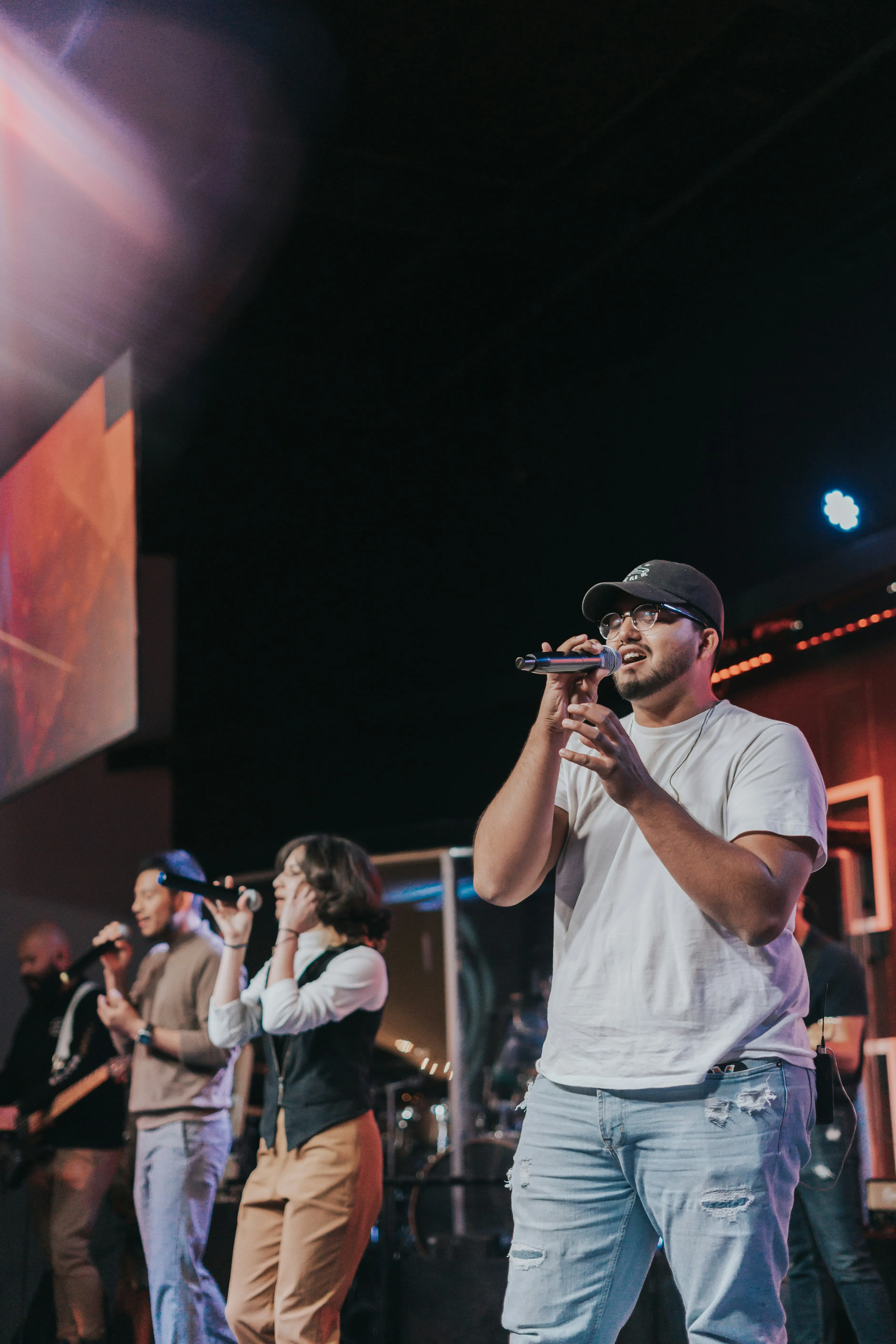
What’s the Biggest Challenge Leading a Small Congregation?
In my experience, it’s not the congregation. It’s the band.
My friend Joe filled in on bass for me once, early in my time leading at my church. I’d mentioned before that our Sunday services could get up to 250, but nobody ever quite believes me until they see it. Right before service, I’m talking to him near the front, and I watch his eyes get wider as he scans the room. He looks at me and goes, “I thought you were kidding… I’ve never played in front of this many people.”
I looked back at him and said, ‘Well, it’s no different than playing in front of 12. You’re the one up here playing. If they could do better, they’d be standing where you are.’
That calmed him down. But the principle runs both directions: a smaller congregation doesn’t mean a lower-stakes room. And band members who’ve only played in big settings can actually get more nervous in a small, quiet room than a full one, because there’s less ambient sound to hide behind.
Your job as the worship leader is to absorb that pressure so your team doesn’t have to carry it. Know the room, know your people, and let your confidence be the ceiling the team rises to — not the other way around.
Worship leader burnout covers what happens when you absorb too much of that weight without releasing it — worth reading alongside this.

How Do You Choose Songs for a Small Congregation?
Small congregations do best with songs people already know. That’s not a limitation — it’s a feature. When your room is 50 people and everyone knows the song by heart, the singing lifts the room in a way that no production value can replicate.
As of 2024, Colorado Baptists recommends keeping a small, rotating repertoire (retrieved July 2026) — some leaders aim for roughly 60 songs a year — so people can sing without always needing lyrics on a screen. The familiarity builds confidence, and confident congregations sing louder.
A few things I keep in mind:
- Lower the key. Modern worship songs are often recorded in keys that are too high for most congregations. In a small room, that gap is brutally obvious. Drop a step or two so more people can actually sing the melody.
- Limit new song introductions. Don’t expect the congregation to learn something new every week. Introduce one new song at a time, and give it four to six weeks to settle before it becomes “theirs.”
- Refresh hymns, don’t retire them. Resources like Reawaken Hymns, Citylight, and Sunday Sounds have done the work of arranging classic hymns in forms that are singable and guitar/piano-friendly for small teams.
- Songs with simple, repeating phrases lower the barrier to entry, especially when you don’t have slides or printouts running.
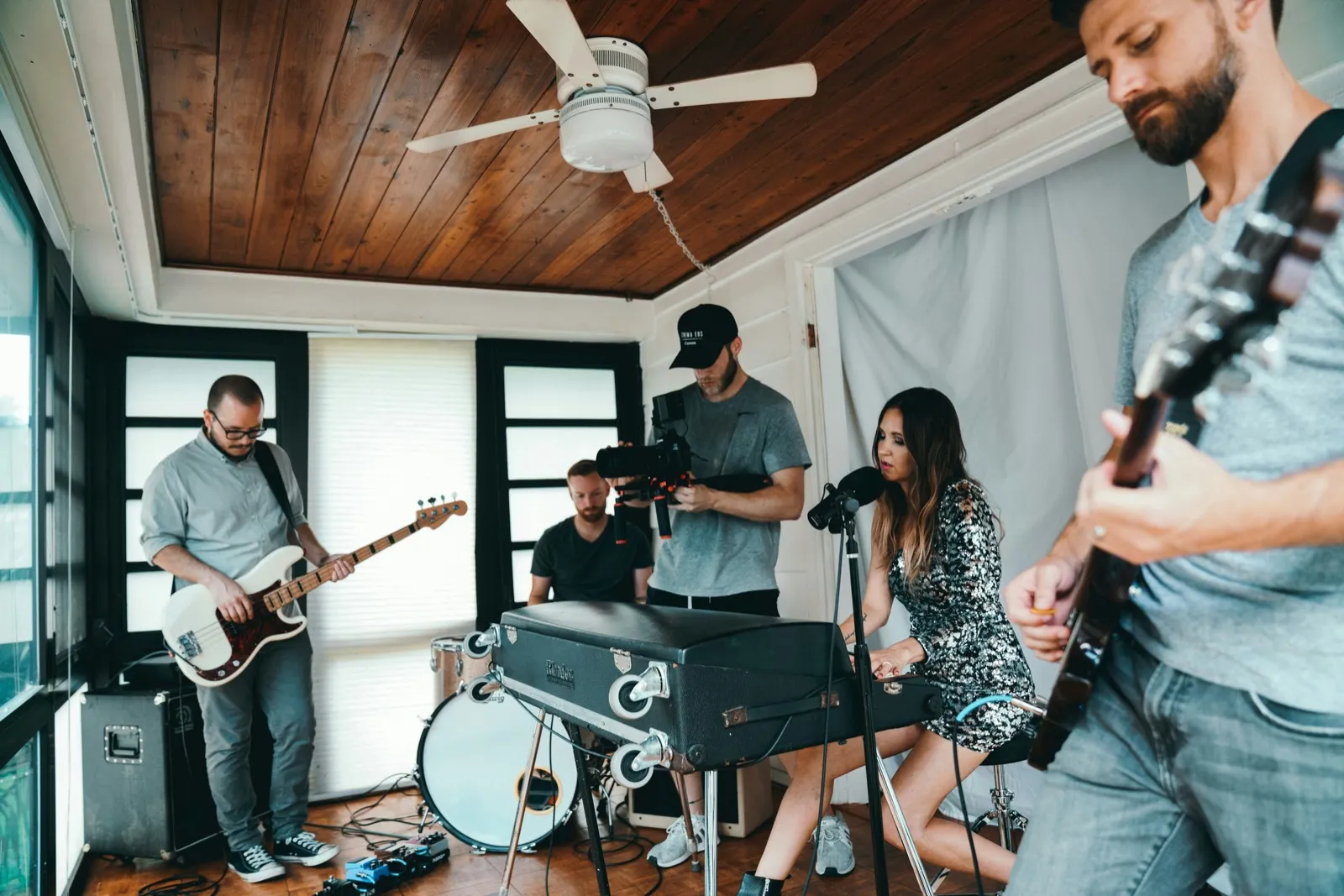
The goal of your song selection isn’t an impressive set. It’s a room full of people singing. Leading Worship Well puts it plainly (retrieved July 2026): choose melody-driven songs where the congregation can easily follow the lead vocal. If only you can hit the notes comfortably, it’s not a congregational song — it’s a performance.
How Do You Build Energy in a Small Room?
Small doesn’t mean low energy. In some ways, intimacy creates more opportunity for powerful worship than a large crowd ever does — but you have to set it up intentionally.
A few things that help:
Arrange your chairs so people are closer together. Tim Price (retrieved July 2026) points out that proximity increases participation — when people are near each other and near the front, they sing louder and engage more. A scattered congregation in a half-empty room will feel defeated before you play a note.
Don’t call attention to the size. Never say “we’re a small but mighty bunch” or acknowledge the empty seats. Speak with the same confidence and invitation you would to a full house. The congregation takes its emotional cues from you.
Dynamics are your best tool. Pull the instruments back on a verse and let voices rise. Come back in fuller on the chorus. Leading Worship Well calls this making “arrangement your band” — in a small setting, the way you vary strumming, volume, and energy does what a full production team normally does automatically.
Adjust in real time. If a chorus is landing, extend it. If a song isn’t connecting, shorten it. Tim Price puts it this way: plan and prepare as if you had twice the attendance, but stay flexible enough to follow what the room is actually doing.
Leave space for others. In a small setting, invite a member to read Scripture, pray aloud, or share a brief testimony between songs. That participation builds worship into the life of the congregation, not just a task for the leader to execute. Colorado Baptists emphasizes this as one of the clearest advantages of a smaller church — you can actually do it.
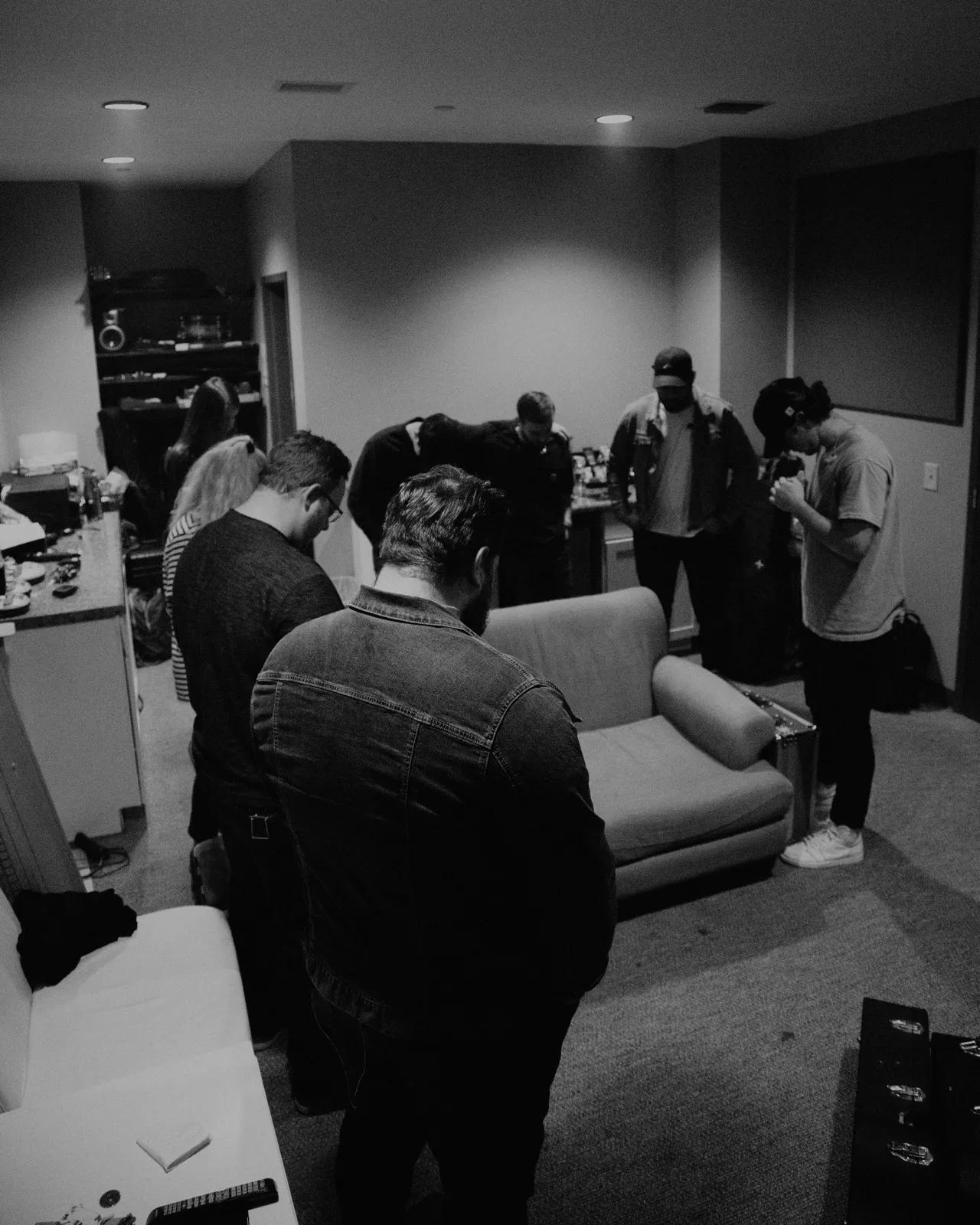
What Would You Tell a Worship Leader Discouraged by Small Numbers?
My pastor-aunt used to say something that has never left me: “God shows up especially for the small in number.”
She was right. And the parallel is right there in Scripture — twelve disciples changed the entire world. Twelve. If you’re leading 45 faithful people in worship every Sunday, that is not a failure. That is a calling.
Whoever shows up for worship on your Sunday is who God meant to experience your ministry that day. That’s not an excuse to stop growing — I want to be clear about that. You should always be searching for new ways to enhance what you have. I’m currently learning electronic music synthesizers, new sounds and textures that I may never use in a Sunday service, or maybe I will someday. The point is: growth doesn’t stop when the room is small.
But don’t confuse size with faithfulness. Leading Worship Well puts it plainly: learn from bigger churches, but don’t measure your faithfulness by their size or production value. Your congregation doesn’t need what another church has. They need what God has called you to bring to them.
Building your first worship team from scratch is a natural next step if you’re in a season of growing what you have — and the worship guitar hub has more resources for leaders building from a small foundation.
Frequently Asked Questions
How do you build energy in a small congregation when the room feels quiet?
Start with proximity — arrange chairs so people are close to each other and close to the front. Then use dynamics deliberately: pull instruments back on verses to let congregational voices rise, come in fuller on choruses, and adjust in real time based on how the room responds. The leader’s confidence sets the ceiling for the congregation’s participation.
What songs work best for small church worship?
Songs people already know by heart perform best in small settings. A rotating repertoire of around 60 songs per year allows familiarity to build. Choose melody-driven songs with simple, repeating phrases, and lower keys by one to two steps from the recorded version so more people can sing comfortably. Classic hymns with fresh arrangements (Reawaken Hymns, Citylight, Sunday Sounds) work particularly well.
Does leading worship for 50 people require a different skill set than leading for 250?
The approach should be the same — same song selection philosophy, same setlist structure, same key choices. What changes is how the congregation responds, and how much you adjust in real time to that response. The biggest practical difference is often managing the nerves of band members who feel more exposed in a quieter, smaller room.
Should a small church worship leader try to sound like a large-church production?
No. Trying to replicate large-church arrangements and song complexity in a small setting usually backfires. The congregation feels the mismatch. Small-church worship thrives on intimacy, participatory singing, and a service flow that invites response — none of which require production value.
How do you keep a small worship team motivated?
Know people by name, connect before and after service, and let relationships fuel the team’s energy. In a small church, the relational dimension is your biggest advantage over a larger ministry. Personally recruit for roles rather than waiting for volunteers — and communicate clearly that every role, from sound to Scripture reading, matters to the service.
What if you’re leading completely alone without a band?
Leading solo acoustic in a small setting is one of the most intimate and powerful worship formats available. Focus on melody-driven songs the congregation knows, use dynamics aggressively (fingerpicking versus full strums), and sit close to the room rather than standing elevated. For a deeper look at the solo acoustic approach, how I lead worship with just an acoustic guitar covers the full setup.
A Prayer for the Worship Leader Faithful in a Small Room
Lord, remind us that You have never measured faithfulness by a head count. Thank You for every person who walks through the door on a Sunday — each one is there because You meant for them to be. Give our worship leaders the confidence to lead with the same preparation and passion whether the room holds 50 or 500, and the wisdom to see intimacy as a gift, not a consolation. Help us keep growing — not to chase numbers, but to steward well whatever You have placed in our hands. Amen.
Be Blessed,
Mark Claiborne
Sources:
- Equip the Called, “5 Guidelines for Leading Worship in a Smaller Church,” retrieved July 2026, https://equipthecalled.com/etc-article/5-guidelines-for-leading-worship-in-a-smaller-church/
- Colorado Baptists, “4 Tips for Leading Worship in a Small Church,” retrieved July 2026, https://coloradobaptists.org/4-tips-for-leading-worship-in-a-small-church/
- Leading Worship Well, “10 Tips for Leading Worship in a Small Church,” retrieved July 2026, https://www.leadingworshipwell.com/blogposts/10-tips-for-leading-worship-in-a-small-church
- Tim Price, “Ideas for Energetically Leading a Smaller Group in Worship,” retrieved July 2026, https://www.timpriceblog.com/ideas-for-energetically-leading-a-smaller-group-in-worship/
Find this helpful?
Writing takes time. If Worship Frontier has been useful to you, buying me a coffee means a lot — and keeps this going.
Join the Conversation
Comments are moderated — approved ones are posted periodically.
Thanks for your comment — it's in the queue for review.