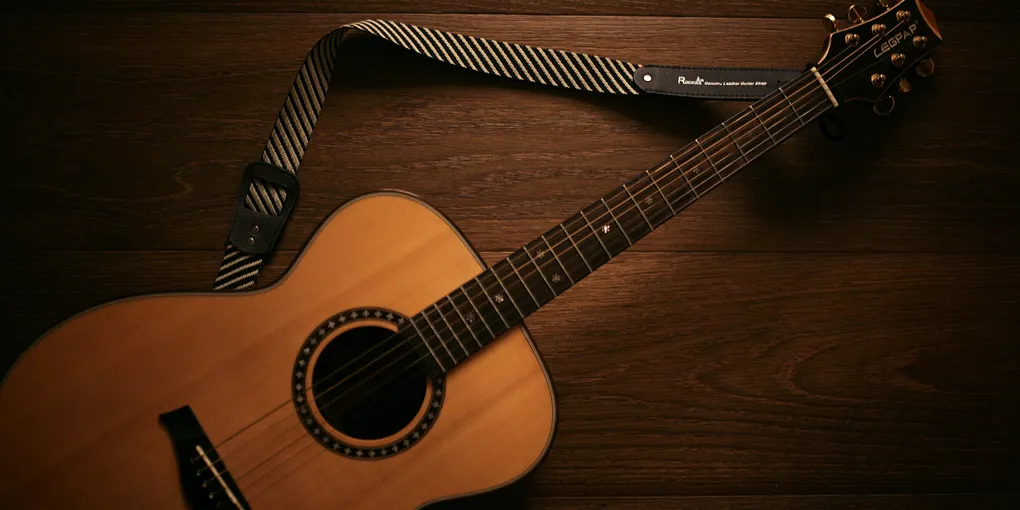
How I Lead Worship with Just an Acoustic Guitar
Table of Contents
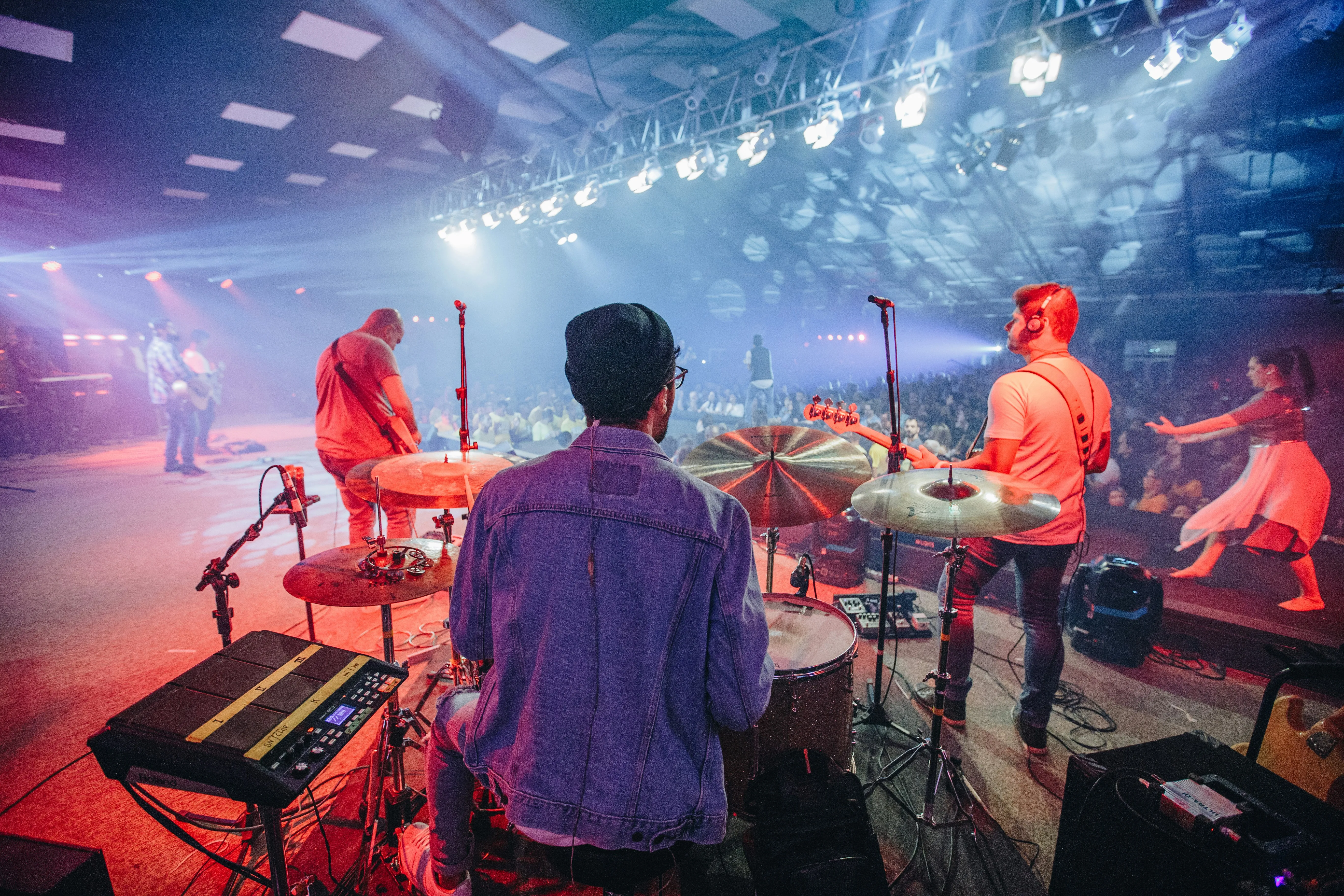
I’m fortunate. My normal Sunday setup includes bass, lead guitar, piano, a drummer, and six singers. That is the context I was built for, and I’m grateful for every person in that room.
But there are Sundays — and retreats, and midweek services, and moments nobody planned for — where it is just me, my acoustic guitar, and whatever God wants to do in the room. And leading worship in that context is a completely different skill.
Key Takeaways
- Solo acoustic worship creates a one-on-one dynamic with the congregation that a full band never will — lean into that, don’t fight it.
- Arrangement is your band. Varying strumming patterns, dynamics, and chord voicings does what a drummer and keyboardist normally do for you.
- A theme-based setlist anchors the room. Every song pointing toward the same idea gives the congregation something to hold onto without a full sound production behind you.
- Small tools go a long way: QR code lyric sheets, a bar stool, and sitting at floor level with the congregation change the atmosphere before you play a note.
What Changes When It’s Just You and the Guitar?
The first time I had to lead worship solo was on a retreat. My team was in the back of the chapel cleaning up — breaking down chairs, folding tables, doing the necessary work. My job was to hold the room and keep the remaining folks in worship until we were ready to transition. No band. No warning. Just my guitar and the people in front of me.
What I remember most isn’t the songs I chose. It’s how exposed it felt. With a full band, part of my attention is always on the team — making eye contact, giving cues, reading the drummer for tempo, checking in with the keys player. All of that disappears when you’re alone. Suddenly it’s a conversation, not a performance. Just you, the guitar, and the congregation. There is nowhere else to look.
That pressure isn’t a problem to solve. It’s actually the whole point. As Worship Artistry puts it — retrieved June 2026 — a solo acoustic set naturally creates a campfire closeness, and the right move is to lean into it, not try to replicate what a full band sounds like.
For more on the journey of learning to lead without a safety net, what I learned teaching myself guitar in 30 days covers the season that prepared me for exactly these moments. And if you’re brand new to leading a room at all, how to lead worship for the first time is the place to start.
How Do I Set Up a Solo Acoustic Worship Session?
My frame of reference for solo acoustic worship isn’t a church service. It’s MTV Unplugged.
I grew up watching musicians strip everything back — no stage production, no backup band, just the artist and an instrument in a room with an audience. The Prince episode stayed with me. There’s something about watching someone who could fill an arena choose to sit down and play quietly that creates more presence, not less. That’s the atmosphere I try to build.
My setup for a solo acoustic session:
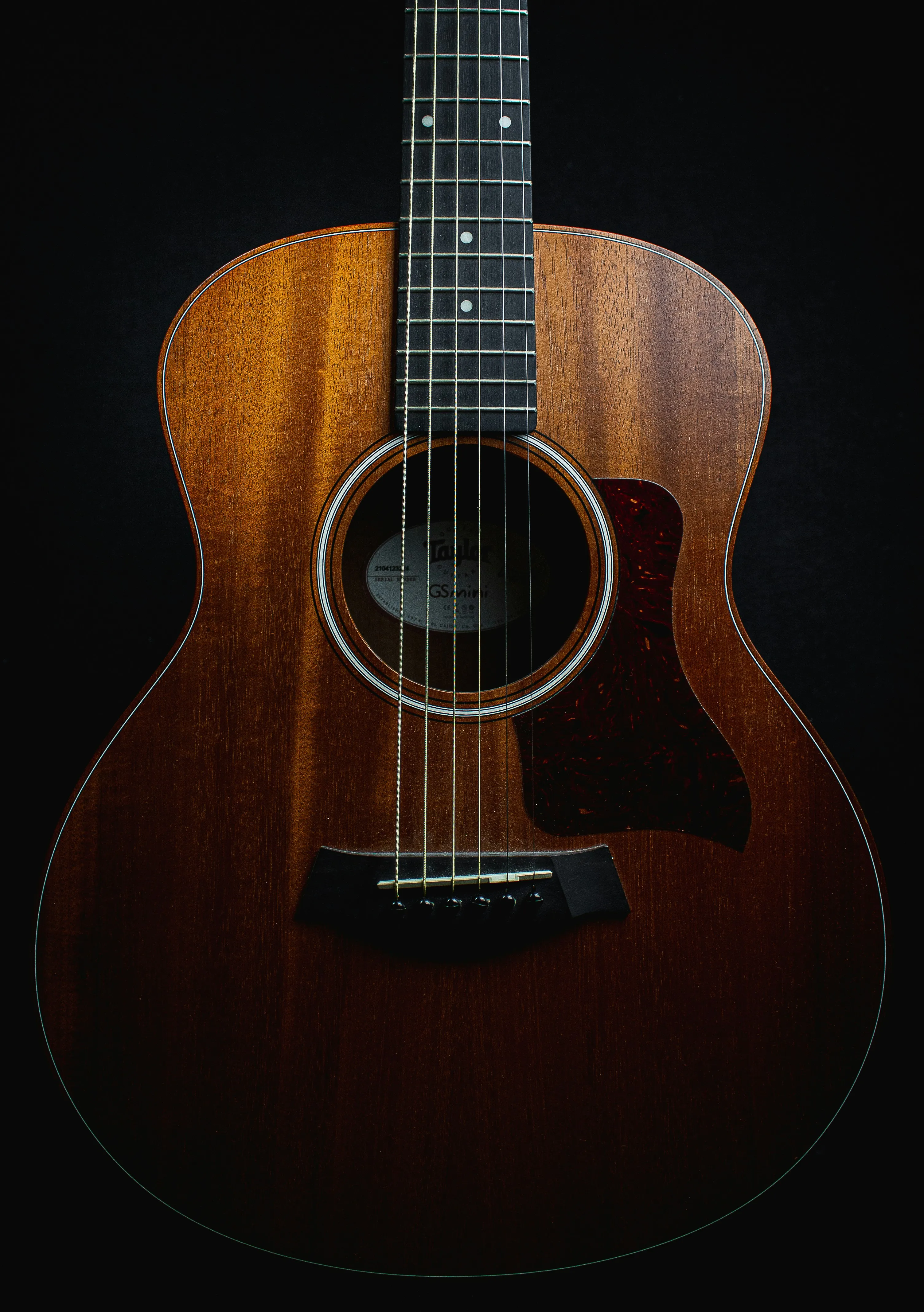
- Taylor 214 CE — my guitar of choice for this format. The ES2 pickup handles live venues cleanly, and the sound is warm without being muddy through a PA.
- A bar stool — I sit, never stand. Standing puts me above the congregation and creates distance I don’t want.
- Floor level or close to it — I position myself as close to the attendees as the space allows. I genuinely dislike the idea of being elevated or isolated from the group. That kind of separation doesn’t create an atmosphere of participation — it creates an audience.
- My setlist — printed or written by hand, not on a phone or tablet. Phones break the eye contact that makes this format work.
The Leading Worship Well principle applies here: embrace the intimacy of the setting. Stop trying to sound like a full band. You’re not one, and the room already knows it. Work with what you actually have in front of you.

How Do You Use Dynamics When There’s No Band Behind You?
In a full band, the drummer controls the energy arc of a song. The keys player fills space. The lead guitarist adds texture. When you remove all of those layers, that work doesn’t disappear — it falls on you.
The practical answer is that arrangement becomes your band. Leading Worship Well (retrieved June 2026) describes it well: use your right hand and left hand differently across the song. Fingerpicking on a verse feels nothing like an open strum on a chorus, even if the chord shapes are the same. Higher chord voicings up the neck read lighter. Lower positions feel fuller. These aren’t just techniques — they’re the equivalent of a band’s arranger deciding which instruments play when.
Practically, this is how I think about it:
- Verses: soft strumming or fingerpicking, minimal — create space for the congregation to breathe into the lyric
- Choruses: fuller strum, stronger pick attack, slightly more voice — let the room open up
- Bridges: this is usually where I either strip back completely (just voice, minimal guitar) or push into the biggest moment of the song
Several solo acoustic worship tutorials on YouTube (retrieved June 2026) demonstrate how intentional rhythmic variation locks the congregation in — particularly using palm muting on verses to create contrast before opening up on the chorus.
The common mistake solo acoustic worship leaders make is playing the same pattern from the first verse to the last chord. The congregation feels that flatness even if they can’t name it. Dynamic movement — from quieter to fuller and back — is what creates the arc that a full production usually handles automatically.
SOMETIMES the quietest moment in a song is the loudest thing in the room. BUT that only works if you’ve built toward it deliberately. ALWAYS let the arrangement serve the lyric, not the other way around.
How Do You Build a Setlist Around One Theme?
One thing I always do for a solo acoustic worship session that I don’t always do with my full band: I pick a theme and let every song point toward it.
With a full band, the production can carry the congregation through transitions between songs that don’t obviously connect. A key change, a pad swell, a drum fill — those bridge gaps. Solo acoustic doesn’t have those tools. So the songs themselves have to do more work.
The Holy Spirit led me to a theme once that shaped one of my most memorable solo sets — I centered the entire session around “The Name” of Jesus. Not as an abstract concept but as a single anchor: every lyric, every bridge, every moment of silence pointed back to that name. I chose songs like “Your Great Name” and “Blessed Be the Name” because they weren’t just thematically adjacent — they were the theme.
When every song in the set is answering the same question or holding the same idea, the congregation doesn’t need a production team to feel the through-line. The music does what the Holy Spirit is already doing.
For more on how I approach song selection week to week, how I build a worship setlist goes deeper into that process.
What Can You Give the Congregation to Help Them Sing Along?
This is the one thing I do for solo acoustic sessions that I don’t hear other worship leaders talk about, and it might be the most practical detail in this post.
I create lyric sheets.
Not just a song title list — full lyric sheets for every song in the set, formatted cleanly, uploaded to a shared Google Drive folder, and linked through a QR code I print on a card or display at the entrance. Congregation members scan it on their phones and have the complete lyrics in front of them throughout the session.
It sounds like extra work. It is extra work. But what it does for participation is hard to overstate. When people don’t know a song, most of them won’t sing. A lyric sheet removes that barrier entirely. Suddenly the room is full of voices, not just mine — and in an acoustic worship setting with no band, that congregational voice is the production.
The phone screen stays flat in their hands rather than pulled up to their face, which keeps them oriented toward worship rather than toward the device. That matters more than it sounds.
Participation starts before the music does. Proximity, lyric access, and sitting at the same level as the congregation communicates something before you play a note: this is a conversation, not a concert.
Frequently Asked Questions
Do you need special gear to lead worship solo on acoustic guitar?
Not a lot — but a few targeted additions help. An acoustic DI or preamp (like a Fishman Spectrum DI) gives you EQ, compression, and feedback control without requiring a soundboard operator to manage your tone. A clean vocal chain with light reverb fills out the mix. Beyond that, a foot tambourine for upbeat choruses and a pad pedal for transitions and prayer moments can add texture without overcomplicating the setup. See Leading Worship Well for a solid breakdown of how to use these sparingly.
What guitar works best for solo acoustic worship?
Any acoustic-electric with a reliable pickup system. The author uses a Taylor 214 CE for solo sessions — the ES2 pickup sits at the bridge rather than under the saddle, which means it captures the guitar’s natural resonance more accurately through a PA. For more options at various price points, best acoustic guitars for worship leaders covers the full range.
How do you keep the congregation engaged without a full band?
Proximity helps more than almost anything else. Sitting close — at floor level, not elevated on a stage — changes the relational dynamic immediately. Lyric sheets (via QR code or printed) remove the barrier of unfamiliar lyrics. And theme-based song selection gives the congregation a through-line to hold onto across songs, even without a production team bridging the transitions.
Should you use a backing track or pad pedal when leading solo?
A pad pedal can help — especially during prayer moments or transitions — but use it selectively. If every song has a pad running under it, the texture stops registering. Save it for specific moments where you want ambient support: an intro, a prayer pause, a bridge where you want the room to breathe. Worship Artistry notes that overusing pads is one of the most common pitfalls in solo acoustic worship.
What’s the most common mistake in solo acoustic worship leading?
Playing the same dynamic and strumming pattern through the entire song — or the entire set. Dynamic variation (soft verses, fuller choruses, sparse bridges) is what creates movement and emotional arc when a band isn’t doing it for you. Without that variation, even a spiritually strong set feels flat.
How do you handle a song the congregation doesn’t know?
Either pick songs they already know, or provide lyric sheets so unfamiliarity isn’t a barrier to participation. The author prints QR codes linking to a Google Drive lyric sheet for the full set — it’s extra prep work that pays off in congregational singing.
A Prayer for the Worship Leader Walking In Alone
Lord, thank You for the moments that strip everything back — when there’s no band to stand behind, no production to lean on, and it’s just us and the room You’ve called us into. Teach us to see the intimacy of those moments as a gift, not a deficit. Let our guitar be enough because You are enough, and let the quiet of an acoustic room make space for Your voice above ours. Amen.
Be Blessed,
Mark Claiborne

Find this helpful?
Writing takes time. If Worship Frontier has been useful to you, buying me a coffee means a lot — and keeps this going.
Join the Conversation
Comments are moderated — approved ones are posted periodically.
Thanks for your comment — it's in the queue for review.