
Best Church Mixers Under $1,000 (Plus One Worth the Upgrade)
Table of Contents
The mixer is the heartbeat of your Sunday morning sound. Get it right and nobody notices — the congregation sings, the room breathes, and your volunteers feel like they actually know what they’re doing. Get it wrong and the feedback loop, the muddy vocals, and the panicked look on the sound tech’s face become the thing people remember.
I’ve been leading worship for over fifteen years in a church of about 350 people. Along the way I’ve made every mistake a worship leader can make with audio gear — and eventually I found the tools that made Sunday mornings feel less like a gamble. The church mixer is where it all starts.
If you’re shopping for a digital mixer and trying to stay under $1,000, you have more good options right now than at any point in church audio history. Here’s what I’d actually recommend — including the one I use myself, which runs just over the $1,000 mark but is worth every extra dollar.
Heads up: this post contains affiliate links (Amazon and zZounds). If you buy through one of them, Worship Frontier may earn a small commission at no extra cost to you. Every pick here is something I’d put in front of my own congregation.
Key Takeaways
- Digital mixers under $1,000 now offer 16–40 channels, scene recall, tablet control, and USB recording — features that required $5,000+ consoles a decade ago.
- For most churches under 500 seats, the Allen & Heath CQ18T is the best all-around choice — its auto-gain feature alone saves a volunteer team significant setup time.
- If your budget is strictly under $1,000, the Allen & Heath CQ12T delivers the same touchscreen workflow as its bigger sibling for $200–$400 less.
- The biggest mistake churches make is buying the most channels they can afford instead of buying the best workflow for their volunteer team.
Top Picks
- Editor's Pick — Best Overall: Allen & Heath CQ18T shop at zZounds →
- Best Strict Budget: Allen & Heath CQ12T shop at zZounds →
- Best Value Rack Mixer: Midas MR18 shop at zZounds →
- Most Channels Under $1,000: Behringer X32 Rack shop at zZounds →
- Best for Multi-Track Recording: Zoom LiveTrak L-20 shop at zZounds →
- Best for Analog Workflows: Tascam Model 16 shop at zZounds →
What Should a Church Mixer Actually Do?
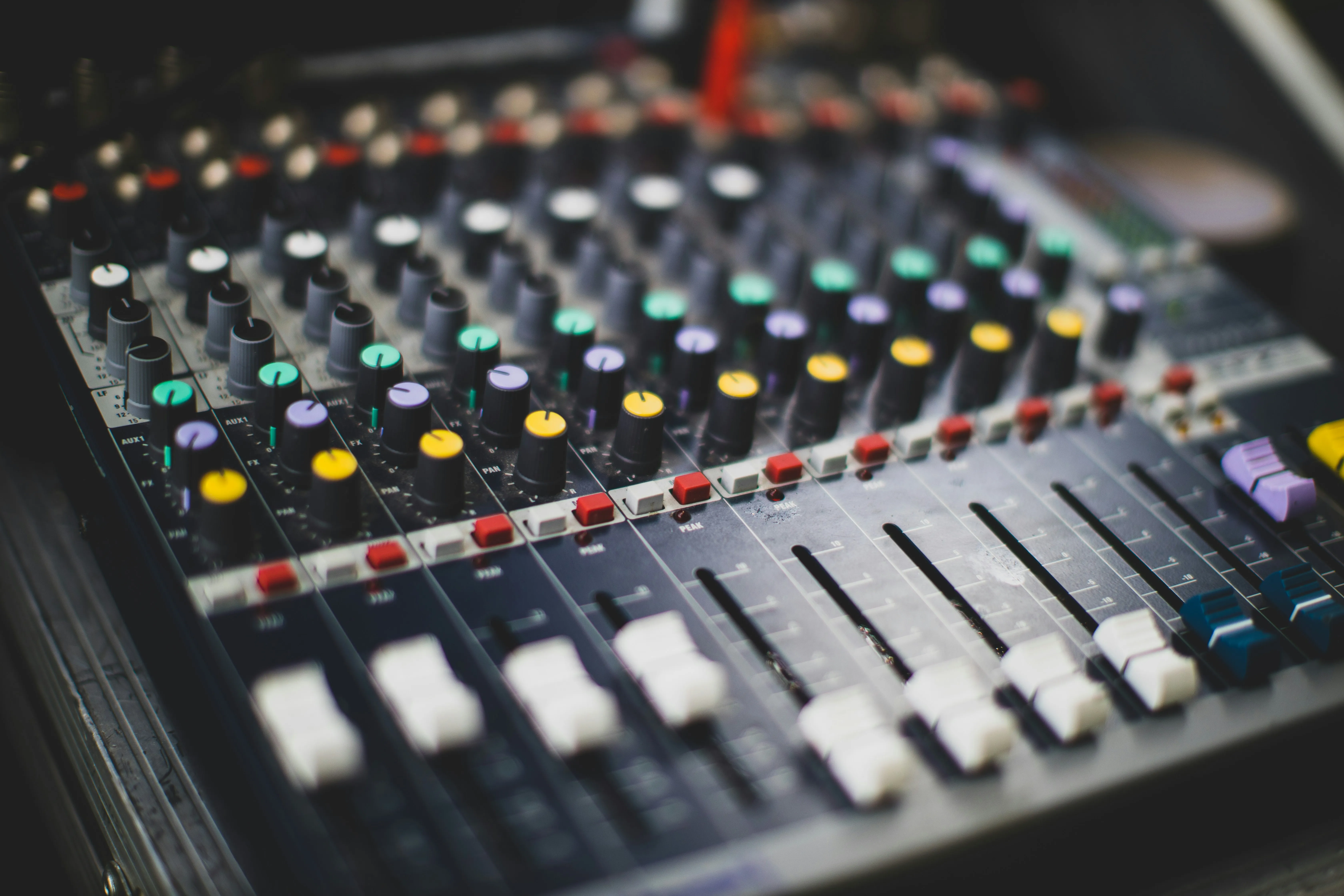
In 2025, digital mixers under $1,000 can handle 16 to 40 input channels, built-in EQ and compression on every channel, scene recall for saving your Sunday preset, and wireless tablet control — capabilities that required consoles costing several times that price less than a decade ago (The Network Installers, Church Sound Installation Guide, 2025). For a church with a volunteer sound team, the spec sheet matters less than the workflow.
The question isn’t just how many channels does it have — it’s can my volunteer run this confidently with thirty minutes of training? According to ProSoundWeb’s church audio training guide, developing a competent front-of-house volunteer typically takes six to twelve months. A mixer with an intuitive touchscreen and scene recall can cut that curve significantly.
What to prioritize when shopping for a church mixer:
- Enough inputs for your full band — count every mic, DI, and instrument line before you shop
- Scene recall so your Sunday preset loads in one tap
- Tablet or app control so your sound tech can walk the room and mix from the congregation’s perspective
- Onboard processing (EQ, compression, reverb, gate) so you don’t need outboard gear
- USB interface capability if you want to record services or stream
For more on what kills Sunday morning sound before the mixer even enters the equation, what causes microphone feedback in church and how to stop it covers the single most common problem volunteer teams face.
The Best Church Mixers Under $1,000
Here’s the full comparison before we get into each one:
| Mixer | Price | Channels | Best For |
|---|---|---|---|
| Allen & Heath CQ18T Editor’s Pick | ~$1,199 | 16 | Best overall — live, recording, podcasting |
| Allen & Heath CQ12T | ~$849 | 8 | Strict $1,000 budget, same A&H workflow |
| Midas MR18 | ~$849 | 18 | Best value rack unit, tablet control |
| Behringer X32 Rack | ~$989 | 40 | Most channels, deepest routing under $1K |
| Zoom LiveTrak L-20 | ~$999 | 20 | Best for multi-track service recording |
| Tascam Model 16 | ~$899 | 16 | Best for analog workflows and SD card recording |
Allen & Heath CQ18T — Best Overall (The One I Use)
The Allen & Heath CQ18T is my personal go-to — not for our main Sunday stage, but for our podcast, and for every time my band travels to a venue that doesn’t have its own equipment. A mixer this capable and this portable earns its keep many times over. That doesn’t make it any less of a powerhouse — if anything, the fact that I reach for it over everything else when I’m away from home tells you everything you need to know.
The single thing that made me fall in love with this mixer is the auto-gain feature. I remember a gig where I had eight different sources coming in — vocals, guitars, keys, drums — and instead of spending forty-five minutes riding gain knobs and hoping for the best, I let the CQ18T analyze each signal and set the gain automatically. It was accurate. Fast. And it gave my team a starting point that actually made sense instead of a guess. That kind of confidence at the top of a set changes everything.
Beyond auto gain, the CQ18T gives you 16 channels in, a 7-inch full-color touchscreen that behaves more like an iPad than a traditional console, 24-bit/96kHz audio quality, and a 24x22 USB audio interface built in. That interface capability is what makes it so versatile — I use it for the podcast and as an interface when I’m recording content for YouTube. One piece of gear doing three jobs at a professional level is hard to argue with at any price.
The Allen & Heath CQ18T’s auto-gain feature uses onboard analysis to set optimal gain levels across all connected channels simultaneously, a process that typically requires manual adjustment by an experienced engineer. For volunteer-run church teams, this single feature can reduce pre-service setup time significantly and give non-engineers a professional starting point (Allen & Heath, CQ-18T product page, 2025).
Our Verdict
The mixer I reach for every time I'm away from our main stage — auto-gain, 7-inch touchscreen, and a built-in USB interface in one box. The best all-around church mixer for volunteer teams right now.
Shop at zZounds →Best for: Churches that need one mixer for live Sunday sound, recording, and podcasting — run confidently by rotating volunteers
✓ Pros
- Auto-gain sets levels across all channels automatically — game-changing for volunteer teams
- 7-inch full-color touchscreen — more intuitive than any console-style interface
- 24x22 USB audio interface built in — doubles as a podcast and recording interface
- 24-bit/96kHz audio quality at a church-budget price
- Wireless tablet control via the Allen & Heath app
✗ Cons
- Technically runs just over $1,000 — a slight premium over the strict budget picks
- 16 channels may not be enough for large ensembles with full drum kits
- Less community troubleshooting content than the Behringer X32 ecosystem
What powers our main stage: Our church runs the PreSonus StudioLive 64S as our primary house console — a flagship 64-channel digital mixer built for serious production. It’s a different class of investment, but if your church is ready to go all-in on a professional platform that handles worship, broadcast, and recording at the highest level, it’s worth knowing that’s what a 350-seat congregation looks like when budget isn’t the ceiling.
Allen & Heath CQ12T — Best Under $1,000 (Strict Budget Pick)
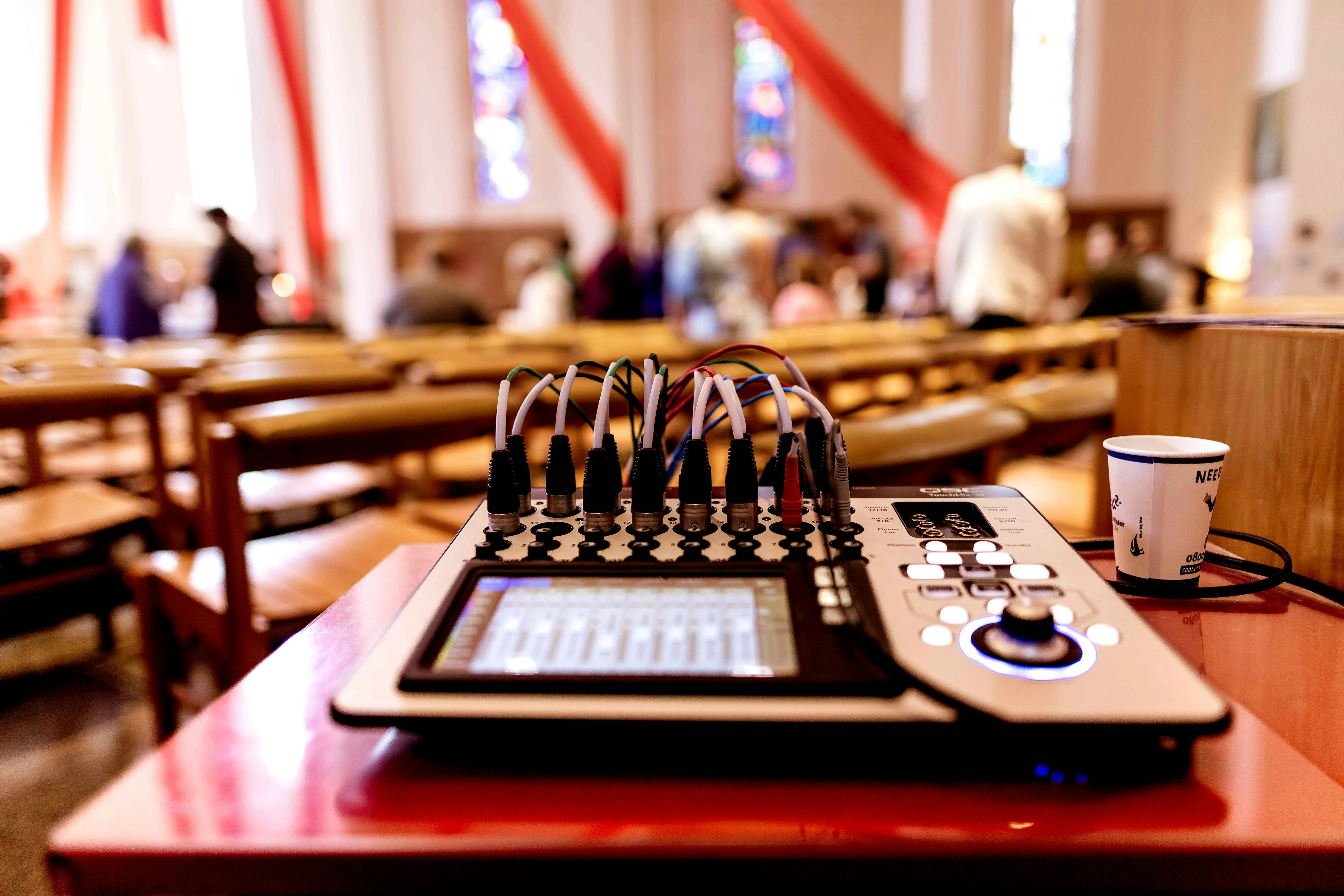
If your budget genuinely won’t go above $1,000, the Allen & Heath CQ12T gives you the same touchscreen workflow and the same CQ-series sound quality as its bigger sibling for about $849. You’re giving up inputs — 8 mic/line vs. 16 — and some of the interface channels, but the operating experience is identical.
For a small church or a church plant with a simpler band setup — two or three vocalists, acoustic guitar, keys, and a click track — the CQ12T covers everything without requiring a larger console. The auto-gain feature carries over from the CQ18T, and the 7-inch touchscreen is just as intuitive.
The honest tradeoff: if your band is growing or you expect to add more sources in the next year, buy the CQ18T now and avoid the upgrade cycle later. But if 8 inputs covers your current reality, the CQ12T is the cleanest under-$1,000 option in this class.
Best for: Church plants and smaller congregations that want the Allen & Heath touchscreen workflow without exceeding a strict $1,000 budget.
Midas MR18 — Best Value Rack Mixer
The Midas MR18 offers 18 channels of Midas-quality preamps in a rackmount form factor for around $849, making it one of the best dollars-per-channel deals in the church mixer category. Midas preamps have a long-standing reputation for warmth and transparency that routinely punches above the MR18’s price point.
What makes it work particularly well for churches is the combination of 18 inputs, a built-in Wi-Fi router for tablet mixing, and the M Air app for iPad and Android control. Your sound tech can walk to the back of the auditorium, pull up the app, and mix from the congregation’s perspective — which is where Sunday morning mix decisions should actually be made.
The MR18 doesn’t have a built-in touchscreen like the CQ18T, so the day-to-day workflow lives entirely in the M Air app. For technically comfortable volunteers, that’s a non-issue. For teams that need something completely plug-and-play from the hardware itself, the Allen & Heath touchscreen options may be a better fit.
Best for: Churches that need 18 inputs, want Midas preamp quality, and prefer a rackmount setup with app-based tablet control over a desktop touchscreen.
Behringer X32 Rack — Most Channels and Routing Under $1,000
If you need maximum routing flexibility under $1,000, the Behringer X32 Rack is the most capable option on this list. At around $989, you get 40 input channels, 25 mix buses, 16 Midas-designed preamps, and a 32x32 USB audio interface — a feature set that still outperforms most mixers at twice the price (B&H Photo, Behringer X32 Rack specs, 2025).
The X32 platform is also the most battle-tested in the church world. Thousands of churches run it, which means there’s an enormous library of YouTube tutorials, Facebook groups, and community forums for troubleshooting. When something goes wrong at 8:45 on a Sunday morning, that community support is worth more than almost any spec on paper.
The tradeoff is complexity. The X32 Rack rewards engineers who want to go deep — routing, monitor mixes, custom bus assignments, stagebox expansion. That same depth can overwhelm a volunteer who’s learning on the fly. If your church has a dedicated audio engineer or a technically experienced volunteer, the X32 Rack is an exceptional value. If you’re rotating untrained volunteers through the sound booth weekly, the simpler touchscreen workflow of the Allen & Heath options will serve your team better. If you’re still in the process of building that team, How to Build a Worship Team from Scratch walks through how to identify, recruit, and develop the right people before the gear conversation even starts.
Best for: Churches with a dedicated audio engineer or technically strong volunteers who want 40 channels, maximum routing depth, and a deeply community-supported platform.
Zoom LiveTrak L-20 — Best for Multi-Track Service Recording
The Zoom LiveTrak L-20 takes a different approach from the rest of this list: it’s designed from the ground up to be both a live mixer and a multi-track recorder. At around $999, with 20 channels and the ability to record 22 tracks simultaneously to an SD card, the L-20 gives you a finished multi-track session you can open in any DAW for post-production — without a separate interface (Zoom, LiveTrak L-20 product page, 2025).
For a church that wants to produce a polished version of every Sunday service or worship set, that capability at under $1,000 is significant. Record live, take the card home, mix it properly, and publish — the workflow is straightforward and doesn’t require a complicated studio setup.
The tradeoff is that the L-20 doesn’t have a touchscreen or a deep tablet app like the Allen & Heath or Midas options. It’s a traditional-feeling mixer with a recording focus layered on top. Teams already comfortable with analog-style controls who primarily want the recording feature will find it a strong fit. Teams that need the most intuitive volunteer experience should look at the CQ series first.
Best for: Churches that prioritize multi-track recording of services and want an all-in-one solution without a separate audio interface or DAW setup.
Tascam Model 16 — Best for Analog Workflows and On-Site Recording
The Tascam Model 16 is for the church that still thinks in analog — and there’s nothing wrong with that. Physical faders, real knobs, a dedicated channel strip for every input, no touchscreen, no deep menus. Just a mixer that looks and behaves like what most audio people learned on. At $899, it also includes 16-track simultaneous recording directly to an SD card and a built-in USB audio interface for DAW use (Tascam, Model 16 product page, 2025).
I used this mixer during COVID when in-person services looked nothing like anything any of us had planned for. We converted a room at our church into a socially-distanced recording studio — every musician spread out, labeled lines running to every source, and the Tascam 16 at the center of it all. I labeled each channel precisely enough that I knew exactly what signal I was getting from every input before I pressed record.
What made it invaluable was what came after: if I wasn’t happy with my vocals or didn’t love a guitar sound, I could take that SD card home, put headphones on, and re-record just that part — without requiring anyone else to be in the room. When we were done, I had a CD-quality mix ready for our pre-recorded YouTube services. For a season where nothing about church looked normal, the Tascam 16 made it possible to maintain a standard of quality our congregation could still be proud of.
Best for: Churches with analog-minded teams who want hands-on fader control and the ability to record multi-track sessions directly to SD card — no DAW required during the session.
Also in the Tascam Model series — if the 16 isn’t the right size for your setup:
- Tascam Model 12 — 12 channels, more compact footprint
- Tascam Model 24 — 24 channels for larger configurations
- Tascam Model 2400 — the flagship, 24-channel with expanded DAW integration
Which Church Mixer Is Right for Your Team?
The honest answer: buy for your volunteers, not for your wish list.
Most churches over-buy on channels and under-invest in workflow. A 40-channel console doesn’t help you if your volunteer is scared to touch it. SOMETIMES the longest spec sheet wins the room — BUT the best mixer for your church is always the one your sound team will run confidently every single week. ALWAYS choose workflow over feature count when your team is volunteer-driven.
Here’s a simple framework based on church size and team experience:
- Under 150 seats, simple band setup — Allen & Heath CQ12T. Eight inputs covers most small church configurations, and the touchscreen is fast to learn.
- 150–500 seats, mid-size band — Allen & Heath CQ18T. My personal pick. It grows with you and handles every role you’ll ask it to play.
- 500+ seats or experienced engineer — Behringer X32 Rack. The deepest feature set under $1,000, built for teams who want full control.
- Recording-first priority — Tascam Model 16 (analog feel, SD card) or Zoom LiveTrak L-20 (more modern interface, similar recording capability).
If you’re newer to leading a worship team and still building the infrastructure around you, how to lead worship for the first time covers the bigger picture before the gear decisions start.
Explore more church tech resources on the Church Tech hub. And if you’re thinking about the bigger picture of gear in ministry, Your Gear Is a Gift, Not a Goal is worth reading before you swipe the card.
Frequently Asked Questions
What is the best digital mixer for a small church?
For a small church under 150 seats, the Allen & Heath CQ12T (~$849) is the best starting point — 8 channels, a 7-inch touchscreen, and the same CQ-series audio quality as higher-end models in the line. It’s the most volunteer-friendly option at this price, with a workflow that looks and responds more like a tablet than a traditional console.
Can a volunteer with no audio training use these mixers?
The Allen & Heath CQ series was designed with non-engineers in mind. The auto-gain feature on the CQ18T handles the most difficult step of live sound — setting gain levels — automatically. The Behringer X32 Rack and Midas MR18, while excellent, have steeper learning curves better suited to volunteers with some audio background. Per ProSoundWeb, developing a competent front-of-house volunteer typically takes six to twelve months — a touchscreen-first workflow shortens that timeline.
What’s the difference between the Allen & Heath CQ18T and CQ12T?
The CQ18T offers 16 mic/line inputs and a 24x22 USB interface, making it versatile for live sound, recording, and use as a studio interface. The CQ12T offers 8 mic/line inputs at a lower price point — roughly $300 less — with the same touchscreen workflow and audio quality. If your input count fits within 8 channels, the CQ12T delivers the same experience at a meaningful discount.
Should I buy a mixer with more channels than I currently need?
SOMETIMES buying headroom makes sense — but ALWAYS consider your volunteer team’s ability to manage a larger console. A 40-channel board with 12 sources running looks cluttered and feels overwhelming to a new volunteer. A better strategy for most mid-size churches is to buy the right input count for your current setup and plan a deliberate upgrade when you outgrow it.
Is the Tascam Model 16 good for church livestreaming?
The Tascam Model 16 is optimized for recording rather than livestreaming. It excels at multi-track SD card recording and USB interface use for DAW post-production, but doesn’t have the dedicated streaming outputs or digital snake capability of the Behringer X32 or Allen & Heath CQ series. For churches that primarily want to record and produce content, it’s excellent. For live streaming to YouTube or Vimeo as the primary goal, the CQ18T or X32 Rack offer more routing flexibility.
A Prayer for Your Church Sound Team
Father, thank You for every person who shows up early on Sunday morning to set levels, run cables, and serve in a role the congregation rarely notices — until something goes wrong. Bless the worship leaders navigating gear decisions on a tight budget, the volunteers learning a new mixer for the first time, and the sound techs who sacrifice their own Sunday experience so everyone else can have one. Let the tools serve the mission, never the other way around. Amen.
Be Blessed,
Mark Claiborne


Find this helpful?
Writing takes time. If Worship Frontier has been useful to you, buying me a coffee means a lot — and keeps this going.
Join the Conversation
Comments are moderated — approved ones are posted periodically.
Thanks for your comment — it's in the queue for review.