Best Stage Keyboards for Worship (2026): Honest Picks for Every Budget
Table of Contents
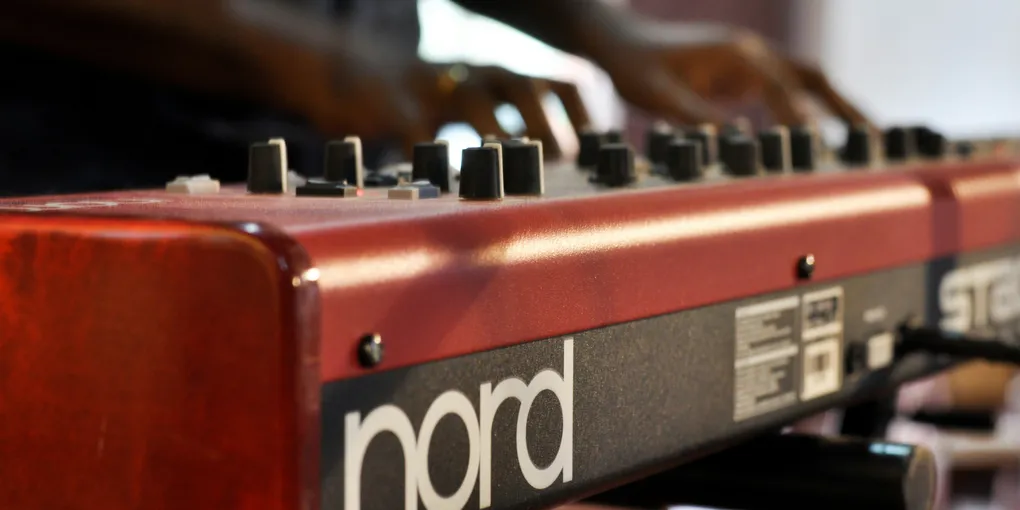
I didn’t come up in a church that used a lot of keys. My background was gospel — heavy choir, strong rhythm section, organ when we had one. So the first time I walked into a church service and heard a Nord Stage sitting center stage, running a full piano-organ-synth rig through a clean front-of-house mix, it stopped me.
Not because it was flashy. Because it disappeared. The keys weren’t performing — they were holding up everything else, filling space, giving the congregation something to float in. I stood in that room and thought: that’s what a keyboard in worship is supposed to do.
I’ve been chasing that sound in every church I’ve served since. And along the way, I’ve developed a pretty clear opinion about what makes a keyboard actually work for Sunday morning — and what gets in the way. If you want the longer conversation about gear and why it isn’t the point, gear and the heart of worship goes deep on that. But if you’re here for the board recommendations, here they are — five keyboards I’d put my name on.
Key Takeaways
- Action is the first criterion, not sound: 88 keys with a feel as close to a real piano as possible is the professional standard for worship keyboard players.
- Workflow simplicity matters more than feature count — a keyboard that requires menu diving mid-set is a liability, not an asset.
- The Nord Stage 4 is the professional benchmark, but the Korg Nautilus and Roland RD-2000 EX offer legitimate alternatives with fewer compromises than you’d expect.
- The Studiologic Numa Compact X SE is the most underrated keyboard for small-church budgets — and the simplest workflow on this list.
Top Picks
- Best overall: Nord Stage 4 shop at zZounds →
- Best workstation: Korg Nautilus shop at zZounds →
- Best for piano-focused worship: Yamaha CP88 shop at zZounds →
- Best stage piano: Roland RD-2000 EX shop at zZounds →
- Best budget pick: Studiologic Numa Compact X SE shop at zZounds →
What Should You Look for in a Worship Stage Keyboard?
Keyboard players are particular — more particular, in my experience, than guitarists or even drummers. And for good reason. The feel of the instrument shapes every note they play, every dynamic choice, every instinct they’ve built over years of practice. Here’s how I’d rank what actually matters.
Key action and weight — above everything else. Among serious worship keyboard players, the consensus is clear: 88 keys with an action that feels as close to a real acoustic piano as possible. Not because every player is a piano purist, but because a realistic action builds better technique, supports more expressive playing, and doesn’t fight you when the moment calls for restraint. Semi-weighted or synth-action keys have their place — pad players and organists often prefer them — but if your keyboard player leads from the piano, action is non-negotiable.
Workflow simplicity — before sound quality. I don’t recommend the Yamaha Montage M8X in this post. It’s an extraordinary instrument — one of the most powerful synthesizers ever made. But for live worship, it has a real problem: too much menu diving, too many layers to navigate mid-set. I’ve watched keyboard players fumble with patch changes between songs because their board required three button presses to get to a sound they needed in four seconds. That fumbling breaks the flow of worship. A board that lets you change sounds intuitively, without looking down, is worth more on a Sunday morning than a board with 4,000 presets you can’t reach in the moment.
Sound quality over sound quantity. A keyboard with 2,000 presets and a thin piano sample is worse than one with 200 presets and a stunning Steinway. For worship, you need a piano that sounds like a piano, an organ that breathes, and a pad that doesn’t distract.
Reliability under pressure. A keyboard that glitches when switching sounds mid-song isn’t a worship instrument — it’s a liability. Every board on this list boots fast and behaves predictably under normal church service conditions.
Portability. Sunday morning setup windows are short. A 65-pound keyboard that takes two people to carry and 15 minutes to cable up causes friction that shows up in the room. Weight matters more than gear reviews usually acknowledge.
Budget honesty. Your keyboard doesn’t have to be the most expensive thing on the platform. It has to serve your congregation. If you’re also building out your sound system, the best church mixers under $1,000 covers that side of the signal chain.
For everything we publish on keyboards, pads, and backing tracks, the Keys & Tracks hub is the right place to start.
Is the Nord Stage 4 Still the Best Keyboard for Worship?
For most worship contexts, yes — the Nord Stage 4 remains the professional standard. Its three-section layout covering Piano, Organ, and Synth at a professional level, in a 43-lb keyboard, has no real competition at its price point. Walk into the average megachurch and there’s a Nord on the keys rig. Walk into the average midsize church with a serious worship program and there’s a Nord on the keys rig. This isn’t coincidence.
The Piano section uses Nord’s proprietary sample library, with models drawn from Steinway and Bösendorfer grands. The Organ section runs Nord’s virtual tonewheel simulation, which is close enough to the real thing that Hammond purists have used it live (Nord, Stage 4 product page). The Synth section gives you subtractive, FM, and wavetable synthesis, plus Nord’s wave library.
For worship, this means you can run a split — piano on the left, pad on the right, a touch of organ underneath — all from one board, without a separate module or laptop. That’s the sound you’re hearing at Elevation, Bethel, Hillsong, and thousands of churches every Sunday. The Stage 4 added improved effects, better piano velocity response, and a redesigned real-time control layout over the Stage 3, all of which matter if you’re buying new.
The price is real. But churches that treat their keys rig as a long-term asset find that the Nord holds value in a way that less expensive boards don’t.
Our Verdict
The benchmark worship keyboard — if your budget allows it, nothing on the market delivers this combination of piano, organ, and synth quality in a stage-ready package.
Shop at zZounds →Best for: Worship teams that need professional piano, organ, and synth from one board
✓ Pros
- Three professional-grade sections: Piano, Organ, and Synth in one board
- Exceptional build quality and reliability — built for touring professionals
- Tonewheel organ simulation is the closest thing to a real Hammond on a stage piano
- Stage 4 Compact (73-key) is 22 lbs — one of the lightest professional keyboards available
- Holds its resale value better than any other keyboard on this list
✗ Cons
- Price puts it out of reach for many small-church budgets
- No built-in sequencer, arpeggiator, or workstation features
- Sound library updates require downloading from the Nord website
What Makes the Korg Nautilus a Top Choice for Versatile Worship Teams?
The Korg Nautilus is the right answer when you want a Nord but also need a full workstation. Nine sound engines in a single keyboard — including a tonewheel organ (the CX-3 engine), the SGX-2 piano engine, FM synthesis, physical modeling, and analog-style synthesis — makes the Nautilus one of the most versatile instruments available for live performance (Korg, Nautilus product page).
This is the successor to the legendary Kronos, which spent a decade as the benchmark professional workstation and still shows up in used gear searches constantly. The Nautilus simplified the UI while keeping the audio quality, which most players who made the switch appreciated. If you find a Kronos in good condition at the right price, the sound engines are the same — the interface is just different.
For worship, the Nautilus shines in churches that need a lot from one player. If your keyboard player is also your musical director — setting keys, programming click tracks, layering orchestral sounds under the worship team — the Nautilus’s 16-track sequencer and deep editing capability support that role in a way the Nord doesn’t. If your keyboardist needs to play great piano and organ and not much else, the Nautilus may be more keyboard than you need.
Our Verdict
The best choice for versatile worship programs — nine sound engines and workstation-class features at a price that competes with the Nord Stage 3 used market.
Shop at zZounds →Best for: Musical directors and players who need workstation features alongside great piano and organ
✓ Pros
- Nine distinct sound engines covering piano, organ, strings, FM, wavetable, and analog synthesis
- CX-3 organ engine and SGX-2 piano are both professional-quality
- 16-track sequencer and full workstation capability built in
- Strong value compared to the Nord at a similar feature level
- Direct successor to the beloved Korg Kronos with a simplified interface
✗ Cons
- Heavy at 51 lbs — noticeably more than the CP88 (41 lbs) and RD-2000 EX (47.84 lbs)
- Deep feature set has a steeper learning curve
- Interface is less intuitive for players who just want to switch sounds quickly mid-set
Why Is the Yamaha CP88 the Best Choice for Piano-Focused Worship?
The CP88 is the first Yamaha I ever played and thought: they got it right. The Grand Hammer action is outstanding — each key is built with real wood on the sides, which gives the action a weight and response that you feel before you even register it consciously. The toggle buttons are tactile and satisfying to engage, which makes switching sounds feel intentional rather than mechanical. Yamaha has been building stage pianos for decades, and this is where all of it shows.
Not every worship keyboard player needs a workstation. Some of the best I’ve watched lead worship weren’t doing anything elaborate — piano on the verses, a swell on the chorus, space during the bridge. Clean, intentional, supportive. That playing style doesn’t need nine sound engines. It needs a great piano.
The CP88 is built around one thing: making you sound like you’re sitting at a world-class acoustic piano. The sample content is sourced from Yamaha’s flagship CFX concert grand and a Bösendorfer Imperial (Yamaha, CP88 product page). Together, that’s as close as a stage piano gets to the real thing. The electric piano sounds — Rhodes and Wurlitzer simulations — are genuinely good as well.
The YC88 is the organ-focused companion in Yamaha’s stage series, with waterfall keys and drawbar controls built around their rotary speaker simulation. If your keyboard player is primarily an organist, the YC88 is worth serious consideration alongside the CP88.
Our Verdict
The most convincing acoustic piano on a stage keyboard at any price — for worship leaders whose primary voice is piano, nothing in this roundup competes with it.
Shop at zZounds →Best for: Piano-focused worship leaders who prioritize acoustic feel and tone above all else
✓ Pros
- Grand Hammer weighted action with real wood key construction — the most realistic piano feel on this list
- CFX and Bösendorfer piano samples are the standard for live acoustic piano tone
- Toggle buttons are tactile and rewarding — patch changes feel intentional, not fumbled
- Clean, focused signal path designed for live performance
- Companion YC88 covers organ for churches with players in both roles
✗ Cons
- Limited to piano and EP sounds — no dedicated organ section or synth engine
- 41 lbs — mid-range weight, lighter than the Nautilus but heavier than the Nord Stage 4 Compact
- Less versatile for churches that need one board to cover piano, organ, and pads
Is the Roland RD-2000 EX the Most Complete Stage Piano for Worship?
For many worship teams, yes — the RD-2000 EX is the most complete single-board solution on this list. The PHA-50 hybrid keyboard action combines a carbon graphite and wood core to replicate the weight gradient of an acoustic piano from bass to treble. It’s the finest keyboard action Roland has ever put in a stage piano, and it’s genuinely competitive with the Yamaha CP88’s Grand Hammer action (Roland, RD-2000 EX product page).
The sound engine layers a SuperNATURAL acoustic piano modeling system with Roland’s ZEN-Core synthesis platform, giving the RD-2000 both exceptional piano tones and access to a broad sound library including pads, strings, organs, and synth voices. Unlike the CP88, which commits to piano, the RD-2000 covers more of the keyboard rig’s overall sonic responsibilities without going as deep as the Nautilus.
Where the RD-2000 earns a distinct reputation in worship contexts is build quality and MIDI control. The unit is built for touring-level abuse, and its zone, split, and layer functionality is straightforward enough that keyboard players who aren’t programmers can set it up reliably. For churches that rotate keyboard players across multiple services, or that have multiple players sharing one board, the RD-2000’s accessible workflow is genuinely valuable.
Our Verdict
The most complete stage piano on this list — outstanding action, professional piano tone, and enough versatility to cover most worship keyboard needs without demanding a workstation skill set.
Shop at zZounds →Best for: Worship teams rotating multiple players on one board who need versatility with a simple workflow
✓ Pros
- PHA-50 keyboard action is among the best weighted actions available on any stage piano
- Covers piano, pads, organs, and synths without the complexity of a full workstation
- Zone and split functionality is intuitive for non-programmers — easy to hand off to another player
- Built for professional touring use — extremely reliable under regular church service demands
- Excellent MIDI control capability for churches running Ableton or similar software
✗ Cons
- Heavier than the Nord Stage at similar feature levels
- Piano tone is outstanding but doesn't reach the acoustic realism of the CP88's Grand Hammer system
- Price point competes with Nord Stage 3 used market, so comparison shopping matters
What Makes the Studiologic Numa Compact X SE a Smart Budget Pick?
Most gear roundups ignore Studiologic. That’s a mistake. The Numa Compact X SE is an Italian-engineered keyboard that has no business sounding as good as it does at its price point — and it’s quietly become one of my most frequent recommendations for small churches and portable ministry setups.
Of everything on this list, the Numa has the simplest workflow. Each program allows a maximum of two sounds, with a straightforward blend control between them. That’s it. No menu diving. No multi-layered patch architecture to navigate between songs. For a keyboard player who needs to shift sounds mid-set without looking down and fumbling through screens, that constraint is the feature. Simplicity is underrated in worship gear — and the Numa is the best argument for it.
The tradeoffs are real: 73 semi-weighted keys instead of 88 weighted, a lighter action than the RD-2000 or CP88, and a sound library that doesn’t compete with a Nautilus or Nord (Studiologic, Numa Compact X SE page). But the Numa Compact X SE weighs approximately 15.65 lbs. It fits in a backpack. It boots in seconds. And it covers piano, electric piano, organ, and pad sounds at a quality level that is genuinely usable for Sunday morning — not a compromise you apologize for, but a clean, honest instrument that does what it promises.
For a church plant that can’t spend $3,000 on a keys rig, or for a worship leader who travels and needs a portable instrument for a house system, or for a second keyboard on the platform handling pads while the primary player handles piano — the Numa fills that role exceptionally well. And if you’re still building out the rest of your setup, the best church mixers under $1,000 is a good next read.
Our Verdict
The most honest budget keyboard on the market — Studiologic builds gear that punches above its price, and the Numa Compact X SE is the best argument for not overspending when you're starting out.
Shop at zZounds →Best for: Church plants, small churches, and worship leaders who need a portable setup on a tight budget
✓ Pros
- Extremely lightweight (~15.65 lbs) — the most portable full-featured board on this list
- Simplest workflow of any keyboard here: max two sounds per program, easy blend control
- Piano, EP, organ, and pad sounds are all usable at a quality above its price point
- Three-zone split and layer capability for live performance flexibility
- Fast boot time and intuitive interface — no programming expertise required
✗ Cons
- 73 semi-weighted keys rather than 88 fully weighted — limits upper-register reach and piano feel
- Sound library is functional, not exceptional — won't replace a Nord or Nautilus
- Build quality reflects the price point — not as road-hardened as the Roland or Yamaha
How Do These Stage Keyboards Compare Side by Side?
| Model | Best For | Keys | Weight | Price Range |
|---|---|---|---|---|
| Editor’s PickNord Stage 4 | Overall / Pro worship | 88 | 43 lbs | $$$$ |
| Korg Nautilus | Versatile / workstation | 88 | 51 lbs | $$$ |
| Yamaha CP88 | Piano-focused worship | 88 | 41 lbs | $$$ |
| Roland RD-2000 EX | Stage piano / versatility | 88 | 47.84 lbs | $$$ |
| Studiologic Numa Compact X SE | Budget / portable | 73 | 15.65 lbs | $ |
Frequently Asked Questions
What is the best keyboard for worship?
The Nord Stage 4 is the professional standard — its three-section Piano, Organ, and Synth layout covers everything a worship keys player needs at a level that competing instruments rarely match. For a more accessible price point, the Roland RD-2000 EX offers similar versatility. See the Keys & Tracks hub for more keyboard content.
Is a weighted keyboard necessary for worship?
For piano-focused players, yes. Weighted or hammer-action keys develop better technique and respond more naturally to dynamic playing — and among serious worship keyboard players, 88 keys with the most realistic piano action possible is the widely accepted standard. For pad players, organists, or synth-focused players, semi-weighted or synth-action keys are often more comfortable.
What’s the difference between a stage piano and a workstation?
A stage piano focuses on realistic acoustic and electric piano sounds in a live-ready package, with a cleaner interface and premium piano feel. A workstation adds synthesis engines, a built-in sequencer, and a broader sound library, at the cost of added weight and complexity. For most worship keyboard players, a stage piano is sufficient. For musical directors managing the whole band’s sound from the keys, a workstation like the Korg Nautilus adds real value.
Can a small church use a budget keyboard like the Studiologic?
Absolutely. The Studiologic Numa Compact X SE covers piano, electric piano, organ, and pad sounds at a quality level that works well in a small-church context — especially at the mix volumes typical of intimate worship settings. Its two-sound-per-program workflow also makes it one of the least complicated boards to hand off between players.
What keyboard does Nord make for worship?
Nord’s Stage series — currently the Nord Stage 4 — is the primary worship keyboard in their lineup. It provides separate Piano, Organ, and Synth sections in a single instrument. The Nord Electro series offers a more compact option focused primarily on piano and organ for players who don’t need a full synth section.
How do I know which keyboard is right for my church?
Start with your player’s primary role and their experience level. A piano-focused player benefits most from the Yamaha CP88 or Roland RD-2000. A player covering piano, organ, and pads from one board should look at the Nord Stage 4 or Korg Nautilus. A new worship team on a tight budget should start with the Studiologic Numa Compact X SE. And remember: the best board is the one your player takes time to learn deeply. Gear is a tool — the player is what makes worship happen. For help building the team around your keys player, how to lead worship for the first time has practical starting points.
A Prayer for the Worship Musician Who Serves Behind the Keys
Lord, thank You for the musicians who take their place behind the keys and serve the congregation quietly — filling the space, supporting the singers, and giving the room something to rest in. Give them an ear for what the moment needs and the skill to deliver it without calling attention to themselves. Whether they’re playing a $500 board or a $4,000 Nord, let the sound that comes through be consecrated — set apart for Your glory, and for the people in the room. Amen.
Be Blessed,
Mark Claiborne
Mark Claiborne is a worship leader with 15 years of ministry experience across gospel, contemporary, and blended worship contexts, and the founder of Worship Frontier.


Find this helpful?
Writing takes time. If Worship Frontier has been useful to you, buying me a coffee means a lot — and keeps this going.
Join the Conversation
Comments are moderated — approved ones are posted periodically.
Thanks for your comment — it's in the queue for review.