Best Reverb Pedals for Worship Guitar: The Strymon Lineup
Table of Contents
If you’ve spent any time in the worship guitar world, you already know the name. Strymon makes reverb pedals the way other companies make promises — consistently, reliably, and at a level that’s hard to argue with.
Yes, there are a lot of Strymon pedals on this list. I said the same thing in the delay pedal post, and I’ll say it again here: I’m not sponsored, I’m just honest. The worship guitar community gravitates toward Strymon reverbs for a reason — their algorithms are exceptional, their build quality is premium, and their approach to reverb design lines up almost perfectly with what Sunday morning requires.
From the flagship BigSky MX to the ethereal Cloudburst, here’s the full Strymon reverb lineup reviewed for worship.
Key Takeaways
- Shimmer reverb — a pitch-shifted, choir-like reverb effect — has appeared on professional worship pedalboards for over a decade and is now considered a defining characteristic of the contemporary worship guitar sound.
- Keeping the mix control at 30-40% is the difference between natural depth and an artificial tone — reverb should enhance your guitar, not replace it.
- The Strymon BigSky has been the benchmark worship reverb since its release, appearing on professional worship stages at Hillsong, Bethel, Elevation, and thousands of churches worldwide.
- For players who want one reverb that does everything, the BigSky MX is the current flagship. For players who want focused, beautiful reverb without the complexity, the BlueSky V2 is the sweet spot.
Top Picks
- Best overall: Strymon BigSky MX shop at zZounds →
- Best classic: Strymon BigSky (original) shop at zZounds →
- Best focused pick: Strymon BlueSky V2 shop at zZounds →
- Best space-saver: Strymon Flint V2 shop at zZounds →
- Best for ambient: Strymon Cloudburst shop at zZounds →
What Does a Reverb Pedal Actually Do?
If you’re just starting to build your worship rig, here’s the simple explanation.
A reverb pedal simulates the natural echo-like reflections you hear when sound travels through a physical space — a room, a hall, a cathedral. Your guitar signal goes in, the pedal creates many tiny reflections that make the note seem to continue after you pick it, and a mix control blends that processed signal back with your dry tone (Fender).
The simplest way to think about it: if delay is “repeat this note later,” reverb is “make this note sound like it’s happening in a real space.”
The main controls:
- Mix — how much reverb blends with your dry signal
- Decay/Time — how long the reverb tail lasts before fading
- Size/Space — the scale of the virtual room (small room vs. cathedral)
The main types:
- Spring reverb — uses physical springs to create the effect; the classic amp-style sound (Mark’s personal favorite)
- Plate reverb — uses a vibrating metal plate; smooth and dense
- Hall reverb — models a concert hall; lush and spacious
- Digital reverb — uses signal processing to imitate rooms with more control and more modes (Laney)
Where it goes in your signal chain: Reverb sounds best near the end of your chain — after your drive and modulation pedals. If you use amp distortion, run reverb in the effects loop to keep the signal cleaner (Fender).
My Honest Philosophy on Reverb
Before we get into the list, I want to tell you where I’m actually coming from — because it shapes every recommendation on this page.
Reverb is meant to emulate natural sound in a room or a space. That’s it. When you walk into a cathedral and someone sings, you hear the room respond. Reverb on a guitar is supposed to recreate that feeling — the sense that your instrument exists in a real acoustic environment. The moment you push past a certain threshold, it stops being believable. Not too much in a technical sense. Unbelievable in the literal sense. It no longer sounds like a guitar in a room. It sounds like a plugin.
That’s why I keep mine at 30-40%. My reverb is always on, but it’s there to push the sustain slightly further in the mix, not to define my tone. The guitar should still sound like a guitar.
My absolute favorite type of reverb — the one I’ve loved since I can remember — is spring reverb. The first tube amp I ever purchased was a Fender Twin Reverb ‘65 Reissue. That built-in hall reverb spoiled me. Warm, natural, slightly bouncy — the kind of reverb that sounds like it was captured in a real room rather than calculated by an algorithm. That’s still what I’m chasing, and it’s exactly why the Carl Martin HeadRoom is my favorite pedal on this entire page.
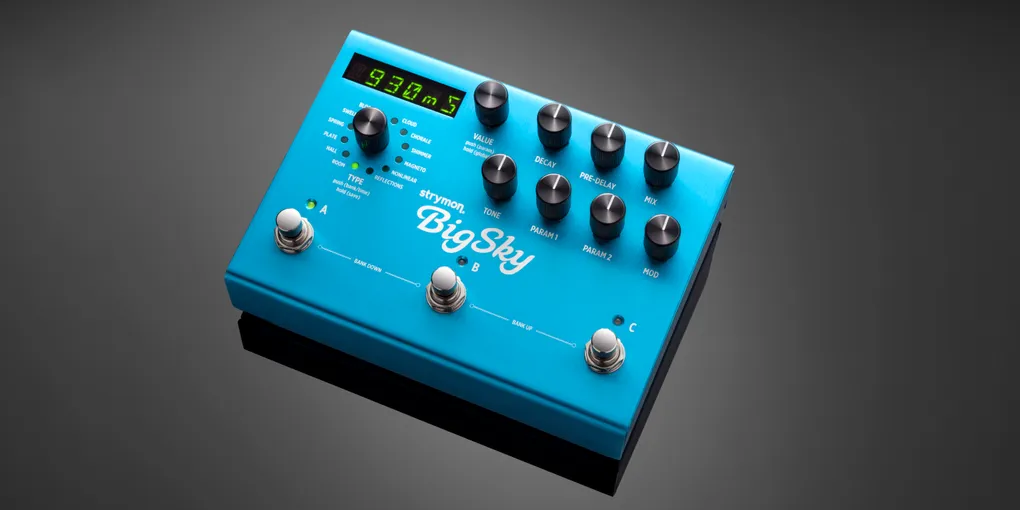
Now — about Strymon. I own the BigSky. It’s an exceptional pedal. But I want to say something I don’t see enough people say honestly: how many products does Strymon need to make that essentially do the same thing? The BigSky, the BlueSky, the NightSky, the Cloudburst — they’re all reverb pedals with different character, yes, but at some point you’re almost competing with yourself. I feature all of them here because they’re genuinely good and deserve to be on your radar. But I think worship guitarists deserve an honest voice that says: you don’t need all of them.
The other thing that matters to me — and it directly affects what I recommend — is simplicity. I don’t want to program my pedals. I want a bypass switch, a few knobs, and a sound I can dial in and trust. No deep menus. No preset banks. No computer editor. I run a full career outside of ministry, I serve at my church every week, and my free time is genuinely limited. I’m not going to spend it programming a guitar rig.
That’s coming from a tech guy, by the way. I know how to program. I just don’t want to.
So when you see the Carl Martin HeadRoom Mini sitting at the top of my personal list alongside the Strymon lineup — that’s the whole story. The best reverb isn’t the most complicated one. It’s the one that disappears into your music and lets you lead worship.
The Strymon Reverb Lineup
1. Strymon BigSky MX — The Current Flagship
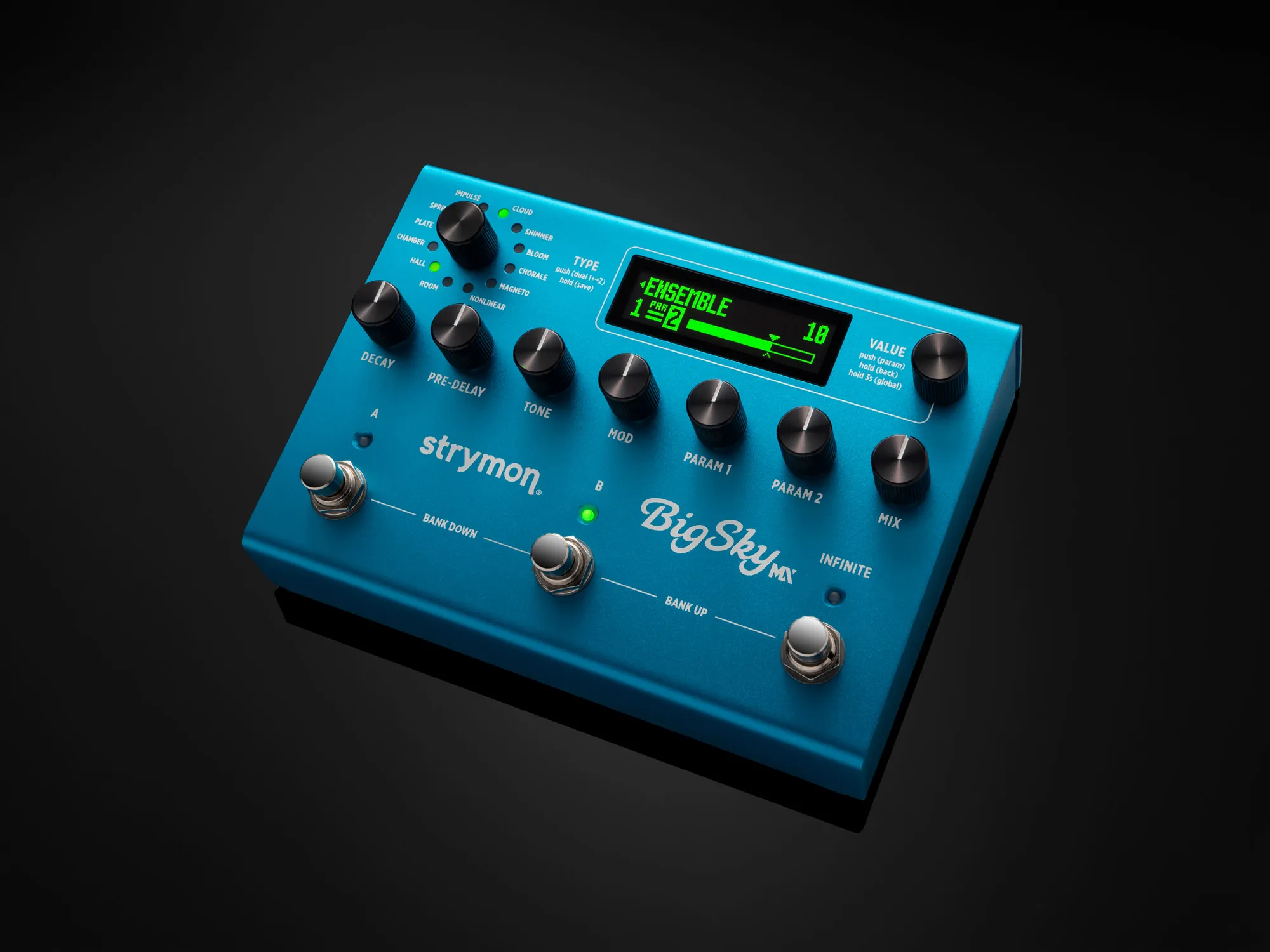
The Strymon BigSky MX is the most current version of the pedal that defined worship reverb for a generation. Twelve reverb machines — including Room, Hall, Plate, Spring, Swell, Cloud, Shimmer, Magneto, Chorale, Bloom, Nonlinear, and Reflect — packed into a compact enclosure with updated internals and a streamlined interface.
What the MX adds over the original: a smaller footprint that fits more easily on real-world pedalboards, MIDI over TRS, and Strymon’s latest processing engine. The sounds are the same legendary BigSky algorithms, now in a box that respects how much real estate your board actually has.
If you’re building a serious worship rig from scratch, the BigSky MX is the answer to the reverb question.
Our Verdict
The most current version of the pedal that defined worship reverb — 12 studio-grade algorithms in a smaller footprint with updated internals and MIDI over TRS.
Shop at zZounds →Best for: Players who want every reverb sound they'll ever need in one box — and want the most current version
✓ Pros
- 12 reverb machines — Room, Hall, Plate, Spring, Shimmer, Cloud, and more
- Smaller footprint than the original BigSky
- MIDI over TRS for live preset recall
- Stereo I/O — runs full stereo on a live rig
- Updated processing engine from Strymon
✗ Cons
- Premium pricing — significant investment for a single reverb pedal
- 12 algorithms is more than most worship sets will ever use
- Deep menus exist if you want them — but you won't need them for Sunday morning
2. Strymon BigSky — The Original Benchmark
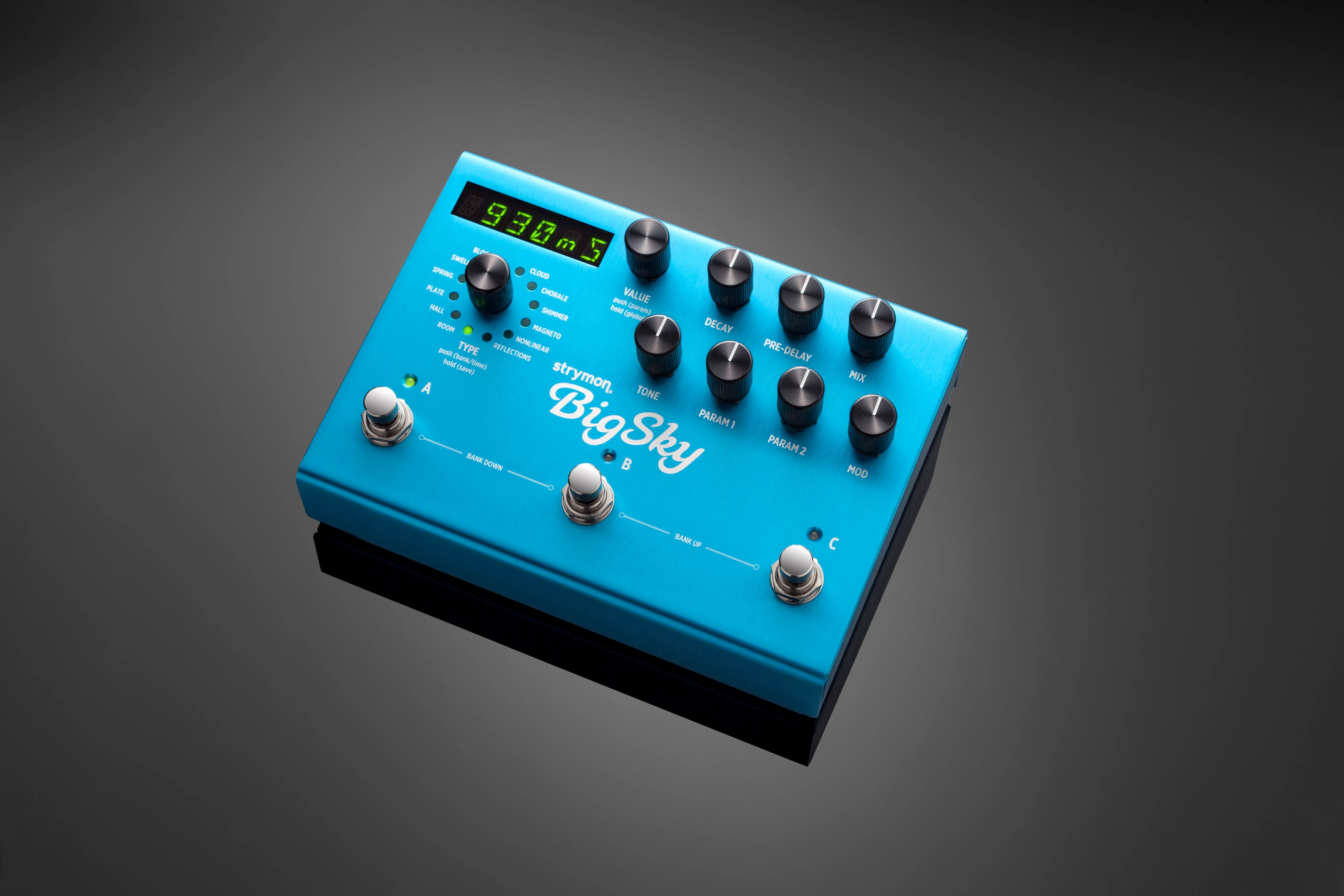
The Strymon BigSky is the pedal that put Strymon on every worship stage in the world. Same twelve reverb machines as the MX, in the original larger enclosure with physical knobs for each parameter. If you’ve heard a worship band with incredible, lush reverb in the last decade, there’s a good chance a BigSky was behind it.
The original BigSky remains fully capable — the algorithms haven’t aged and the sound is identical to the MX. If you find one used or prefer the larger enclosure and physical controls, there’s no reason not to choose it.
Best for: Players who prefer the original form factor, want to buy used, or already own one and need no convincing to keep it.
3. Strymon BlueSky V2 — Focused and Beautiful
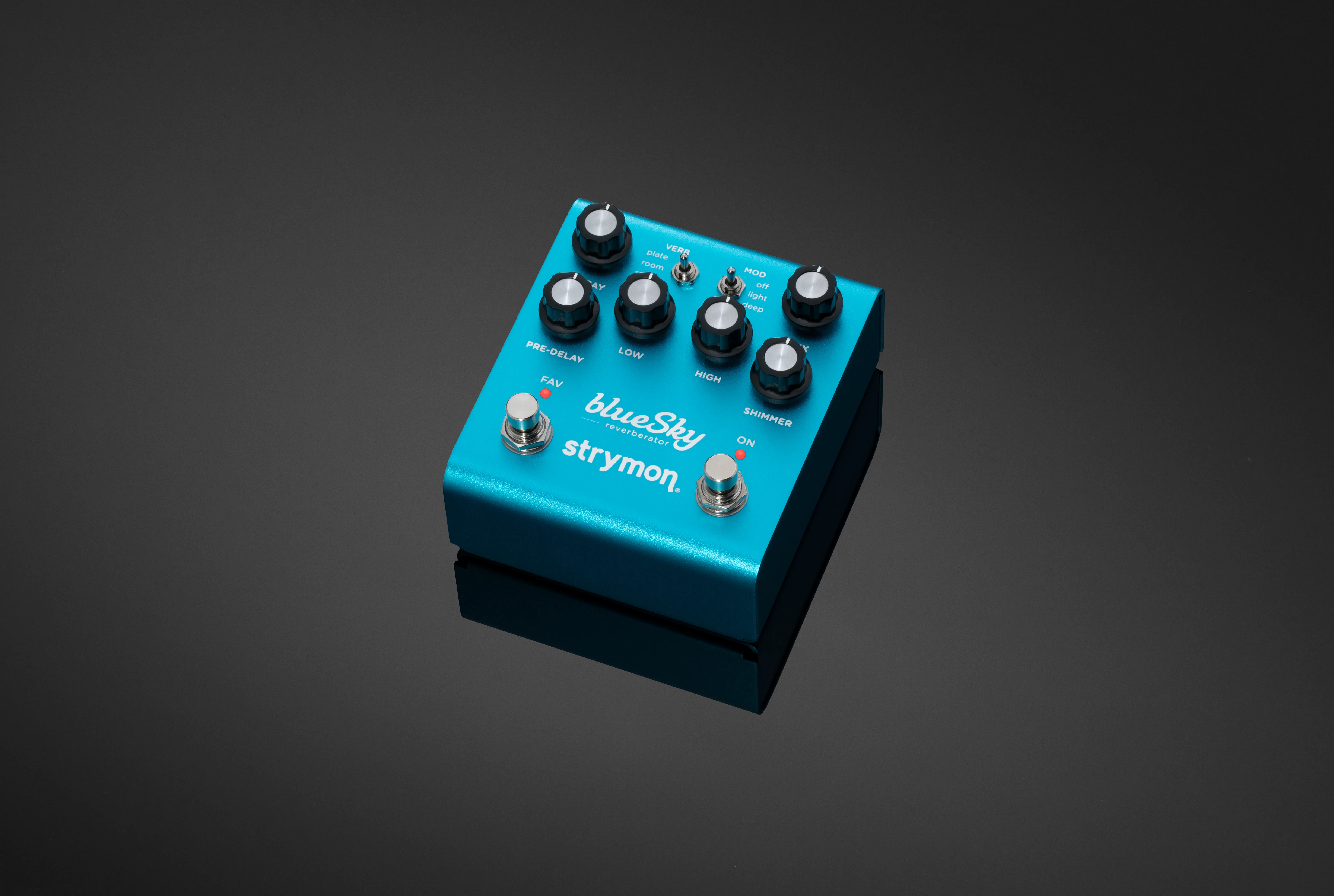
The Strymon BlueSky V2 is the pedal I’d recommend to worship guitarists who want exceptional reverb without the full BigSky investment — or the complexity. Three reverb types (Room, Hall, Plate) with Shimmer and Modulation switches, all in a compact enclosure with Strymon’s unmistakable quality.
Here’s what’s easy to miss about the BlueSky: its focused approach is actually a feature for live worship use. Instead of twelve algorithms you’re scrolling through on a Sunday morning, you have three great modes and one toggle for shimmer. Set it and forget it. The worship guitarist who knows they want hall reverb with a shimmer option doesn’t need twelve machines — they need one that does it perfectly.
Best for: Players who want Strymon quality in a simpler, more focused package — the single best reverb for worship guitarists who don’t need everything.
4. Strymon Flint V2 — Reverb + Tremolo in One
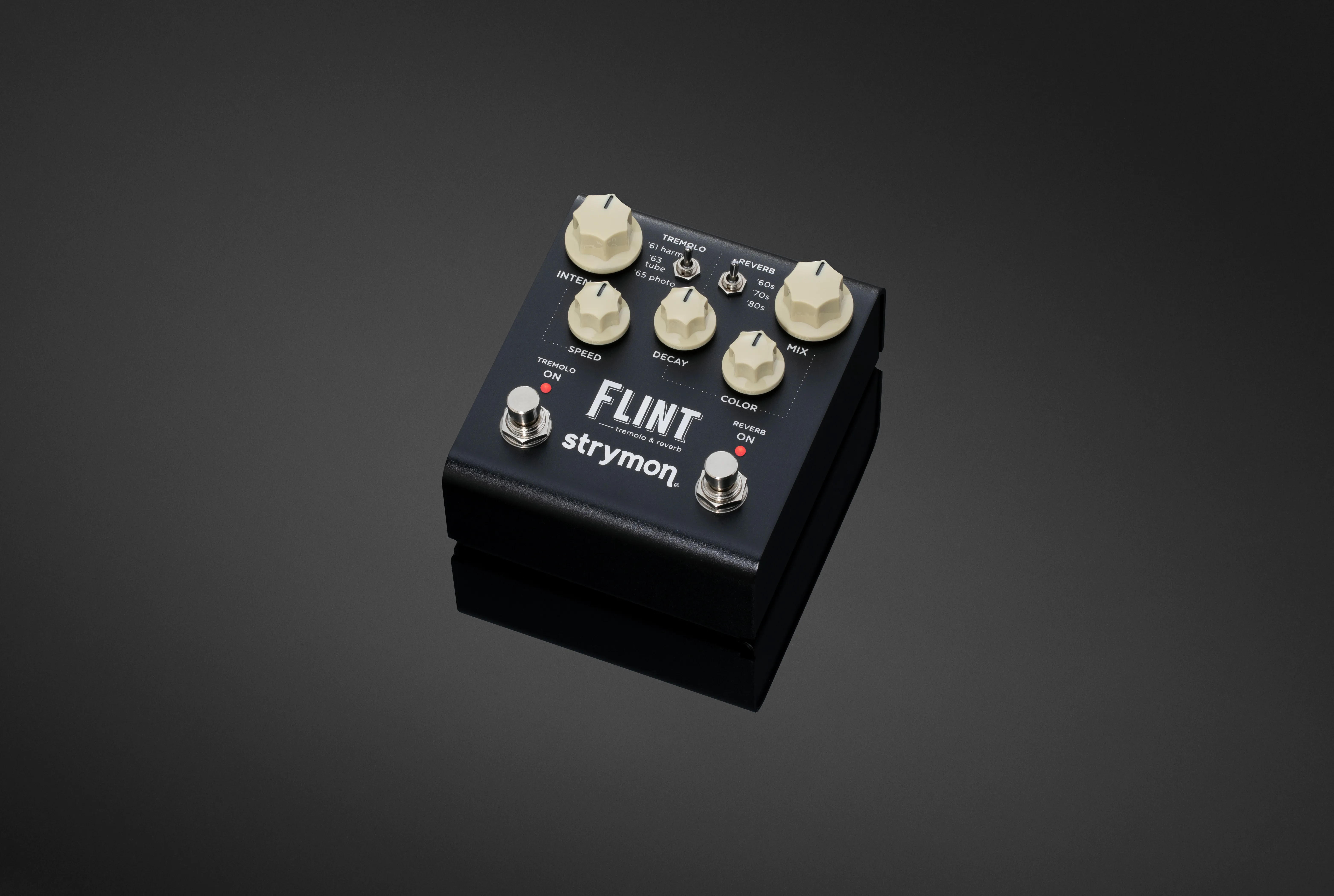
The Strymon Flint V2 is the most practical pedal on this list for worship guitarists who are short on board space. Vintage-inspired reverb (Spring, Room, Hall) and three tremolo types (Harmonic, Bias, Photocell) in a single enclosure — two of the most essential worship sounds without taking up two slots.
The Flint’s reverbs are warmer and more vintage-flavored than the BigSky’s. No shimmer mode, no ambient clouds — just beautifully authentic spring and hall tones that suit devotional and classic worship contexts perfectly. The tremolo is the best I’ve heard in a pedalboard unit.
Best for: Players who want reverb and tremolo without the pedalboard footprint — especially those who lean toward a warmer, more vintage worship tone.
5. Strymon Cloudburst — Ambient and Ethereal
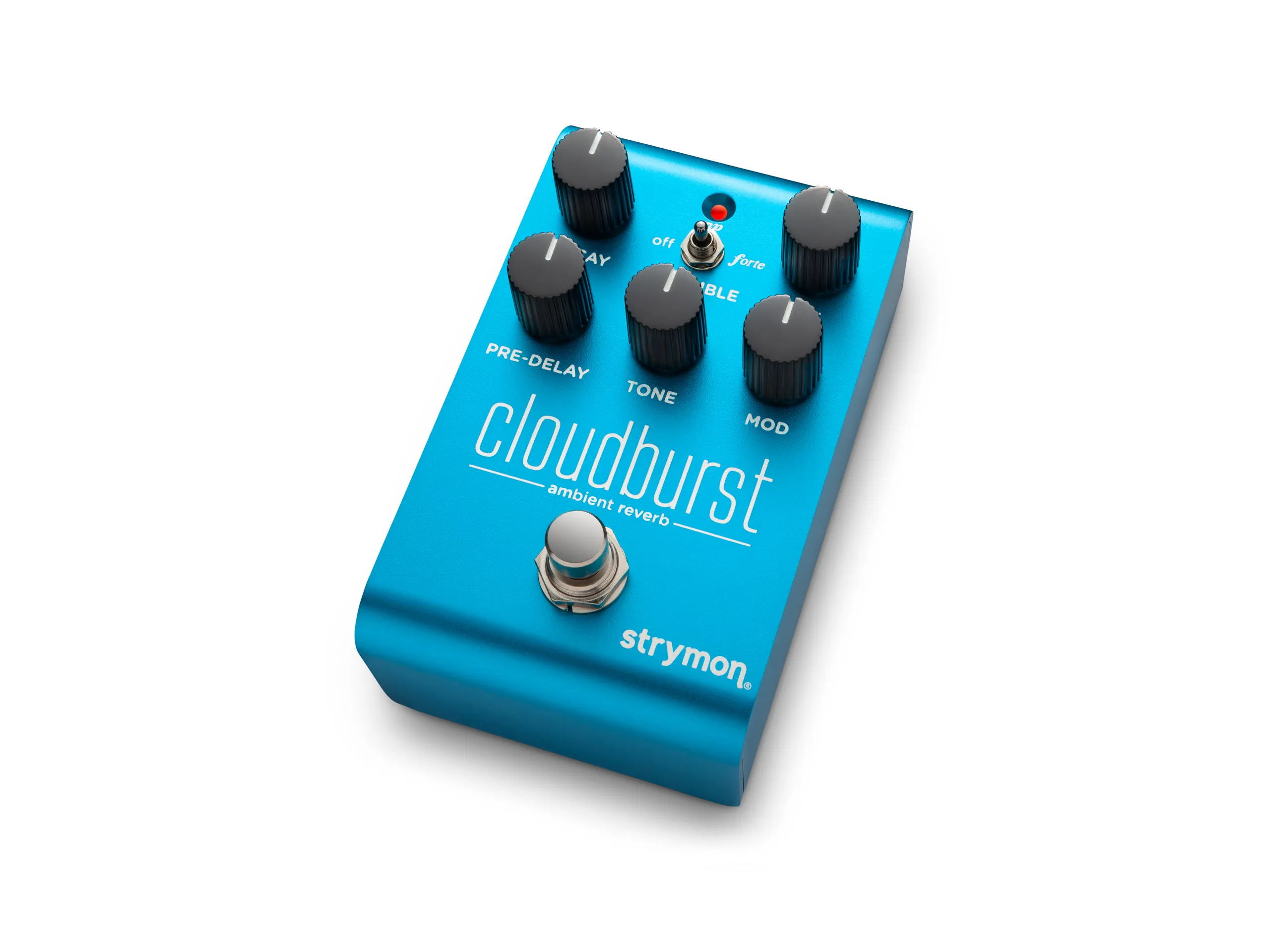
The Strymon Cloudburst is Strymon’s most purpose-built ambient reverb — designed from the ground up for lush, orchestral, choir-like soundscapes. Four reverb types (Ensemble, Atmosphere, Bloom, and String) create textures that sound less like a room and more like a space.
For worship guitarists who build ambient intros, background beds during prayer, or ethereal endings to slow worship songs, the Cloudburst is in a different category than the BigSky or BlueSky. It’s not a general-purpose reverb — it’s a specialty instrument for creating sonic environments that feel sacred. If you’ve heard a worship set open with a floating, cathedral-like guitar texture, this is often how it’s made.
Best for: Ambient worship guitarists, players who build soundscapes during prayer or ministry moments, and anyone chasing that orchestral worship texture.
6. Strymon NightSky — For the Adventurous
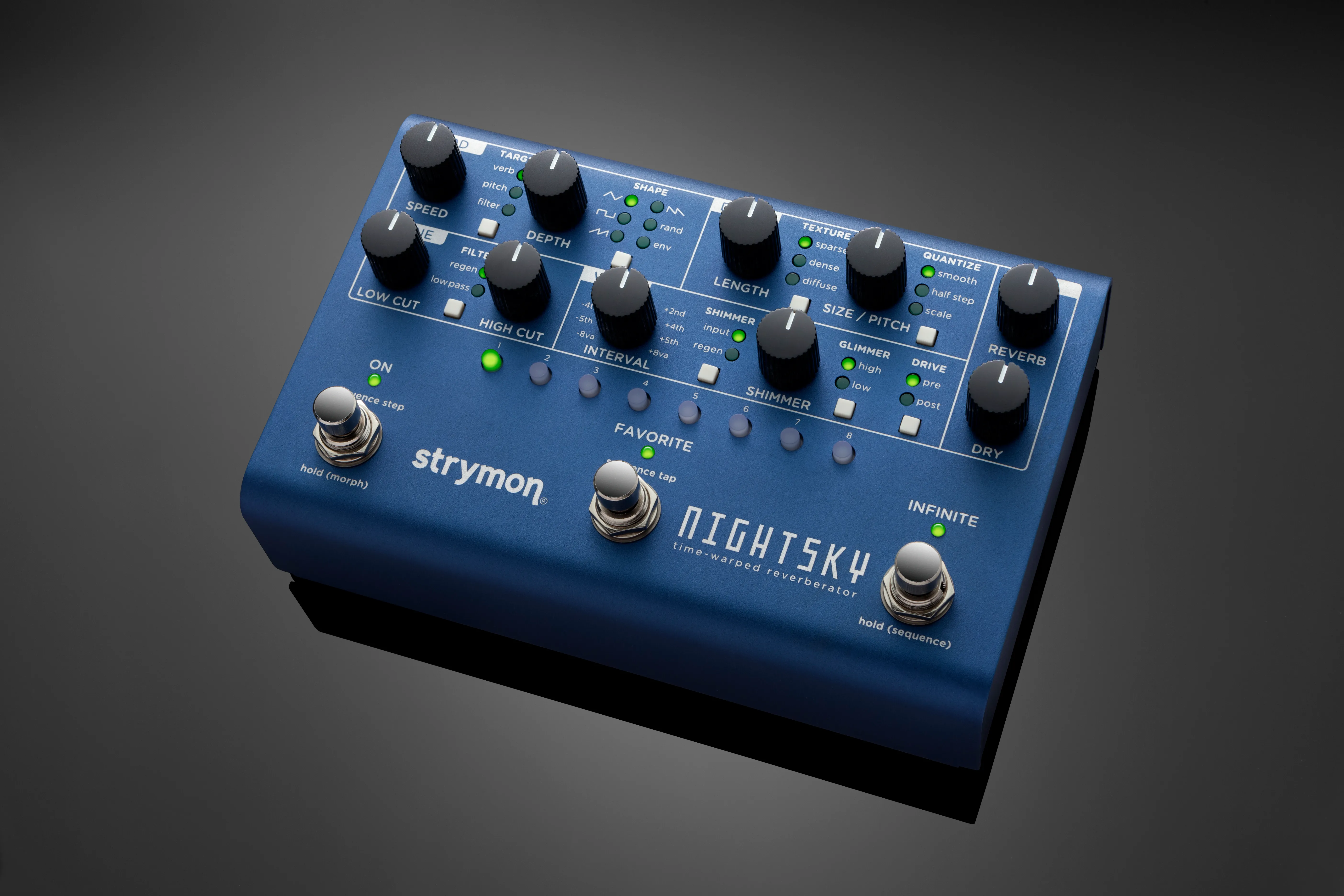
The Strymon NightSky is the most experimental pedal on this list — a pitch-shifting, time-warping reverb that creates generative, evolving textures rather than traditional room sounds. It’s not available on zZounds at this time, but it’s worth knowing about.
This is not the pedal for a worship guitarist who wants to set a reverb and play chord progressions. It’s for the player who wants to create sonic environments — ambient pads, evolving textures, and sounds that exist somewhere between music and atmosphere. In the right hands, during the right moment in a worship service, the NightSky can create something genuinely transcendent.
Best for: Experimental ambient players, worship leaders who build full soundscapes, and guitarists who treat effects as instruments rather than tools.
How They Compare
| Pedal | Type | Shimmer | Presets | Stereo | Best For |
|---|---|---|---|---|---|
| BigSky MX | Multi-engine (12) | ✓ | ✓ | ✓ | Everything |
| BigSky | Multi-engine (12) | ✓ | ✓ | ✓ | Classic flagship |
| BlueSky V2 | Focused (3) | ✓ | — | ✓ | Simple + excellent |
| Flint V2 | Vintage + Tremolo | — | — | ✓ | Space savings |
| Cloudburst | Ambient (4) | — | ✓ | ✓ | Orchestral textures |
| NightSky | Experimental | ✓ | ✓ | ✓ | Soundscapes |
What to Look for in a Worship Reverb Pedal
Shimmer. If you lead worship in a contemporary setting, shimmer reverb — a pitch-shifted octave layer blended into the reverb tail — is the signature sound of the genre. Make sure any reverb you consider has it.
Stereo output. Reverb opens up dramatically in stereo. If your signal chain runs into two amps or a stereo IEM system, stereo reverb is not optional — it’s the difference between good and extraordinary.
Presets. Sunday morning moves fast. A reverb that saves your dialed-in settings means you spend zero time tweaking before service and all your attention on leading.
Trails. When you bypass the reverb, trails mode lets the tail fade naturally instead of cutting abruptly. Without trails, bypassing mid-song sounds like someone flipped a switch. Every pedal on this list has trails.
Mix control. The ability to set how much reverb blends with your dry signal is essential for live worship — too much reverb in a full-band context muddies the mix instantly.
If you’re building out a full board rather than just your reverb slot, the 5 pedals every worship guitarist needs covers how reverb fits alongside drive, compression, modulation, and delay — plus a few budget-friendly picks for the rest of your chain.
Frequently Asked Questions
What reverb pedal do most worship guitarists use?
The Strymon BigSky has been the dominant reverb pedal on professional worship stages for over a decade, appearing on rigs at Hillsong, Bethel Music, Elevation Worship, and thousands of churches worldwide. The BigSky MX is its current successor. For players seeking quality at a lower price point, the BlueSky V2 is the most common alternative.
What is shimmer reverb and why is it used in worship music?
Shimmer reverb adds a pitch-shifted layer — typically an octave up — to the reverb tail, creating an ethereal, choir-like quality. It became closely associated with worship music because it creates a sense of space and transcendence that suits congregational worship contexts. The BigSky’s shimmer algorithm is widely considered the standard.
Do I need both reverb and delay on my worship board?
Most worship guitarists run both — they serve different purposes. Delay creates rhythmic echoes of your note. Reverb puts your guitar in a space. Together they create the atmospheric texture associated with modern worship guitar. If budget forces a choice, reverb has more impact on the overall sound.
What’s the difference between the BigSky MX and the original BigSky?
The BigSky MX features a smaller footprint, MIDI over TRS, and Strymon’s updated processing engine — but the same twelve reverb algorithms as the original. If you have a BigSky already, there’s no urgent reason to upgrade. If you’re buying new, the MX is the current recommendation.
Is the Strymon BlueSky V2 worth it compared to the BigSky?
Yes — for many worship guitarists, the BlueSky V2 is the better choice. Its three focused reverb types with shimmer and modulation cover the majority of worship use cases, in a simpler interface that’s easier to manage on stage. The BigSky is the right choice if you want all twelve algorithms; the BlueSky V2 is right if you want the best of those algorithms without complexity.

Budget & Boutique Picks
Not everyone is building a Strymon rig — and not everyone should. Here are three picks that earn their place on a worship board without the flagship price tag, plus my personal boutique favorite.
I’ll say this upfront: my philosophy these days is having a smaller-sized board. I’m currently running the Fender Professional Medium Pedalboard — a well-built, compact board that keeps my rig organized and portable. Every pedal has to justify its footprint. The lighter, the better. That means every pedal I add has to justify its footprint — and mini-format pedals have become my preference for anything that doesn’t absolutely need the full-size version. That thinking shaped two of the three picks below.
JHS 3 Series Reverb
The same thing I said about the JHS Delay applies here: JHS builds pedals that sound significantly better than their price suggests. The JHS 3 Series Reverb is simple — three knobs, one reverb type, one job — and it does that job well. Warm, musical, and sits naturally in a mix without fighting the band. For a worship guitarist building their first real reverb setup, this is the honest starting point.
Best for: Budget builds, first-time reverb buyers, backup boards.
TC Electronic Hall of Fame Mini
The TC Electronic Hall of Fame Mini is one of the best examples of the compact pedal philosophy in action. TonePrint technology in a mini enclosure — meaning you can load custom reverb tones directly from your phone, including community-designed presets built specifically for worship. Hall and shimmer tones that compete well above the price point, in a footprint that respects your board.
If you want quality reverb without the Strymon investment, and you share my appreciation for a smaller board, this is the one.
Best for: Compact board builds, players who want TonePrint customization, budget-conscious worship guitarists.
⭐ Carl Martin HeadRoom Mini — My Favorite on This Entire List
I have to be honest with you: out of every pedal on this page — Strymon included — the Carl Martin HeadRoom is my personal favorite reverb pedal. Full stop.
I own the larger version. It sounds extraordinary. Warm, natural, studio-grade reverb that doesn’t color your tone so much as it deepens it. The kind of reverb that makes you forget it’s even there until you bypass it and suddenly the guitar sounds smaller and flatter. That’s how good reverb is supposed to work.
The problem has always been the size. The full HeadRoom is massive, and my current philosophy is smaller boards with smaller pedals. So for years it’s been a pedal I loved and couldn’t practically use.
Then I found the Carl Martin HeadRoom Mini. Same boutique-quality reverb character in a form factor that actually fits. And I’ll tell you exactly how much I believe in this recommendation: I placed an order for the mini while writing this post.
If you want to know what’s going on my board — this is it.
Best for: Players who want the best-sounding reverb on this list regardless of brand, compact board builds, worship guitarists who are tired of following the crowd.
A Final Word
Every pedal on this list earns its place in the Strymon lineup — they just serve different players at different stages. If you’re starting out, the BlueSky V2 is the honest recommendation. If you want everything, the BigSky MX is the answer. If you’re building ambient soundscapes, the Cloudburst is in its own category.
The worship guitar community’s love for Strymon reverbs isn’t hype. It’s the sound of a thousand Sunday mornings.
For more on building your worship guitar rig, see the best delay pedals for worship guitar — delay and reverb work together, and choosing them as a pair almost always leads to a better result. For the full picture of what goes on a worship board, the gear and the heart of worship is worth reading before you spend another dollar. And if you’re just starting out, how to lead worship for the first time covers what actually matters before you worry about the rig.
A Prayer for the Worship Musician
Father, bless the hands that hold the guitars and the ears that shape the sound in our worship spaces. Let the reverb lift the room, let the tone serve the congregation, and let every worship guitarist remember that the goal has never been the sound — it has been the soul. May every note played in Sunday worship draw someone closer to You. Amen.
Be Blessed,
Mark Claiborne

Find this helpful?
Writing takes time. If Worship Frontier has been useful to you, buying me a coffee means a lot — and keeps this going.
Join the Conversation
Comments are moderated — approved ones are posted periodically.
Thanks for your comment — it's in the queue for review.